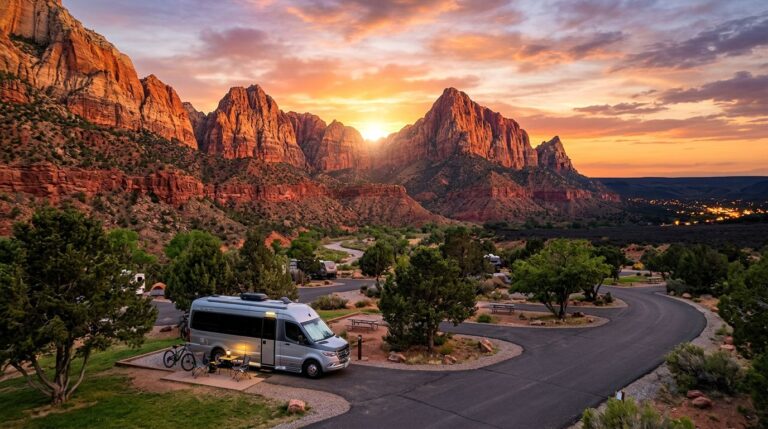
Zion National Park is one of the easiest national parks to fall in love with, and one of the easiest to mess up with bad timing. The good news is you don’t need secret trails or elite fitness. You need a simple plan that respects crowds, weather swings, and Zion National Park’s unique Zion Canyon “one main canyon” layout.
These Zion travel tips are the same ones I use to keep a first visit calm, even if you’re a beginner hiker who just wants big views without big stress.
Key takeaways (save these before you go):
- Plan around the shuttle system, because it changes how your whole day works.
- Start early, not because it’s trendy, but because parking and popular trails fill fast.
- Pick 1 to 2 “must-do” hikes per day, then add smaller scenic stops.
- Dress for temperature swings, especially in winter and shoulder season.
- Treat water like a hazard, not just a pretty photo backdrop.
Choose your season with intention (weather and crowds matter)
If you only remember one thing, remember this: Zion National Park feels like a different park depending on the month. Summer can be blazing and busy. Shoulder seasons feel like the sweet spot. Winter is quieter, but you have to respect cold mornings and shorter daylight.
As of February 2026, Zion National Park commonly sees mid-30s to upper-60s Fahrenheit across the day, and skies are often cloudy. That range is why I pack layers even for “short” walks. Early starts can feel like winter, then lunch feels like spring.
Here’s the quick mental model I use when planning trips to Zion National Park:
| Season | What it feels like | My planning focus |
|---|---|---|
| Winter (Dec to Feb) | Quieter, cold mornings, big temperature swings | Layers, traction, shorter days |
| Spring (Mar to May) | Comfortable, popular, runoff can be high | Early starts, shuttle strategy |
| Summer (Jun to Aug) | Hot, crowded, sun is relentless | Heat plan, water, shade breaks, monsoon season and flash flooding risks |
| Fall (Sep to Nov) | Pleasant, still busy | Weekdays, sunrise starts |
Crowds don’t just affect your mood. They change your hike choices. A crowded trail can be safer for navigation, but it can also feel stressful if you’re new to hiking. If you want a broader menu of beginner-friendly options beyond Zion, I keep a running list of best easy national park hikes for beginners, and Zion’s Riverside Walk is on it for a reason.
For up-to-the-minute conditions, I always cross-check the official Zion trip planning page; visitors should also check the visitor center for daily updates before heading to Riverside Walk.
Master the Zion Canyon logistics (shuttle, parking, and the tunnel)
Zion National Park’s main challenge isn’t the hiking; it’s the traffic funnel in Zion Canyon. Most people want the same corridor at the same time, Zion Canyon. So your day either runs smoothly, or it turns into a slow grind of parking loops and missed starts.
First, the shuttle. In February 2026, the park’s shuttle system is typically not operating, which often means you can drive private vehicles in the canyon (still, I confirm current access before I go). Once the shuttle season starts in spring, your strategy changes. You’ll want to plan around shuttle stops, lines, and the time it takes to move between trailheads.
Second, parking. Master parking at Zion by arriving early enough that your “Plan A” lot still exists. Check the visitor center for the latest parking updates. If you roll in late morning on a weekend, assume you’ll be improvising with parking at Zion. Have your America the Beautiful Pass ready at the entrance station. If you’re staying in lodging in Springdale, that helps because you can lean on town access and avoid some of the vehicle chaos.
Third, the Mount Carmel Tunnel. It’s open as of February 2026, which is huge for east side access and scenic drive. If you’re driving an oversized RV or large vehicle, rangers may control traffic through the tunnel at set times when staff are present. In other words, don’t treat it like a quick pass-through; build a little buffer.

Photo by Jay Chung
If you like having audio guidance and turn-by-turn context on scenic drives, this Zion National Park know-before-you-go guide is a helpful primer for first-timers (especially if you’re the trip planner for a mixed group).
Pick the right hikes, then hike them safely (beginner-friendly advice)
Zion National Park has famous hikes that can humble anyone, and mellow trails that still feel magical. The trick is choosing hikes that match your comfort level, then backing them up with simple safety habits.
When I’m planning for beginner hikers, I prioritize trails with straightforward navigation, reliable footing, and a fast payoff. A few classic, lower-stress choices to consider (then confirm conditions right before you go):
- Riverside Walk: An easy, scenic out-and-back from the Temple of Sinawava trailhead with steady footing and constant canyon views.
- Pa’rus Trail: Great for a low-pressure walk or sunset stroll.
- Canyon Overlook Trail: Short, scenic, and popular, but it can feel exposed in spots.
- Emerald Pools (near Zion Lodge): A gentle path to waterfalls and pools, perfect for easing into Zion National Park.
On the other end of the spectrum, Angels Landing is iconic, but it’s not a casual add-on. The hike to Scout Lookout and beyond has real exposure and requires a hiking permit, often obtained through the permit lottery at the visitor center. The Narrows, traversing slot canyons, demands checking flash flooding risks before attempting it. I treat these as “plan it on purpose” hikes, not spontaneous decisions. Your best source for current rules, hiking permit links, and more is the official Zion visitor planning hub.
Water is the other Zion curveball. People see the Virgin River and think “refreshing.” I think “respect it.” As of February 2026, the park warns visitors to avoid going in rivers and streams due to toxic cyanobacteria, and not to submerge your head or drink the water.
My rule in Zion: if water touches your face, you did it wrong. Treat the river like a boundary unless you’ve confirmed current safety guidance.
Now the hiking gear. I don’t overpack, but I never underpack in Zion. In winter and shoulder season, a cold start plus a warm afternoon is normal. I bring layers, a simple headlamp, snacks, and more water than I think I’ll drink. If there’s any chance of ice on shaded paths, traction helps.
If you do one thing for a smoother day, start early. It fixes parking, crowds, and heat all at once.
Want a simple way to keep expectations realistic? Pick one “anchor hike” for the morning, then add one short trail in the afternoon. Zion rewards unhurried walking.
Final thoughts
Zion National Park doesn’t require complicated planning, but it punishes vague planning. If you follow the timing, logistics, and safety basics above, you’ll spend more time hiking and less time troubleshooting. Travelers avoiding main canyon crowds can head to Kolob Canyons or Kolob Terrace Road instead. That’s the whole point of good Zion travel tips. Show up early, pick the right trails for your group, and let the canyon do the rest.
Zion National Park travel tips FAQ
Do I need the shuttle in February?
Usually no. In February 2026, the shuttle system typically isn’t running in Zion National Park, so private vehicles can often access more of the canyon. Still, confirm current access at the visitor center before you arrive.
What temperatures should I expect in February?
Plan for big swings, often from the mid-30s to the upper 60s Fahrenheit. I start with layers and adjust fast once the sun hits.
Do I need a permit for Angels Landing?
Often yes, and that usually means securing a hiking permit for Angels Landing. Rules can change, so I check the official park page right before I commit to that hike.
Is The Narrows safe right now?
Conditions vary by day. In February 2026, Zion warns against going in The Narrows or the Virgin River due to toxic cyanobacteria, and you should avoid getting water on your face or drinking it.
Can I drive the Mount Carmel Tunnel with an RV?
Yes, but oversized vehicles may need ranger traffic control at scheduled times. Build buffer time so it doesn’t squeeze the rest of your day.
What’s the easiest way to avoid crowds?
Go on a weekday, start early, and keep your “must-dos” to one major hike per day. Crowds thin out fast once you stop trying to do everything.