If you only have one day in Grand Canyon National Park, I recommend keeping your grand canyon north rim hiking plan mostly on the rim, then adding a short “taste of the canyon” only if you feel great and conditions are solid. The North Rim is higher, cooler, and quieter than the South Rim, and that combo makes it feel almost unreal, like you’re standing on the balcony of a giant stone stadium.
There’s one catch: the North Rim is seasonal, and as of March 2026 it’s closed. When it does open, services may be limited in 2026 due to fire impacts, per the National Park Service, so you’ll want a plan that still works if a few usual conveniences aren’t running.
Key takeaways (read this, then you’re set):
- Best first-timer day: easy rim viewpoints plus one moderate trail (Transept or a short North Kaibab out-and-back).
- Start early because parking and afternoon weather can get messy fast.
- Treat any downhill as optional. The climb back up hits harder than you think.
- Check closures the day before. In 2026, openings and access may change quickly.
Know before you go: North Rim season, access, and what’s different in 2026
The North Rim typically opens mid-May and closes with the first big snows, often around mid-October. Access is via Highway 67, the main road that starts at Jacob Lake, the gateway where visitors turn off toward the park for a drive across the high-elevation Kaibab Plateau within the Kaibab National Forest. That highway closes in winter, so you can’t just “swing by” in March. Have your America the Beautiful pass ready for the entrance station.
Right now (March 2026), the North Rim is closed for the season, and the park has also been working through damage from the 2025 Dragon Bravo Fire. The latest updates indicate limited access is tentatively planned for May 15, 2026, but it’s condition-dependent. In other words, the date can slide if weather or repairs demand it. Early season could also mean limited services compared to a normal year.
My advice is simple: plan your perfect day, then build a backup. If the North Rim can’t open, pivot to the South Rim for a rim-focused day hiking and viewpoints (the National Park Service keeps solid safety guidance on Grand Canyon day hiking).
One more practical note: the North Rim sits around 8,000 feet. If you live near sea level, that altitude can make even short hikes feel “spicier,” especially if you arrive late and rush.
If you’re trying to avoid a rough day, don’t make your only plan a deep drop into the canyon. Make that the bonus round.
A one-day North Rim hiking plan I’d put my friends on
This is my go-to structure for first timers because it stacks big views early, then gives you choices. You’ll get a satisfying day even if you skip the harder option.
Here’s the flow I like:
| Time window | What I do | Effort level | Why it’s worth it |
|---|---|---|---|
| 7:00 to 8:30 | Bright Angel Point Trail and rim viewpoints | Easy | Fast payoff, huge views, great morning light |
| 9:00 to 11:00 | Transept Trail out-and-back | Moderate | Quiet forest, canyon peeks, feels like “real hiking” |
| 11:30 to 12:30 | Lunch and reset near the Grand Canyon Lodge | Easy | You’ll want calories before any downhill |
| 1:00 to 3:30 | Optional: North Kaibab Trail to Supai Tunnel, then back | Moderate-to-hard | Classic canyon descent without committing all day |
| 4:00 to sunset | Scenic drive on Cape Royal Road (if open) with Point Imperial Trail and Cape Royal Trail stops, then short walks | Easy | Ends the day with low stress and high reward |
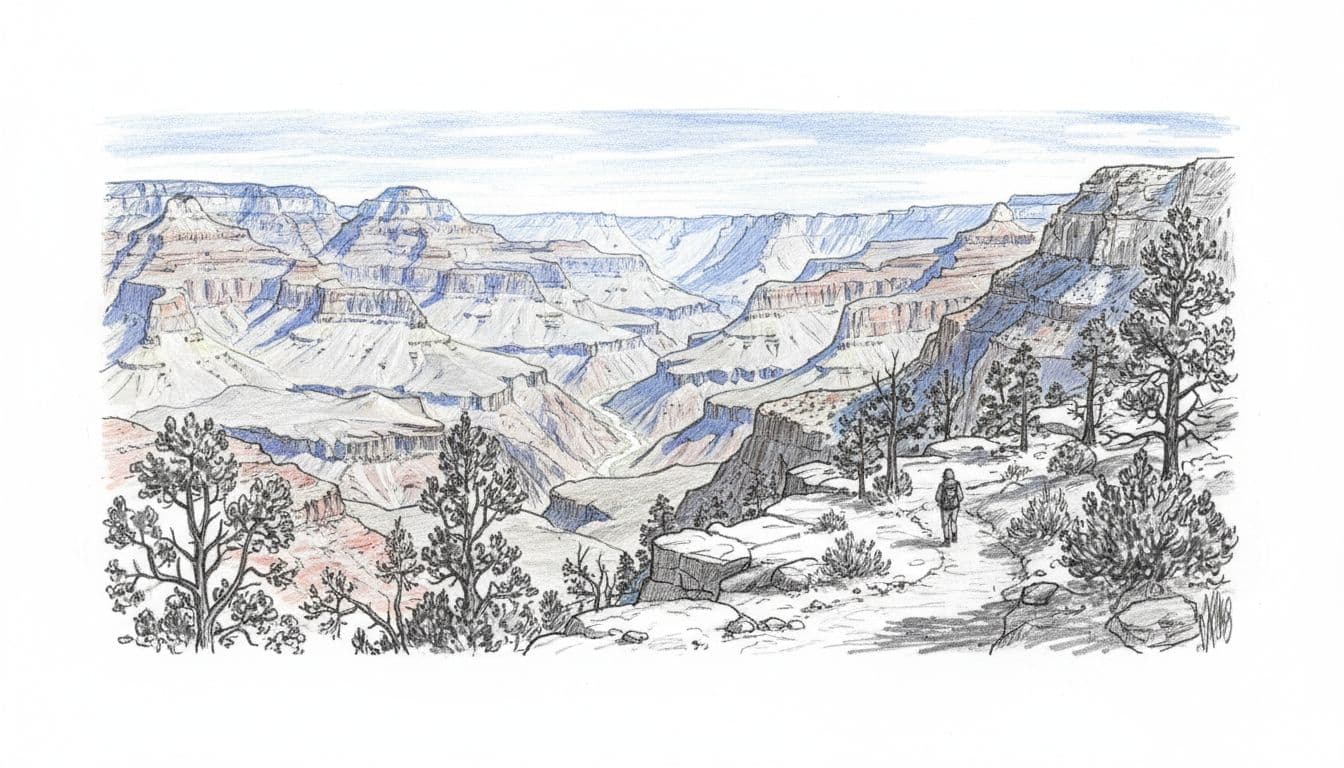
Morning: rim views first, then a mellow forest trail
I like to start with Bright Angel Point Trail and nearby rim viewpoints because you get that “I can’t believe this is real” moment before your legs even warm up, including a distant glimpse of the Colorado River. Also, morning tends to be calmer, which makes the rim feel peaceful instead of rushed.
Next, I usually send first timers onto the Transept Trail, which starts near the Grand Canyon Lodge. It’s a comfortable way to experience North Rim hiking without committing to a steep canyon climb. If you want a quick look at current conditions and recent hiker notes, I’ll often check Transept Trail on AllTrails the night before.
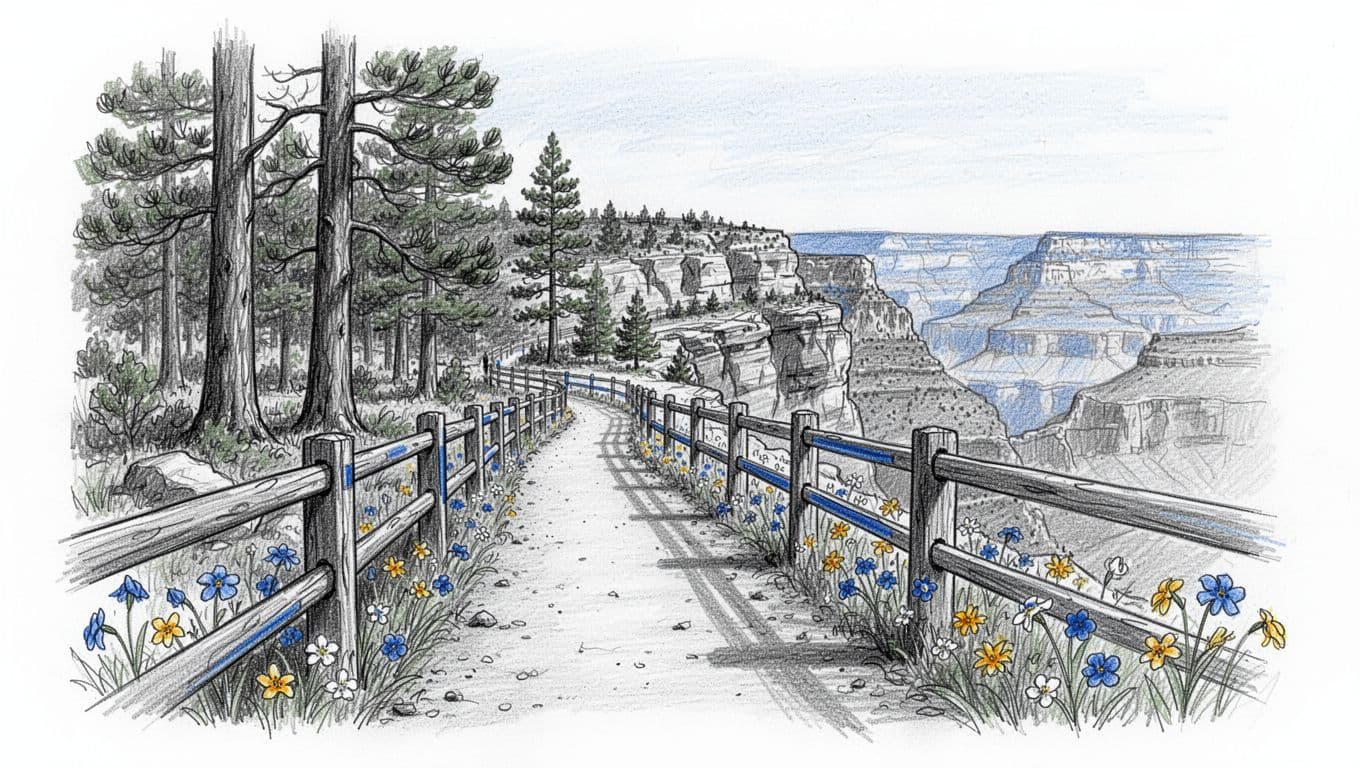
Afternoon option: “taste of the canyon” on the North Kaibab Trail (only if you feel good)
If you want to go below the rim, the safest first-timer approach is an out-and-back to a clear turnaround point on the North Kaibab Trail descending into the inner canyon, then turning around on schedule, not on vibes.
A common goal is Supai Tunnel, which is 1.7 miles from the trailhead. The key detail is the elevation change and the climb back up. I always pull the official mileages and elevations from the North Kaibab Trail PDF so I’m not guessing.
My personal rule: if you reach your turnaround later than planned, turn around anyway. The canyon doesn’t care that you “almost made it.”
Gear, water, and safety for first timers (the stuff that saves your day)
North Rim hikes in this high-altitude environment can feel cool and shady, then suddenly you’re in sun, wind, and dry air. I pack for swings, even on a “short” day.
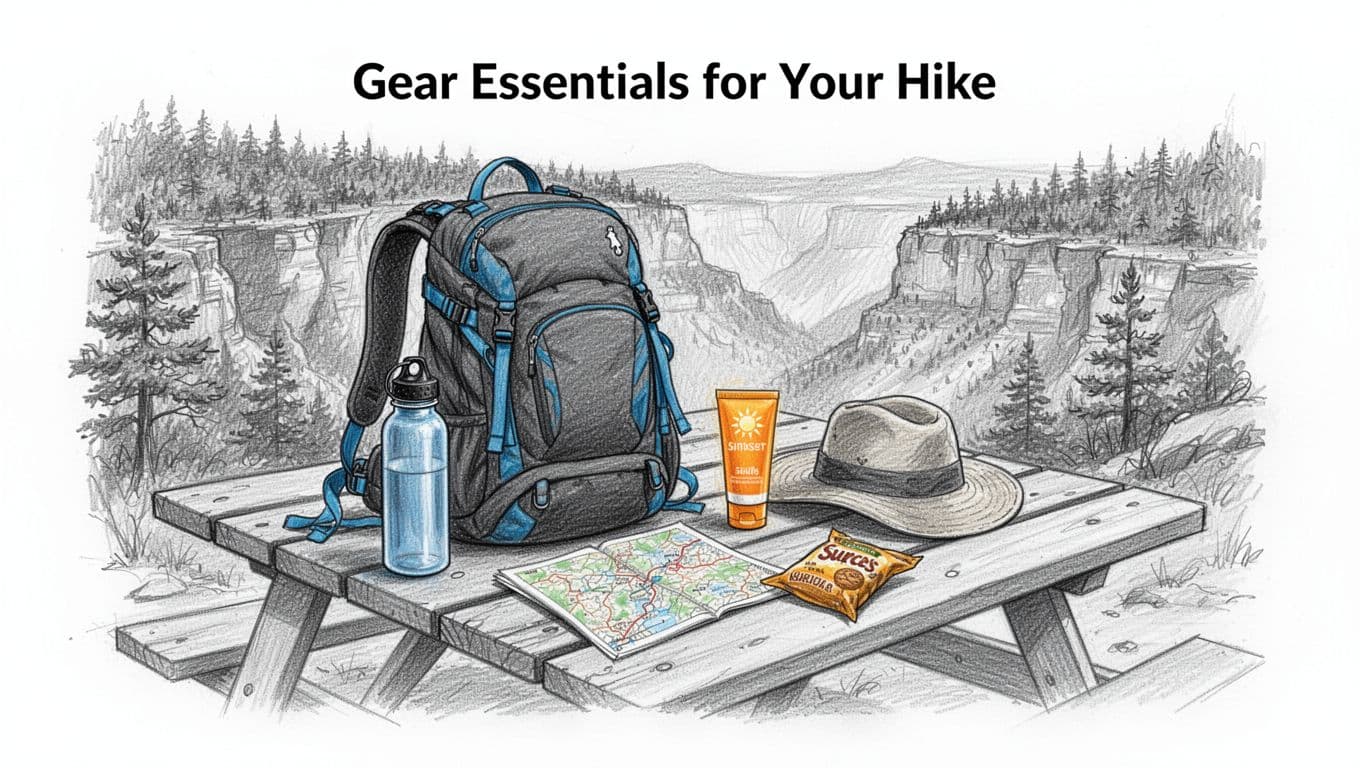
Here’s what I consider non-negotiable for grand canyon north rim hiking as a beginner:
- Water plus electrolytes: Check water availability at the trailhead (seasonal pipes can break); bring more than I think I’ll need. Dry air sneaks up on you.
- Hiking boots: Sturdy ones with good traction handle the rocky terrain and elevation changes.
- Layers: a light insulation layer and a wind layer go a long way.
- Sun protection: hat, sunglasses, sunscreen. Even when it’s cool, the sun hits hard.
- Food you’ll actually eat: salty snacks and a real lunch. Bonking out here feels awful.
- A turnaround time: set it before you start, then stick to it.
- No backcountry permit needed: This day-use plan doesn’t require one (save those for overnight stays).
Also, watch your footing near the rim. It’s obvious, yet people still step too close for a photo. I treat the edge like a sleeping bear. I respect it, and I don’t poke it. Stay alert for flash floods too, even when hiking on the rim or the upper canyon.
Conclusion
A great North Rim day isn’t about cramming in miles, it’s about stacking views like those of the Colorado River from the rim viewpoints and keeping the effort sustainable. If you follow the rim-first plan, you’ll leave feeling proud instead of wrecked. Then, if you’re still strong after lunch, you can add that short canyon descent as the bonus. Plan it well, and your first North Rim day will feel like the start of a longer obsession with Grand Canyon National Park.
FAQs
Is the Grand Canyon North Rim open in March?
Usually no. The North Rim is seasonal, and Highway 67 closes in winter. As of March 2026, it’s closed, with a tentative reopening planned for mid-May if conditions allow.
What’s the best one-day hike for first timers on the North Rim?
I’d start with rim viewpoints plus the Transept Trail. If you want to go below the rim, a short North Kaibab Trail out-and-back (with a strict turnaround time) is the most beginner-friendly way for day hiking in Grand Canyon National Park to sample the inner canyon.
Can I hike to the river and back in one day from the North Rim?
No, I wouldn’t attempt that. The park warns against rim-to-river-to-rim day hikes for most people, and rescues happen every year. Keep it conservative and enjoyable.
How much water should I bring for a one-day North Rim hike?
Enough that you never feel like you’re rationing. For most beginners, I plan for several liters across the day, plus electrolytes, because the dry air and altitude can drain you faster than expected.
Are mule rides available on the North Rim?
Mule rides are available on the North Rim, but they are more limited than on the South Rim. You can book shorter rim rides seasonally, though they don’t go down to the river like South Rim options. Always check current schedules with the park.
Are there other short trails on the North Rim?
Yes, the North Rim offers plenty of short trails for easier exploration. Options include the Cliff Springs Trail, Cape Final Trail, Roosevelt Point Trail, Widforss Trail, Uncle Jim Trail, and segments of the Arizona Trail. These provide stunning views with minimal elevation change.
What about Tuweep Toroweap?
Tuweep Toroweap offers dramatic overlooks into the canyon from a remote North Rim area, but it requires a separate backcountry permit, high-clearance 4WD vehicle, and self-sufficiency. It’s not connected to the main North Rim developed area.