Yellowstone looks simple on a map until you start driving it. One wrong turn between regions can cost half a day, because the distances are bigger than they appear.
The trick with a Yellowstone National Park map is to stop trying to cover everything. First-timers get the most out of the park by circling a few high-payoff zones and building each day around those, rather than racing the full road system. Which zones make sense depends on the season, since road access changes a lot between spring and fall.
Key takeaways
- The Lower Loop is the strongest first-day route once roads are fully open.
- Old Faithful, Grand Prismatic, and the Grand Canyon of the Yellowstone make the best first-day mix.
- Lamar Valley works best as a second-day wildlife add-on.
- In early spring, before the interior roads open, Mammoth and Lamar are the practical focus because the North Entrance road stays open year-round.
How to read a Yellowstone national park map before picking stops
Picture Yellowstone as a giant figure eight. The Grand Loop Road ties the park together in two connected circuits, an Upper Loop and a Lower Loop. The map can make stops look close together when they are not, so it helps to plan by region instead of by mileage.
A simple way to group sights is by type of experience. The Lower Loop suits most first-timers because it stacks the greatest hits fast: geysers, colorful hot springs, waterfalls, and easy boardwalk walks. The northern side of the park feels more open and wild, which makes it better for wildlife-focused days than for a quick first taste of Yellowstone’s thermal scenery.
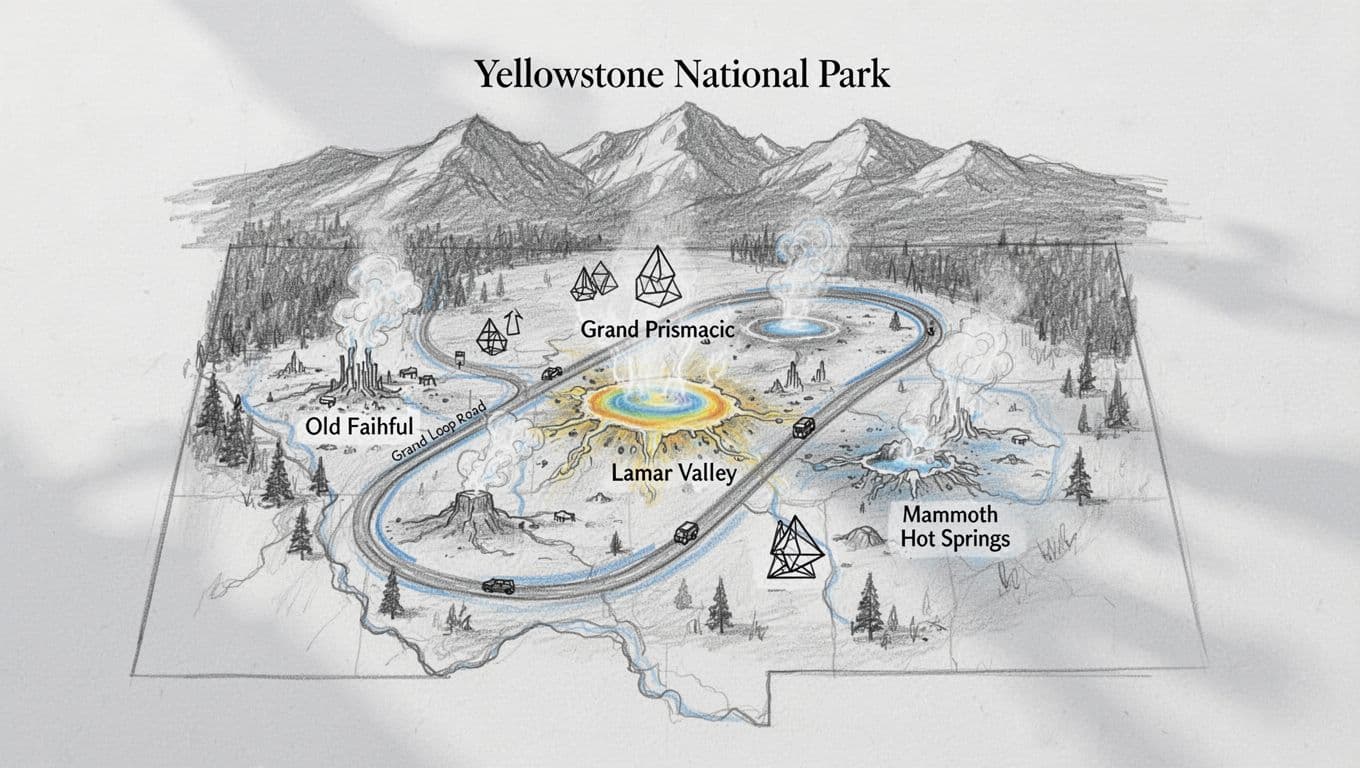
With only one day, it is better to pick one side of the figure eight and stay disciplined rather than bounce between both halves. That is the logic behind this Yellowstone one-day itinerary, which leans hard into the south and west highlights on the Lower Loop. With two days, a two-day Yellowstone itinerary spreads the big zones across separate days so the park never turns into a windshield marathon.
Yellowstone rewards focus, not mileage.
Start with the Lower Loop once roads are fully open
When all roads are open, usually from late May through September, the Lower Loop is the strongest first-day route. A good starting point is Old Faithful and the Upper Geyser Basin. It is famous for a reason. The boardwalks are beginner-friendly, the thermal features come fast, and the area feels unmistakably Yellowstone within the first few minutes. Old Faithful erupts on a fairly predictable schedule, with a median of about 102 minutes between eruptions as of early 2025, so it is worth checking the next predicted time at the Old Faithful Visitor Education Center or in the NPS app when you arrive.
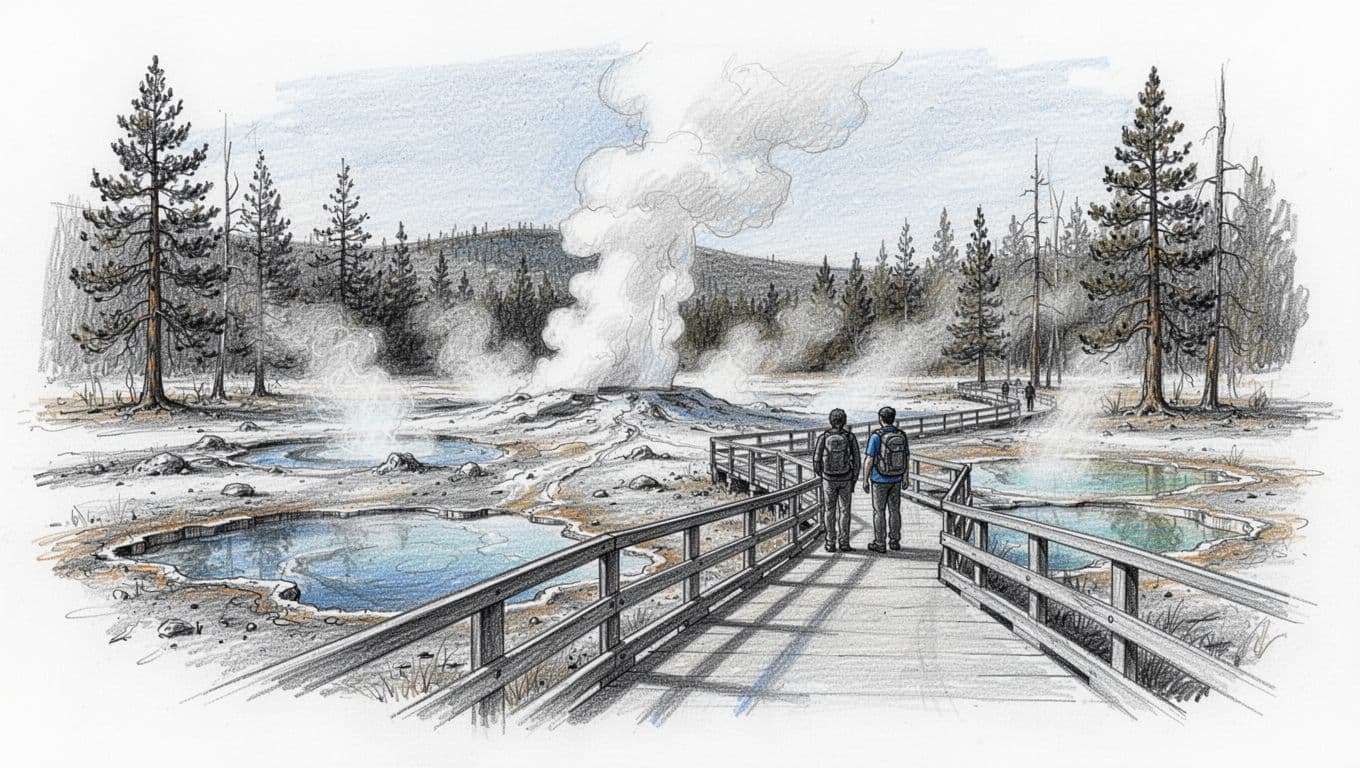
The next stop is Grand Prismatic Spring in the Midway Geyser Basin, about six miles north of Old Faithful. The boardwalk is short, flat, and high reward. If your legs feel good, add the overlook trail for the classic view down onto the spring’s rainbow bands. It is one of the best step-up options for beginners, and there are more low-stress picks like it in this guide to beginner-friendly national park hikes.
A strong way to finish the day is the Grand Canyon of the Yellowstone. This stretch rounds out the day with a different kind of payoff: less steam and color, more cliffs, river force, and big viewpoint drama. Artist Point is the easy classic for taking in the Lower Falls. The Brink of the Lower Falls trail is short but steeper, so it suits anyone with energy left in the tank.
With extra time, Hayden Valley works well as a bonus drive between the Lake area and the canyon rather than a main stop. It is a good wildlife corridor, but for a first day the signature geothermal and canyon scenery usually earns the priority. Wyoming has plenty of bigger payoffs on foot too, and this roundup of the best hikes in Wyoming covers trails beyond the boardwalks for anyone planning a longer trip.
In early spring, the north side is the map to follow
Here is the seasonal catch. Most interior roads close to regular vehicles from early November to late April, and they reopen in stages through spring. The only road open to regular vehicles year-round runs from the North Entrance at Gardiner, Montana, through the park to the Northeast Entrance near Cooke City, Montana, by way of Tower Junction. So in early spring, before the interior opens, the open-road map points north.
A natural first stop is Mammoth Hot Springs. The terraces are easy to walk, the travertine shapes feel otherworldly, and elk often wander right through the area. Access is simple and the walking is mellow, which makes it a clean early-season choice.
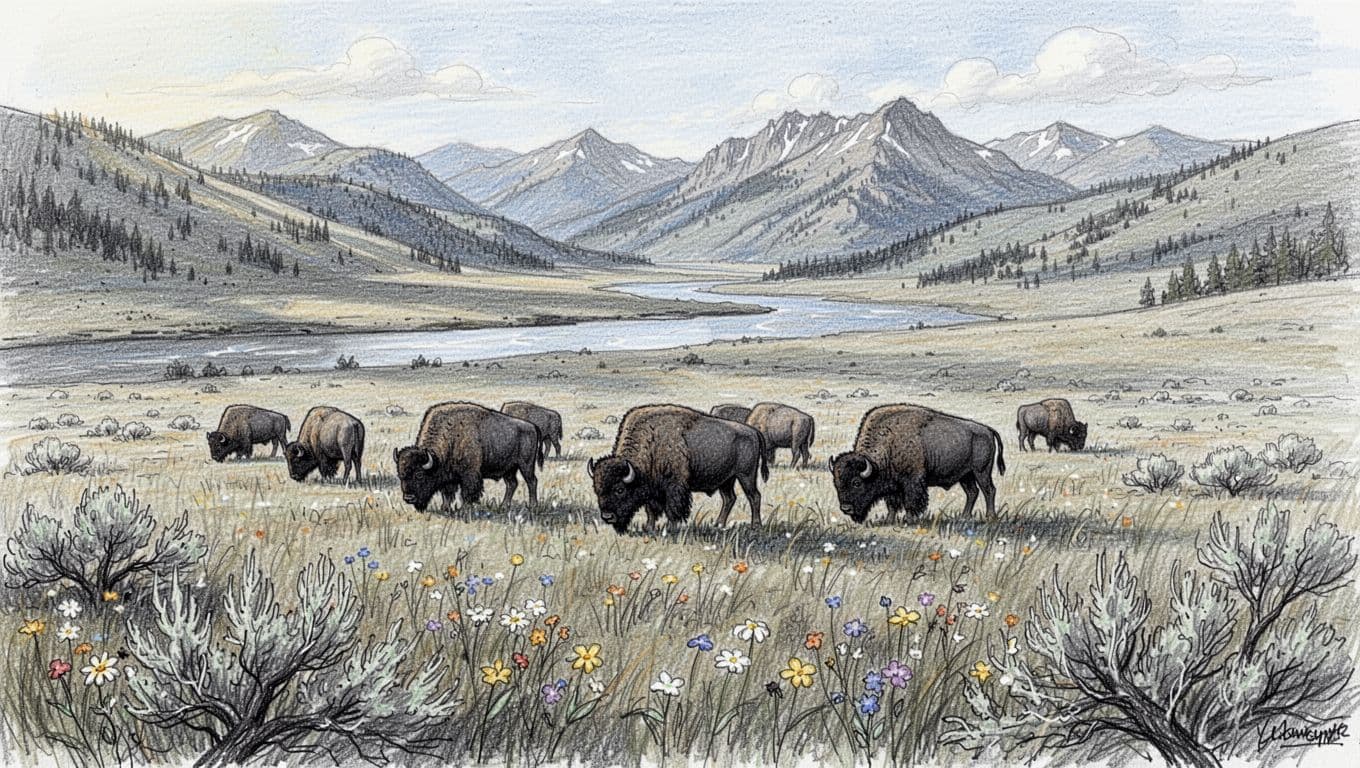
From Mammoth, the road east leads to Lamar Valley, Yellowstone’s wildlife sweet spot in spring. Bison are common, wolves are possible, and bears start moving again as the snow melts. Go early or late when animals are most active, pull over only in safe turnouts, and keep your distance. The park requires staying at least 100 yards from bears and wolves and at least 25 yards from all other wildlife, including bison and elk.
Spring also brings changeable conditions, so it pays to plan for friction. Weather can flip fast, snow can linger at higher elevations, and road work can slow things down. In 2026, for example, the interior roads reopen in stages: the West Entrance to Old Faithful and the Norris to Canyon stretch on April 17, the East Entrance over Sylvan Pass on May 1, the South Entrance roads on May 8, and the high passes at Dunraven and on the Beartooth Highway on May 22. Bridge work near Mammoth also brings single-lane traffic with delays of up to 15 minutes into late October. Dates shift with the weather, so check the live road status on the park’s road page before you drive.
Before you go
A few practical details make the map easier to use once you arrive:
- Entrance fee. A private vehicle pass is $35 and covers everyone in the car for seven consecutive days. It is good only at Yellowstone, so if you are pairing the trip with the Tetons, an America the Beautiful annual pass covers both parks and most other federal sites.
- No reservations. Yellowstone does not use timed-entry tickets or vehicle reservations, so you can arrive at any open entrance without booking an arrival window.
- Five entrances. The North (Gardiner), Northeast (Cooke City), East (Cody), South (toward Grand Teton and Jackson), and West (West Yellowstone) entrances are spread far apart, and it takes several hours to drive between them.
- Bear country. Carry bear spray and know how to use it, make noise on trails, and never approach wildlife for a photo.
- Best window. Late May through September gives the fullest road access and the widest choice of routes.
FAQs about using a Yellowstone national park map
What’s the best entrance for first-timers?
In full road season, the West Entrance sets up the Lower Loop well and puts Old Faithful within easy reach. In early spring, before the interior roads open, the North Entrance is the practical choice because its road stays open year-round.
Can you see Yellowstone’s best spots in one day?
Yes, but only with a focused plan. Choosing one zone instead of the whole park, and building the day around three anchor areas at most, makes a single day feel productive rather than rushed.
Should you plan for hiking or mostly viewpoints?
For beginners, short walks and boardwalks come first. Yellowstone is a driving park with high-payoff stops attached, so smart routing matters more than big mileage.
Do you need a paper map if you use your phone?
A paper map is still worth carrying. Cell service drops out fast inside the park, and while offline maps help, a paper map makes it easier to see the whole park at once and plan on the fly.
Does Yellowstone connect to Grand Teton?
Yes. The South Entrance road links directly to Grand Teton National Park, which makes it easy to combine the two. This Grand Teton National Park map is a useful companion for planning that side of the trip.
A good Yellowstone trip starts with focus. Circle the Lower Loop in full road season, or Mammoth and Lamar in early spring, and let go of the idea that you can do it all. That one choice saves time, cuts stress, and makes the park feel bigger in the best way.