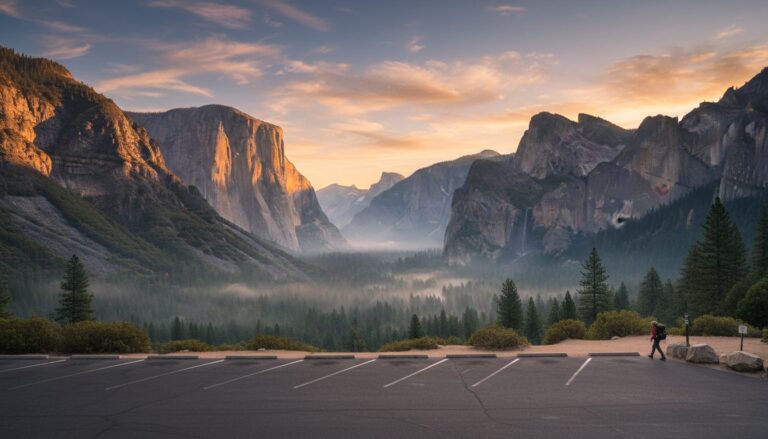
Two days is enough for a focused first Yosemite visit if the time goes to Yosemite Valley plus one bigger detour. The Valley holds most of the famous granite (El Capitan, Half Dome, Bridalveil Fall, Yosemite Falls), and a day two trip to either Glacier Point or Mariposa Grove balances out the experience.
The most important 2026 planning fact: no timed-entry reservation is required this year. NPS announced in February 2026 that the reservation system used in 2024 and 2025 has been dropped, including for peak summer and the February firefall period.
Before you go
- Entrance fee: $35 per vehicle for a 7-day pass. America the Beautiful annual pass works
- No timed-entry reservation required in 2026 (this is the headline change from prior years)
- Park is open year-round; some roads are seasonal (Tioga, Glacier Point)
- Park is cashless
- Best season: Valley waterfalls peak April through June; summer for full road access; fall for color; winter for firefall (rare conditions on Horsetail Fall) and snow
- Cell service: very limited inside the Valley and beyond; download maps before arriving
- Free in-park shuttles run year-round in Yosemite Valley
Seasonal road status
- Yosemite Valley and Wawona Road: open year-round (chains may be required in winter)
- Glacier Point Road: typically open late May through October, depending on snow
- Tioga Road (CA-120 across the high country): typically opens late May or early June, closes November
- Mariposa Grove Welcome Plaza Road: closed seasonally in winter; shuttle from the plaza to the grove runs late April through November
Check the NPS current conditions page before traveling. Tioga and Glacier Point Road dates shift year to year based on snowpack.
The two-day plan
| Day | Focus | Key stops |
|---|---|---|
| 1 | Yosemite Valley orientation + one short hike | Tunnel View, Valley Visitor Center, Lower Yosemite Fall, Cook’s Meadow, Bridalveil Fall |
| 2 | One bigger detour OR a Valley hike | Glacier Point + Sentinel Dome OR Mariposa Grove OR Mist Trail to Vernal Fall |
Day 1: Yosemite Valley
The Valley is the famous part. Drive in via Highway 41 (Wawona Road) for the dramatic Tunnel View arrival, or Highway 140 (El Portal Road) for the straightest approach from the Bay Area. Day-one stops in driving order:

- Tunnel View — drive-up overlook of the Valley with El Capitan, Half Dome, and Bridalveil Fall in one frame
- Bridalveil Fall — short paved walk (~0.5 mi RT) to the base; runs heaviest in spring
- Yosemite Valley Visitor Center — current trail and road conditions, exhibits, maps
- Lower Yosemite Fall — 1 mi paved loop; the tallest waterfall in North America (2,425 ft total drop)
- Cook’s Meadow Loop — 1 mi easy loop with the classic Half Dome view from the Valley floor
- Sentinel Bridge over the Merced at sunset for one of the most-photographed reflections of Half Dome
Park once at the Day Use Parking lot (or anywhere in the Valley) and use the free Valley shuttle to move between stops. Driving in the Valley is slower than walking or shuttling during peak season.
Day 2: pick your detour
Three strong day-two options. Pick based on the time of year, energy level, and what’s open.
Option A: Mist Trail to Vernal Fall (Valley)
The Valley’s headline day hike. 1.6 mi RT to the Vernal Fall footbridge (easy-moderate); 2.4 mi RT to the top of Vernal Fall (~1,000 ft gain, moderate, slippery from waterfall spray in spring); 5.4 mi RT continuing to the top of Nevada Fall (strenuous). Spring runoff makes the Mist Trail genuinely wet from spray.
Option B: Glacier Point + Sentinel Dome (Glacier Point Road, summer-fall)
When Glacier Point Road is open, this is the best Valley-rim day on the south side. Drive to Glacier Point (one of the iconic Valley views from above), then short side trails to Sentinel Dome (2.2 mi RT, granite dome with 360-degree views) and Taft Point (2.2 mi RT, exposed cliff-edge view).
Option C: Mariposa Grove of Giant Sequoias
The largest sequoia grove in Yosemite, near the south Wawona entrance. Park at the Mariposa Grove Welcome Plaza and take the free shuttle to the lower grove (shuttle runs late April through November). The Big Trees Loop is 0.3 mi paved and accessible; the Grizzly Giant Loop is 2 mi RT; the full Mariposa Grove Trail is ~7 mi RT for the entire grove.
Half Dome (advanced)
Half Dome is a 14 to 16-mile round-trip, ~4,800 ft of elevation gain, 10 to 12 hours typical. The cables are up from late May through the day after Columbus Day in mid-October. Permits are required by lottery via recreation.gov; the preseason lottery happens in March, with daily lotteries during the cables season. For the full breakdown of the route and a strategy for the cables, see the 5 best hikes in Yosemite.
Where to base yourself
- Inside the Valley: The Ahwahnee (historic lodge, expensive), Yosemite Valley Lodge, Curry Village (tent cabins). All book 6 to 12 months ahead
- Wawona: Wawona Hotel near the south entrance; quieter than the Valley
- El Portal: closest gateway town just outside the west entrance
- Groveland and Mariposa: larger gateway options, 30 to 60 minutes outside the Valley
- Tuolumne Meadows (summer only): Tuolumne Lodge or campground when Tioga Road is open
Pairing with related Yosemite + California content
- 5 best hikes in Yosemite — the trail picks across the park
- Yosemite National Park map guide — area-by-area orientation
- Yosemite Valley day hikes — Valley-specific trail breakdown
- How to avoid crowds in Yosemite — timing and quieter trails
- Best time to visit Yosemite — month-by-month breakdown
- Yosemite with kids — family-friendly options
Frequently asked questions
Do I need a reservation to enter Yosemite in 2026?
No. NPS announced in February 2026 that Yosemite will not use a timed-entry reservation system in 2026, including during peak summer and the February firefall period. A standard $35/vehicle entrance pass is all that’s required.
Is two days enough?
For the iconic experiences, yes: day one in the Valley plus day two on Glacier Point Road, Mariposa Grove, or the Mist Trail. Three days lets you add a Tuolumne Meadows day (summer-fall) or a longer hike like Sentinel Dome plus Taft Point. A week gives space for Half Dome or quieter Wawona-area trails.
What if I’m visiting in early spring?
Glacier Point Road and Tioga Road are usually closed through late May. The Valley remains accessible year-round, and waterfalls run at peak flow in April through June from snowmelt, so spring is actually one of the best times to see Yosemite Falls and Bridalveil. Plan day two as either Mariposa Grove (open year-round once the shuttle starts) or the Mist Trail.
How does the Half Dome permit work?
Permits are required to climb the cables. There’s a preseason lottery in March (apply on recreation.gov; $10 to apply, $10 more if awarded) and daily lotteries during cables season. About 300 permits per day, 225 for day hikers and 75 for backpackers.
Should I drive or use the shuttle?
Park once and shuttle in the Valley. The free in-park shuttle runs year-round through the Valley and handles most stops between visitor center, lodge, Curry Village, Lower Yosemite Fall, and other major points. Driving and re-parking at each stop is slower in peak season.