My Favorite Death Valley National Park One-Day Itinerary for First-Timers

You can see a lot of Death Valley National Park in one day, but only if you stop trying to see all of it. Death Valley National Park, the hottest place on Earth, is huge, the driving is longer than it looks, and first-timers usually lose time by stacking too many detours into one day.

If you ask me, the best Death Valley itinerary for a first visit is simple and designed for efficiency: hit the big paved highlights, protect the cool hours, and save your longest scenic stop for sunset. That’s the route I’d use with any friend who’d never been before.

Key takeaways:

  • Start as early as you can, sunrise is the sweet spot.
  • Focus on zabriskie point, badwater basin, artists drive, and mesquite flat sand dunes.
  • Keep midday for short walks, food, water, and air-conditioning.
  • Skip remote or closed roads on your first trip.

Before you go, plan around heat and closures

Death Valley National Park is not a park I’d wing. As of May 2026, Titus Canyon Road, Darwin Falls Road, and Lower Wildrose Road are closed, while South Badwater Road is open but needs extra care in places. While most of this route is paved, some side roads might require a high-clearance vehicle. The night before your trip, check the official park conditions page and look again that morning.

May can already push past 110F, so keep that in mind. This one-day plan works best from late fall through early spring. If you’re planning a winter visit to Death Valley National Park, my Death Valley winter hiking guide will help you dial in timing and layers.

In Death Valley, a short walk at 8 a.m. can feel easy. The same walk at 1 p.m. can feel like a bad idea.

I’d also top off gas before entering the park, purchase a national park pass online or at the gate, carry more water than you think you’ll need, and download an offline map. Cell service is unreliable throughout the park, and this place does not care if your phone is at 7 percent.

My go-to one-day route for first-timers

This is the pacing I recommend most often for a Death Valley itinerary in Death Valley National Park.

TimeStopWhy it works
SunriseZabriskie PointBest light, quick payoff
8:00 a.m.Furnace Creek Visitor CenterMaps, water, updates
9:00 a.m.Badwater BasinCooler, less harsh
10:30 a.m.Artists DriveEasy scenic loop
MiddayStovepipe WellsLunch and break, avoid worst heat
Late dayMesquite Flat Sand DunesBest for sunset

That route keeps you on the main paved corridor in Death Valley National Park and puts the most exposed stop before the day gets rough.

Sunrise through late morning

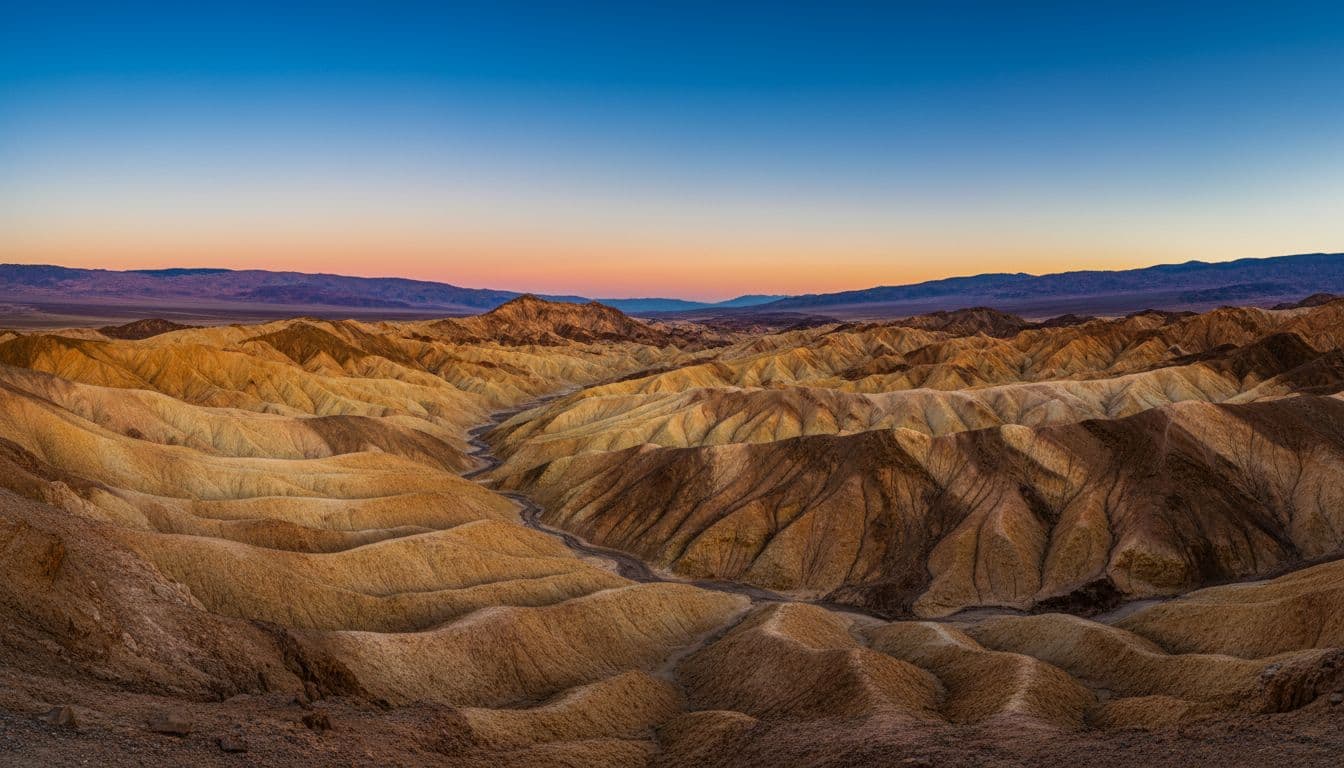
Start at Zabriskie Point. For a first-timer, it’s hard to beat. The badlands catch low light beautifully, parking is easy if you’re early, and the payoff comes fast. Nearby, Twenty Mule Team Canyon offers a similar quick overlook if you want a bit more variety. If sunrise matters most to you, I like the pacing in Indigo Sahara’s sunrise-heavy itinerary, even if I’d still keep the rest of the day a bit tighter.

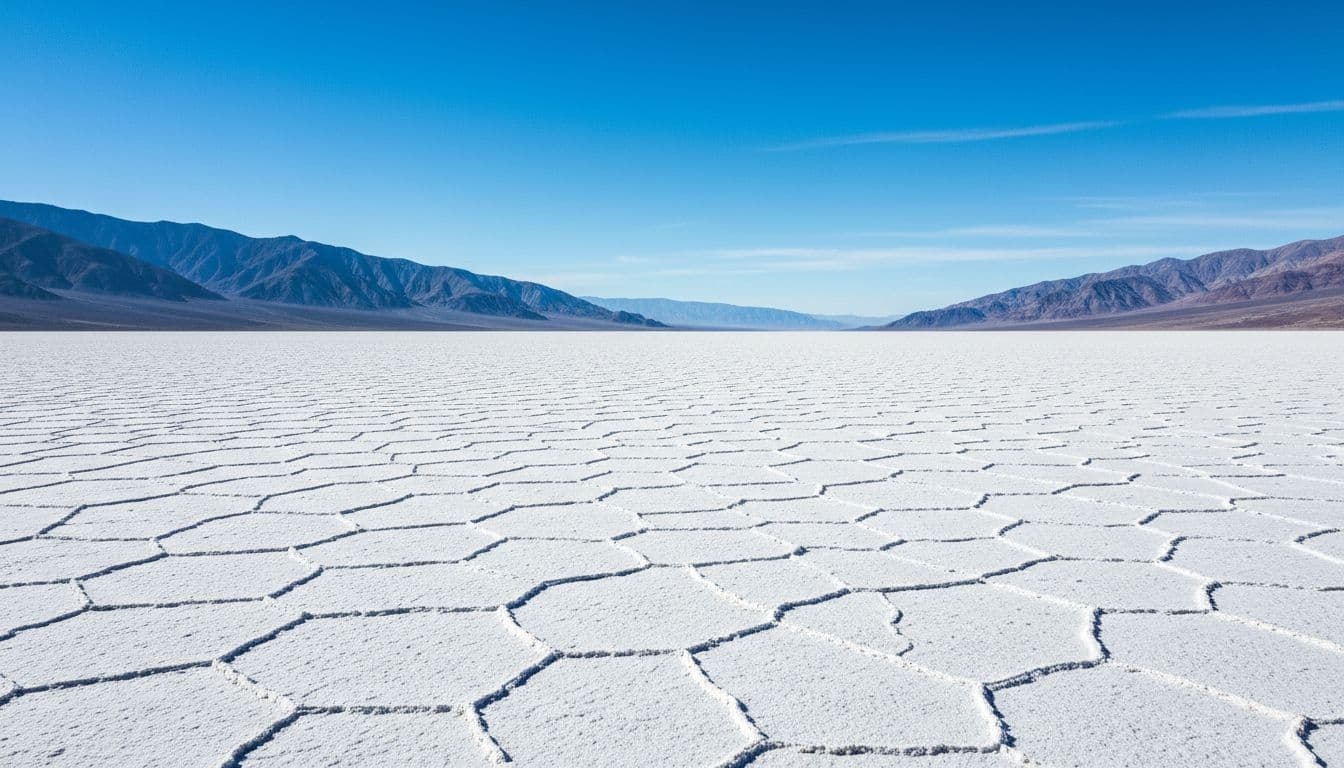
From there, stop at Furnace Creek Visitor Center. Use it for bathrooms, water, maps, and any last-minute road updates. Then head straight to Badwater Basin, the lowest point in North America. Walk out far enough to leave the parking lot behind, but don’t turn it into an endurance test, since the vast salt flats can feel endless under the sun. For most first-timers, 15 to 25 minutes on the salt flats is enough. If you prefer a hiking trail in the morning, try Golden Canyon, which leads to the striking Red Cathedral.

Vast cracked white salt flats stretch to rugged black mountains under midday sun.Pin

On the drive back north, take Artists Drive. This is one of those rare scenic drives that’s worth the small detour every single time. Artists Palette gives you those strange green, pink, and rust-colored hills with almost no effort. Along Artists Drive, Artists Palette stands out again with its vibrant mineral streaks. If you’ve still got energy, Devil’s Golf Course is an easy add-on, but I wouldn’t force it.

Mineral-streaked hills in reds, pinks, greens, and yellows line a winding road in Death Valley under clear sky.Pin

Afternoon and sunset

Midday is when I stop pretending I need more sights. Grab food, refill water, cool off, and reset. Furnace Creek works well for this, and Stovepipe Wells can work too depending on your direction.

For late afternoon, I head to Mesquite Flat Sand Dunes. This is my favorite sunset stop for beginners because it feels big, dramatic, and fun without requiring a full hike. You can wander a little or a lot. Either way, the light gets better by the minute in Death Valley National Park.

If your route takes you back east, Zabriskie Point is also excellent near the end of the day. The one-day route from Where Are Those Morgans is a good example of how to flip the order if you’re exiting in that direction for your Death Valley itinerary.

Eroded undulating hills in warm orange-yellow-brown tones against vivid blue sky from overlook.Pin

What I’d skip on a first visit

I would not cram in everything with a famous name in Death Valley National Park. That’s how a good day turns rushed.

If you only have one day, skip the longer detours and closed-road temptations. Titus Canyon is closed anyway, Darwin Falls Road is closed, Lower Wildrose is out too, Dantes View and Ubehebe Crater are best saved for longer trips. Dantes View is beautiful, but it can eat time if you’re already trying to fit Badwater, the scenic drive of Artist’s Drive, and the dunes into one day.

If you’re arriving late from Las Vegas, be mindful of the drive time and trim the plan instead of speeding through it. A compact northbound day plan can help if you need a slightly different order. My rule is simple: fewer stops, better light, less stress.

Final thoughts

If I only had one day in Death Valley National Park, this is still the route I’d pick. It gives you the park’s biggest textures, best light, and easiest wins without turning the day into a marathon.

That’s what a smart Death Valley itinerary should do. Not prove how much ground you can cover, but help you leave feeling like you actually saw the place.

Death Valley National Park is also an international dark sky park, making it perfect for stargazing if you stay past sunset.

FAQ

Can I do Death Valley in one day from Las Vegas?

Yes, but it’s a long day. Death Valley National Park is about 120 miles from Las Vegas, so I’d leave before dawn, expect a late return, and keep the itinerary tight. If you can overnight near the park, your day gets much better.

Do I need a 4WD vehicle for this itinerary?

No. This route sticks to the main paved highlights. A standard car is fine for Zabriskie Point, Furnace Creek Visitor Center, Dantes View, Badwater Basin (the lowest point in North America), Artist’s Drive, Mesquite Flat Sand Dunes near Stovepipe Wells, and Ubehebe Crater.

What are some top short hikes in Death Valley?

Top short hikes include the Golden Canyon hiking trail, Mosaic Canyon, and the easy Harmony Borax Works hiking trail. Harmony Borax Works provides a quick, family-friendly path through historic borax ruins.

What should I pack for one day in Death Valley?

Bring lots of water, salty snacks, sun protection, a full tank of gas, and an offline map. In winter, add layers. In warm months, I’d also keep walks short and stay honest about the heat.

Similar Posts

Leave a Reply

Your email address will not be published. Required fields are marked *