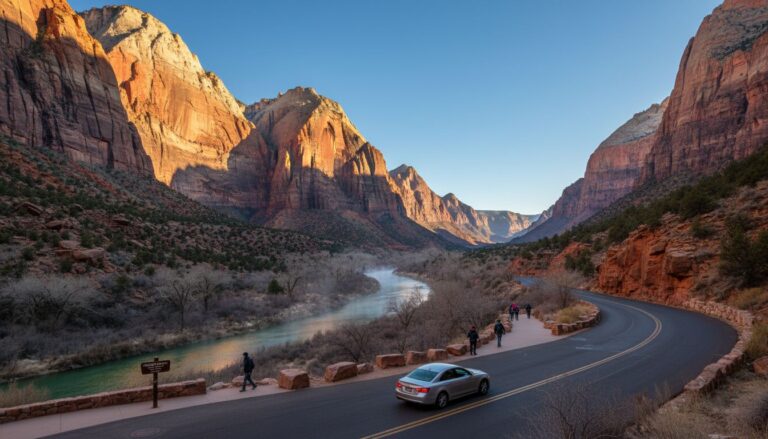
The Grand Canyon National Park doesn’t care how fit you are, it cares how well you plan. Most first-timers pick a trail based on distance, then get surprised by the uphill grind back to the rim. My fix is simple: I build every day hike around a turnaround time, not a destination.
In this guide, I’ll give you realistic time plans for popular Grand Canyon South Rim hikes, plus the rules I use to keep the day fun instead of frantic.
Key takeaways (read this, then choose a hike):
- Plan for the uphill, even on “easy” routes, because the return is the hard part.
- Pick a turnaround time before you start, then stick to it.
- Start earlier than you think, especially during spring and fall.
- Water and shade aren’t equal on every South Rim corridor, so match the trail to the weather.
- Build in buffers for shuttle waits, viewpoints, and snack stops.
My timing rules for South Rim day hikes (so you finish smiling)
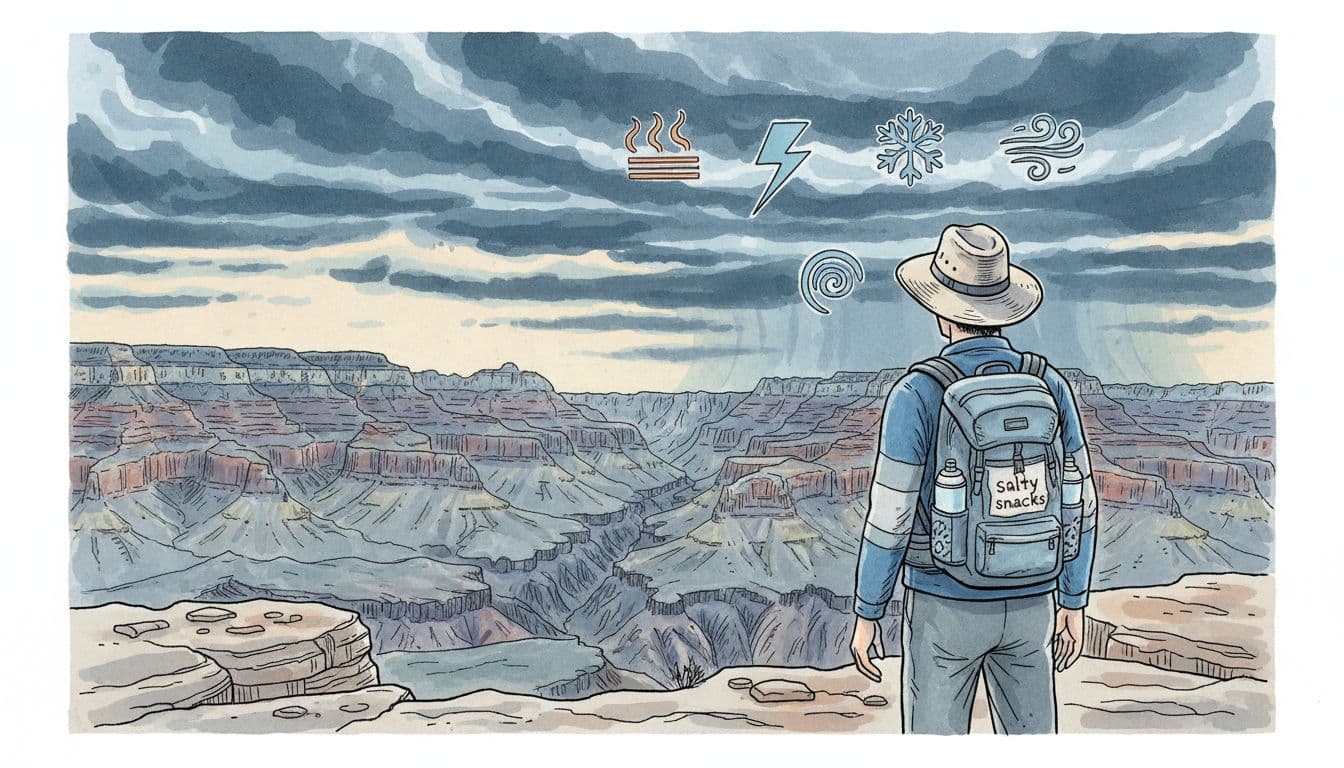
First, I anchor my plan to official guidance, then I adjust for my pace, the day’s conditions, and by carrying the ten essentials. The National Park Service lays out the big picture well on their page about Grand Canyon day hiking advice. After that, I focus on three practical rules.
Rule 1: Down is faster, up is the schedule.
Going down can feel effortless. Coming back up feels like hiking a stairwell for miles. So I budget more time for the climb than the descent, particularly to manage the elevation gain during the return trip.
Rule 2: Turnaround time beats peak goals.
I decide when I must turn around (based on heat, daylight, and energy), so my hiking time is dictated by a turnaround clock rather than a physical landmark. Then I hike until that time. Some days I reach the landmark. Other days I don’t, and it’s still a win.
If you only follow one rule, follow this: the canyon is optional, the climb out is required.
Rule 3: Add buffers like you mean it.
On the South Rim, little delays stack up. Shuttle waits, bathroom stops, photo breaks, and crowded pinch points all cost time. I usually add 30 to 60 minutes of “life happens” margin to any plan.
Easy to moderate Grand Canyon South Rim hikes (with time plans you can actually follow)
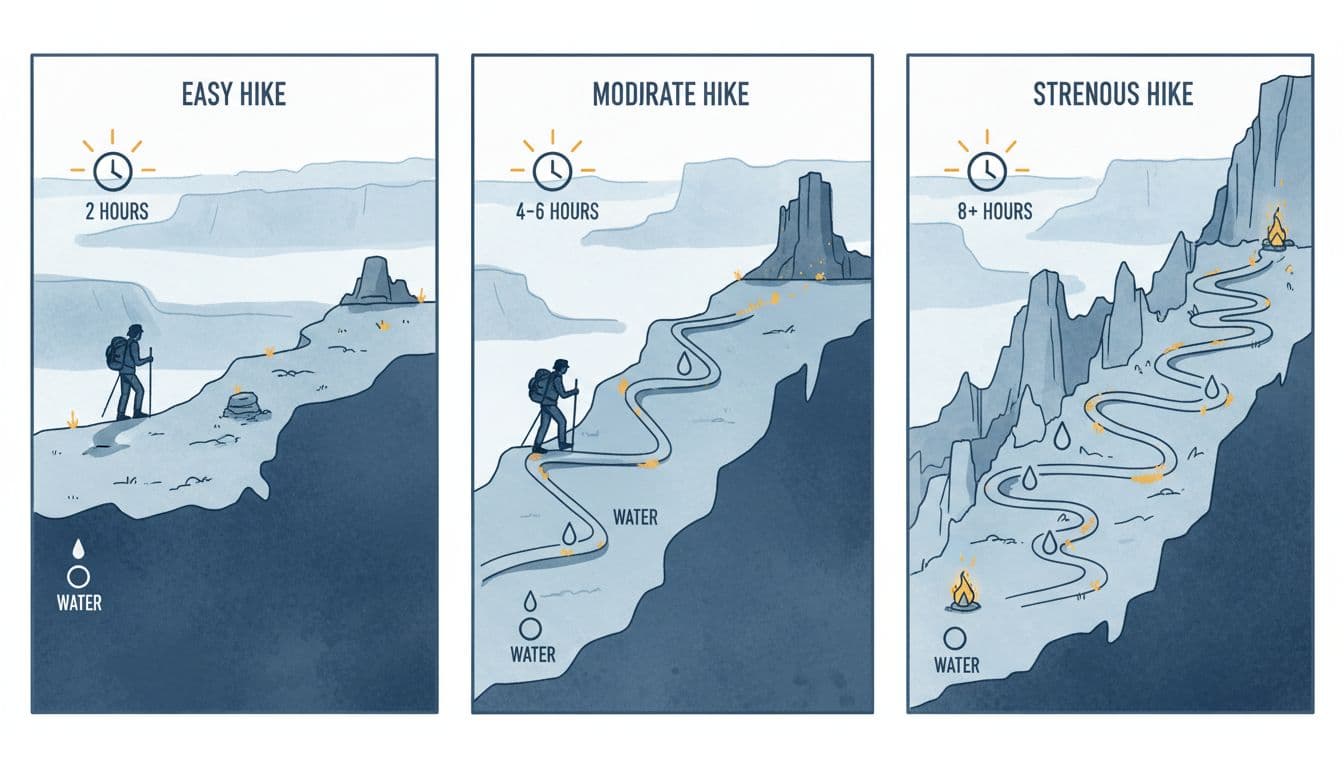
For beginners, my favorite South Rim hikes in Grand Canyon National Park are the ones with clean logistics and clear “good enough” endpoints. You get huge views without gambling your day on a big climb.
Here’s the way I time four classic options. Treat these as realistic ranges for most people who stop for photos and short breaks.
A quick reference to compare plans:
| Hike (South Rim) | Typical on-trail time | Start time I like | Turnaround rule | Why it works |
|---|---|---|---|---|
| rim trail viewpoint stroll (paved sections) | 1 to 2.5 hours | Any time (sunrise is best) | Turn when you’re done | Minimal elevation change, easy to scale |
| Bright Angel Trail to 1.5 Mile Resthouse (round trip) | 2.5 to 4 hours | 7:00 to 9:00 am | Turn by halfway point time | Reliable “taste of the canyon” climb back |
| South Kaibab Trail to Ooh Ahh Point (round trip) | 1.5 to 3 hours | 6:30 to 9:00 am | Turn when wind or sun ramps up | Fast payoff, but exposed |
| South Kaibab Trail to Cedar Ridge (out and back) | 3 to 5 hours | 6:00 to 8:00 am | Turn no later than late morning | Bigger views, stronger legs required |
The takeaway is simple: Bright Angel Trail is the friendliest training hike, because the grade is consistent and you’ll feel the climb early. Stops like the 1.5 mile resthouse and 3 mile resthouse are great milestones for gauging progress. South Kaibab Trail has a faster “wow” factor, but it’s more exposed, and the descent can trick you into going too far.
If you’re trying to fit hiking into a packed sightseeing day, I like the planning approach in this one-day South Rim itinerary. I still prioritize the early hike, then I drive viewpoints later.
Strenuous South Rim day hikes (and the turnaround times I won’t break)
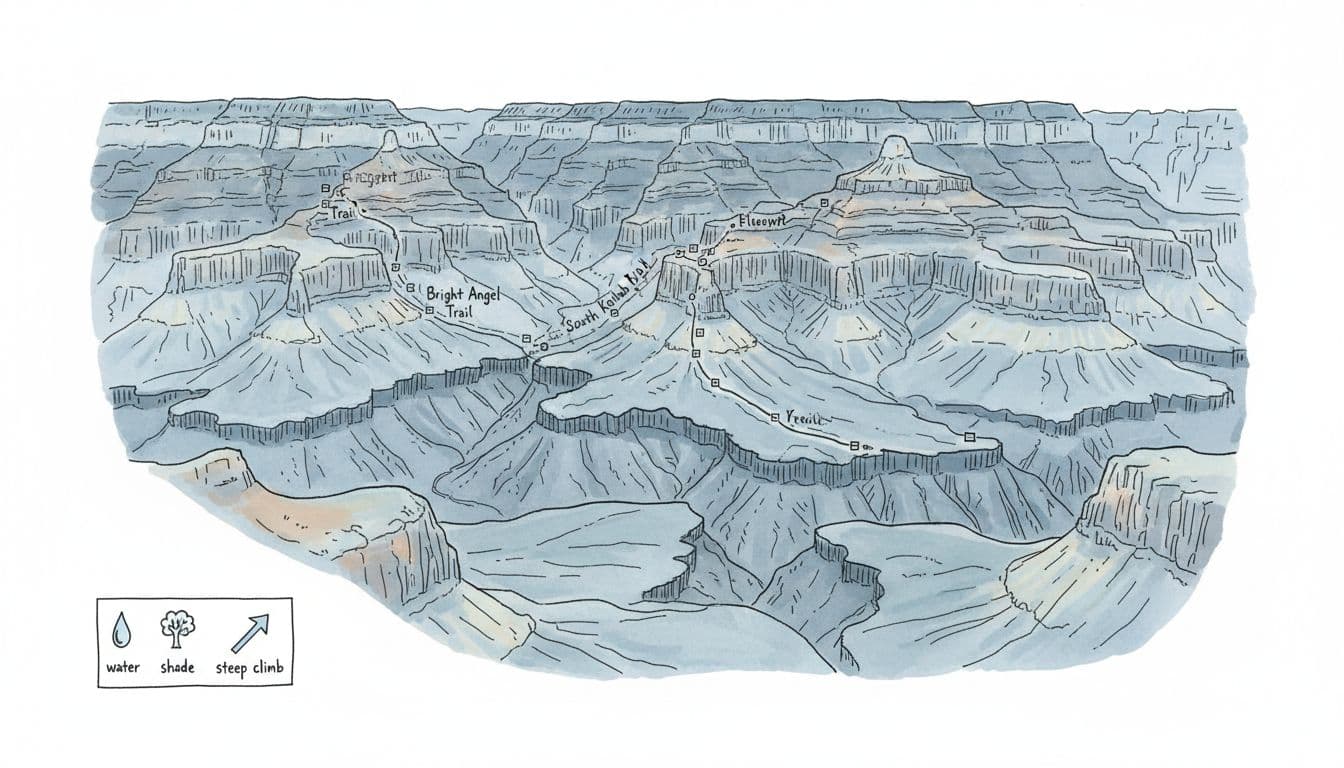
Some Grand Canyon South Rim hikes, often attempted by those seeking a rim to river experience, look reasonable on paper, then they stretch into an all-day suffer-fest. I’m not against hard days; I just want you to choose them on purpose.
South Kaibab Trail to Skeleton Point (out and back) is a legit “big day” for many hikers. The trail is steep, exposed, and dry. While the Colorado River is visible from here, it is rarely a safe round trip for a single day hike. If I’m doing it as a day hike, I like wheels moving early, often around 5:30 to 6:30 am. I also set a firm turnaround, usually late morning at the latest, because that climb to the rim in afternoon heat can get ugly fast.
Bright Angel to Havasupai Garden and back is another classic. It’s longer, but it has more shade and more infrastructure than South Kaibab. A side trip to Plateau Point from Havasupai Garden adds significant hiking time. Still, the final miles up can feel endless when your legs are cooked. Reaching Phantom Ranch is generally not recommended for South Rim day hikes due to the extreme heat and desert hiking conditions.
The “monster” day is combining South Kaibab down and Bright Angel up. If you want a detailed breakdown of that plan, see this guide to South Kaibab and Bright Angel in one day. Before you commit, it also helps to read a reality check on pacing and effort like how long it takes to hike the Grand Canyon.
My honest filter is this: if you can’t describe your water plan, your food plan, and your turnaround time in one sentence each, pick a shorter hike.
Conclusion: the best plan is the one you’ll finish
Grand Canyon day hikes are like cooking with a timer, not a mood. When I plan realistic time windows, I hike calmer and enjoy the views more. The South Rim offers variety for all levels, so pick one of these Grand Canyon South Rim hikes, start early, and protect your turnaround time. Pack the ten essentials before leaving the trailhead. You’ll earn the canyon, and you’ll keep it fun.
FAQs about South Rim day hiking time plans
What’s the best start time for a South Rim day hike?
I start at sunrise when I can, especially in warmer months. Earlier starts buy you cooler temps on the rim trail and lighter crowds.
Can I day hike below the rim if I’m a beginner?
Yes, as long as you keep it short and treat the climb back like the main event. Bright Angel to the 1.5 Mile Resthouse is a common first “below the rim” goal.
Are there other trails for experienced hikers?
Experienced hikers in Grand Canyon National Park might look at the Hermit Trail or the Grandview Trail. For instance, the Grandview Trail leads to Horseshoe Mesa, while the Hermit Trail offers steeper challenges, but always check with the Backcountry Information Center first.
Do I need to ride a shuttle bus for South Kaibab?
Often, yes, since parking at the trailhead is limited and restrictions can change. I always confirm the current shuttle situation before I go.
How much water should I carry?
Enough to cover the whole hike if water sources are off or lines are long. During the summer months, some trailhead taps are the only reliable water sources. I plan for steady sipping and bring salty snacks so the water actually helps.