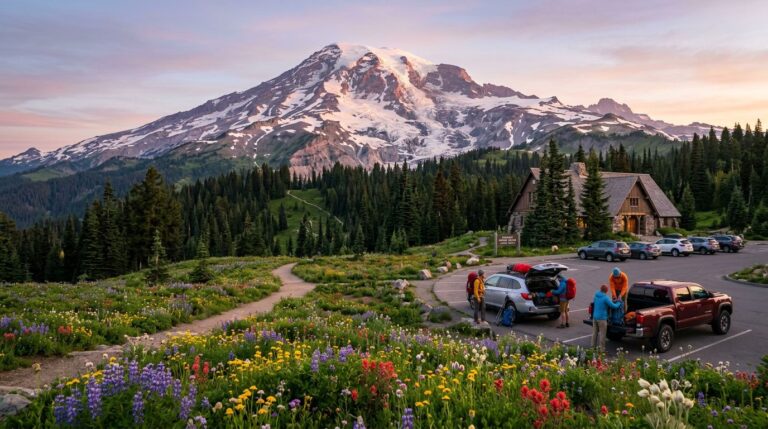
If you’re visiting from Jackson Hole and want Grand Teton day hikes to feel smooth, the secret isn’t picking the “best” hiking trails. It’s getting your timing right so you’re not circling parking lots, hiking in peak heat, or racing sunset back to the car.
I plan Grand Teton days like I plan flights: I build a simple schedule, then I protect the early hours like they’re non-refundable (and perfect for spotting moose). Once you do that, even the famous trails feel calmer.
One quick reality check since it’s March 2026: most classic hikes are still in winter mode right now in Grand Teton National Park. Many trails hold snow and ice, and some roads (like Teton Park Road) typically don’t open until late April or May. Use this post as your spring and summer playbook, and always confirm current conditions on the NPS hiking page for Grand Teton.
Key takeaways (so you can plan fast):
- Arrive early on purpose: for the busiest trailheads, I plan to park by 6:30 to 7:30 am in peak season.
- Hike in two halves: a cool, quiet morning push, then an earlier return to beat heat and weather.
- Pick a “Plan B” trailhead before you drive, so a full lot doesn’t wreck your day.
- Turnaround times beat goals: I choose a time to turn around, even if the summit is close.
My simple “5:00 am to 6:00 pm” timing template for Grand Teton National Park day hikes (it works on almost every hike)
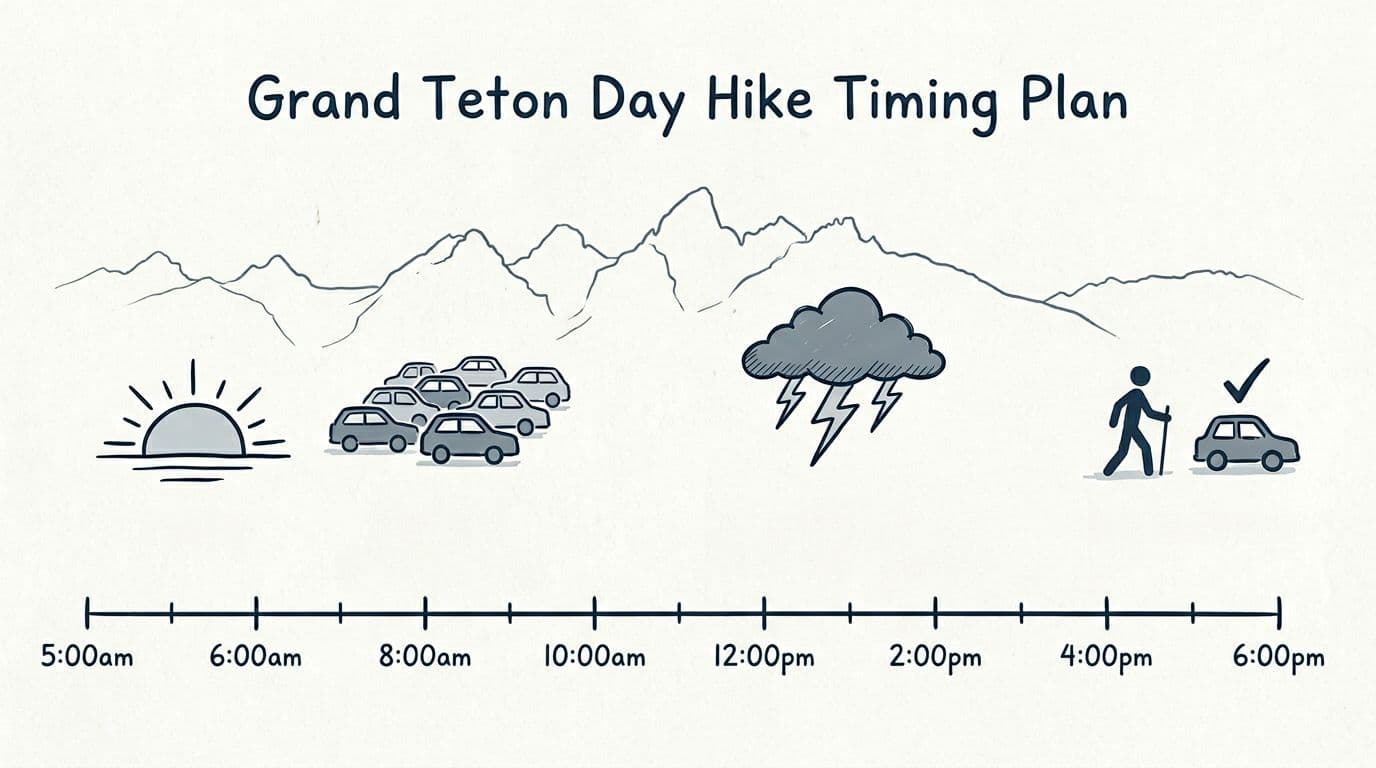
This is my default day-hike shape in Grand Teton National Park. I don’t always wake up at 5:00 am, but I plan like I might. That early buffer saves the whole day.
Here’s the idea: trailhead parking and trail traffic build fast, while the safest, nicest hiking usually happens earlier. In summer, afternoon weather can also get sporty, especially if you’re higher up and exposed. Even on mellow trails, I like being on my way back before the afternoon feels rushed.
My template looks like this:
- Pre-dawn to early morning: drive, park, eat something simple, start moving.
- Mid-morning: reach your main payoff (lake, viewpoint, wildflowers, canyon), take a real break.
- Late morning to early afternoon: head down or cruise easy terrain back.
- Mid-afternoon: you’re back at the car, then you can pivot to a scenic drive or a short walk.
My rule: if a hike is popular, I’d rather start “too early” and finish happy than start late and negotiate every foot of trail.
Two seasonal notes that matter. First, March is winter here. Snow travel skills and traction gear are often required, plus access can be limited (and shuttle services don’t typically run this time of year). Second, road and trail access changes every spring, so I always check updates right before I commit, starting with the National Park Service hiking guidance.
Trailhead timing plans for the busiest day hikes in Grand Teton National Park (Taggart Lake, Jenny Lake, Lupine Meadows)
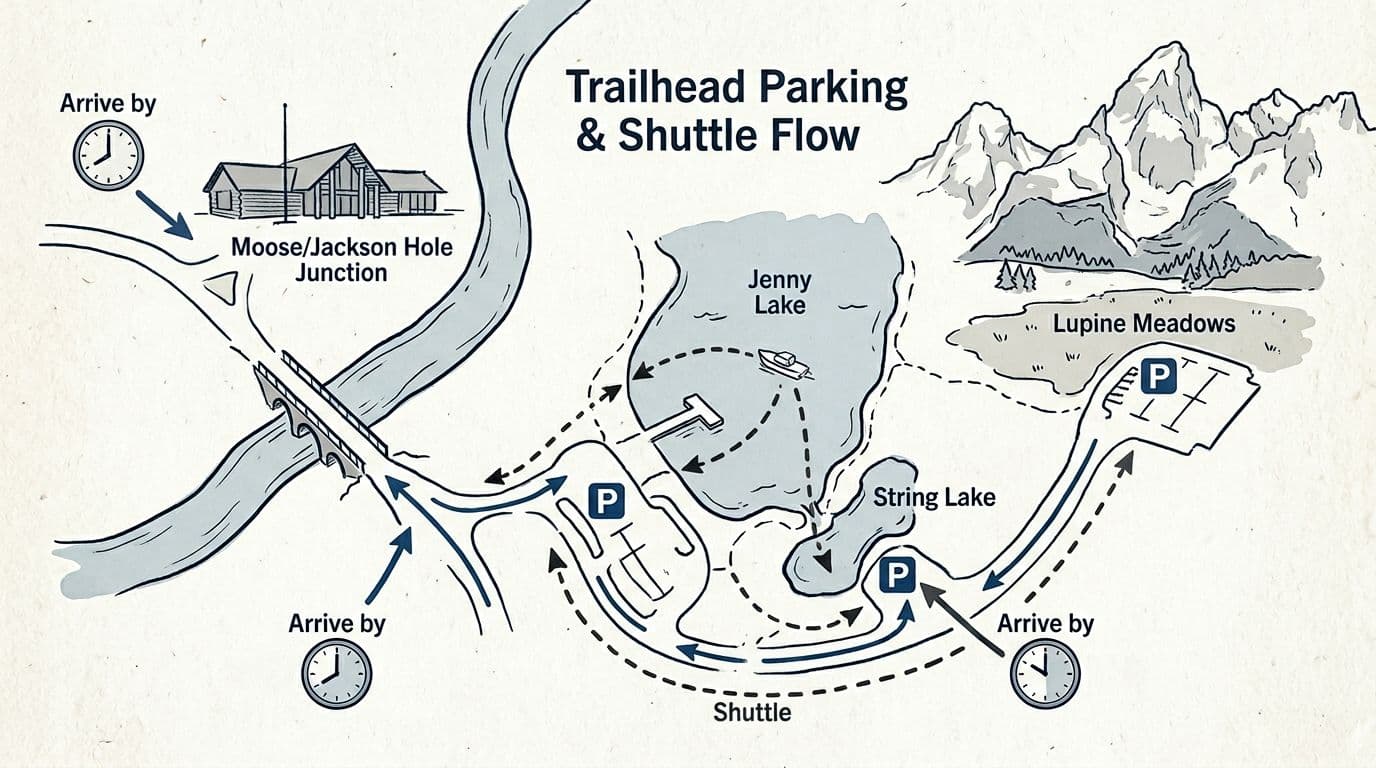
When people say “Grand Teton National Park day hikes are crowded,” they usually mean the same few trailheads. The good news is you can plan around that, even as a beginner.
Before the specific plans, here’s the quick reference I use. Times assume peak summer demand and good hiking conditions.
| Hike area | My “park by” target | Why it matters | What I do if it’s full |
|---|---|---|---|
| Taggart Lake (Taggart Lake TH) | 7:00 am | Small lot, very popular for alpine lakes | Shift to nearby Bradley Lake or a lower-commitment lake walk |
| Jenny Lake (Jenny Lake area) | 6:30 am | Parking pressure builds early | Start at nearby String Lake trailhead instead |
| Delta Lake (Lupine Meadows) | 6:00 am | Limited parking, big social-media pull | Choose quieter Amphitheater Lake or a canyon hike like Cascade Canyon |
1) Taggart Lake (beginner-friendly, classic views)
If I’m taking someone newer to hiking, Taggart Lake is an easy win when it’s snow-free. I plan to park by 7:00 am so we start walking before the trail turns into a parade. Once I’m hiking, I keep the pace comfortable and take short breaks early, because that’s when beginners feel strongest. For a bit more adventure, I extend to the Taggart Lake and Bradley Lake loop.
My simple plan: arrive, start hiking within 15 minutes, reach the lake mid-morning on the classic 3.5-mile round trip, then head back before lunch. If you show up later and the lot is jammed, I don’t spiral. I pivot to another nearby low-stress option and save Taggart Lake for another morning.
2) Jenny Lake to Hidden Falls and Inspiration Point (best “big reward” for effort)
This zone gets busy for a reason. It’s beautiful, and it stacks rewards fast as a gateway to Cascade Canyon. I try to park by 6:30 am in peak season in Grand Teton National Park. If seasonal shuttle boat service is running (typically summer), it can speed things up across Jenny Lake, but it also adds another timing variable. I prefer hiking early and treating any shuttle boat or boat as a bonus, not the foundation of my plan, especially with the path to Hidden Falls and deeper into Cascade Canyon toward Lake Solitude.
3) Delta Lake via Lupine Meadows (steeper, more serious day hike)
This is where timing stops being “nice” and becomes “necessary.” I plan to park by 6:00 am and get moving quickly. The strenuous hike features real elevation gain, and the descent can feel long if you start late. Amphitheater Lake shares the same Lupine Meadows trailhead for similar vibes with less hype. I also keep a hard turnaround time, because fatigue plus afternoon weather is a bad combo.
If I’m not at my high point by late morning, I turn around. Photos are great, but finishing strong is better.
For more trail ideas to match your fitness level, I like scanning Earth Trekkers’ Grand Teton day hike list to sanity-check options before I commit.
Backup trailheads, safety, and what I pack (so timing doesn’t fall apart)
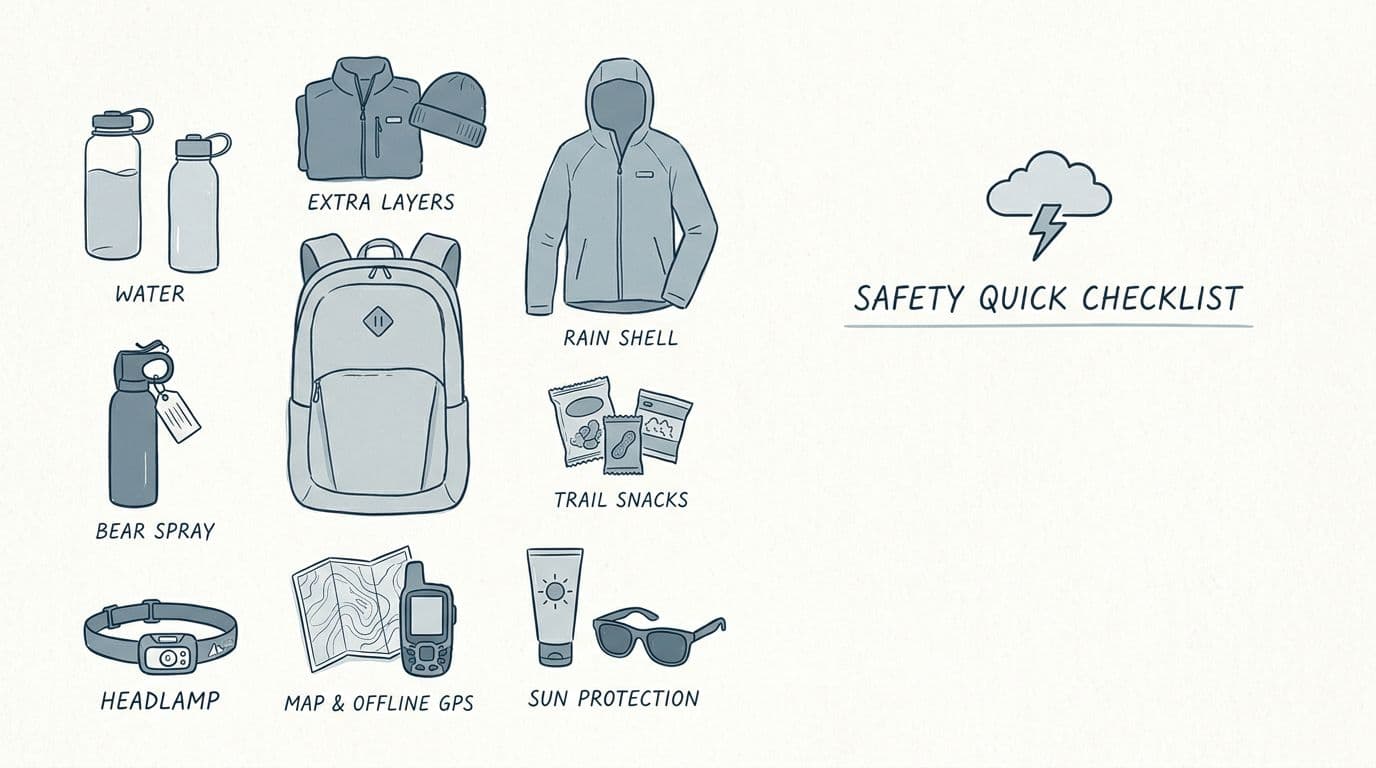
A timing plan is only useful if it survives real life. In Grand Teton National Park, that means two things: parking surprises and fast-changing conditions.
My favorite way to “save” a day: I pre-pick a backup trailhead that’s close by and easier to park at, such as Phelps Lake or Leigh Lake. That way, a full lot doesn’t turn into a bad mood. Another trick is choosing a hike with flexible distance (an out-and-back along a lakeshore, for example). You can still get a great morning, even if you cut it short.
Conditions matter more than ego here. In March, expect winter travel problems and shorter days. In early season, snow and mud can slow you down, so your “normal pace” won’t apply. Also, some access can change year to year due to maintenance and construction; for example, 2026 closures have been mentioned for the Death Canyon Trailhead area. I treat that as a reminder to verify the latest status with the park before I drive.
On packing, I keep it simple. I bring water, snacks, layers, rain protection, and a headlamp even for “easy” hikes, because late starts and slow descents happen. I also carry bear spray due to grizzly bears in the area and store food properly. It’s cheap insurance.
If you want more easy-to-moderate ideas to plug into these same timing rules, note that the hiking trails discussed here are for day use and do not require a backcountry permit. The Parks Expert’s short Grand Teton day hikes roundup is a helpful list to browse.
Conclusion
In Grand Teton National Park, Grand Teton day hikes get dramatically better when I treat timing like a real part of the route. I start early, protect a turnaround time, and keep a backup trailhead in my pocket. That planning style turns “busy and stressful” into calm and scenic day hikes with the Teton Range as a stunning backdrop, even on famous trails. What hike are you building your first early-morning plan around?
FAQs
What time should I arrive for popular Grand Teton trailheads?
In peak summer, I plan to secure trailhead parking by 6:30 to 7:30 am for the busiest areas (Jenny Lake earlier, Lupine Meadows earliest). Earlier starts also feel cooler and quieter.
Are Grand Teton day hikes doable in March?
Usually not in a typical hiking sense. March often brings snow-covered hiking trails, closed roads, and winter hazards in Jackson Hole. Check conditions on the NPS Grand Teton hiking page and consider snowshoeing if you’re experienced.
Do shuttles or boats help with timing at Jenny Lake?
They can, but I don’t build my day around them. Seasonal service (often summer) adds lines and schedules. If I hike early, I stay flexible.
What’s the easiest timing plan for beginners?
Pick one main trailhead, arrive early with bear spray, and keep the route short. I like “park by 7:00 am, hike 2 to 3 hours, snack break, then head back” as a first-day formula.
How do I avoid afternoon weather issues?
I start early and aim to be heading down by late morning on bigger climbs. If clouds build fast or wind spikes, I shorten the plan and take the safer win.