If I only had one day in Haleakala National Park, the “house of the sun” at over 10,000 feet elevation, I’d keep it simple: sunrise at the summit, then a crater hike before lunch. That combo gives you the biggest payoff with the least wasted time.
A lot of first-time visitors try to cram in too much, then spend half the day in the car. My preferred haleakala itinerary avoids that trap and keeps the focus on the Summit District, where the views feel almost lunar and the trails are the real prize.
Key takeaways:
- I recommend staying on the Summit District only for a one-day visit.
- You need a sunrise reservation for entry from 3:00 a.m. to 7:00 a.m.
- For most beginners, Sliding Sands Trail out-and-back is the best choice in Haleakala Crater.
- Dress for cold wind at sunrise, then strong sun on the hike back out.
The one-day Haleakala itinerary I’d actually follow
My advice is blunt here: don’t pair Summit District sunrise with the Kipahulu District in the same day. On a map, it looks possible. In real life, it turns into a long, tiring zigzag across Maui. The Kipahulu District, often part of the Road to Hana, offers a stark contrast to the Summit District. If you want a sense of how different the park areas are, this summit and Kīpahulu overview helps.
Here’s the pace I’d use for a smooth day:
| Time | Plan | Why it works |
|---|---|---|
| Pre-dawn | Drive to the summit entrance | You’ll beat stress and parking headaches |
| Sunrise | Watch the sunrise from the summit area | Best light, coldest temps, biggest wow factor |
| Early morning | Snack, short reset, restroom stop | You’ll want energy before hiking |
| Morning to midday | Hike Sliding Sands Trail in Haleakala Crater out-and-back | Best crater experience without overcommitting |
| Early afternoon | Drive down, grab a late lunch | You’re done before fatigue stacks up |
That Haleakala itinerary keeps the day focused. It also gives you room for weather, slow driving, and a longer-than-expected climb back up. I like that margin because summit days can feel easy at first, then suddenly humbling.
How I handle sunrise without ruining the rest of the day
As of March 2026, every vehicle entering the summit area between 3:00 a.m. and 7:00 a.m. needs a sunrise reservation. The sunrise reservation costs $1 per vehicle, and it’s separate from the national park entrance fee or pass. You can book it on Recreation.gov up to 60 days ahead, or in the shorter release window two days ahead. If you want a plain-English refresher, this updated sunrise reservation guide lays it out well.
When I checked current conditions, no summit road issues were posted, and no crater trail closures were listed. Still, I’d verify conditions right before the trip because mountain weather changes fast.
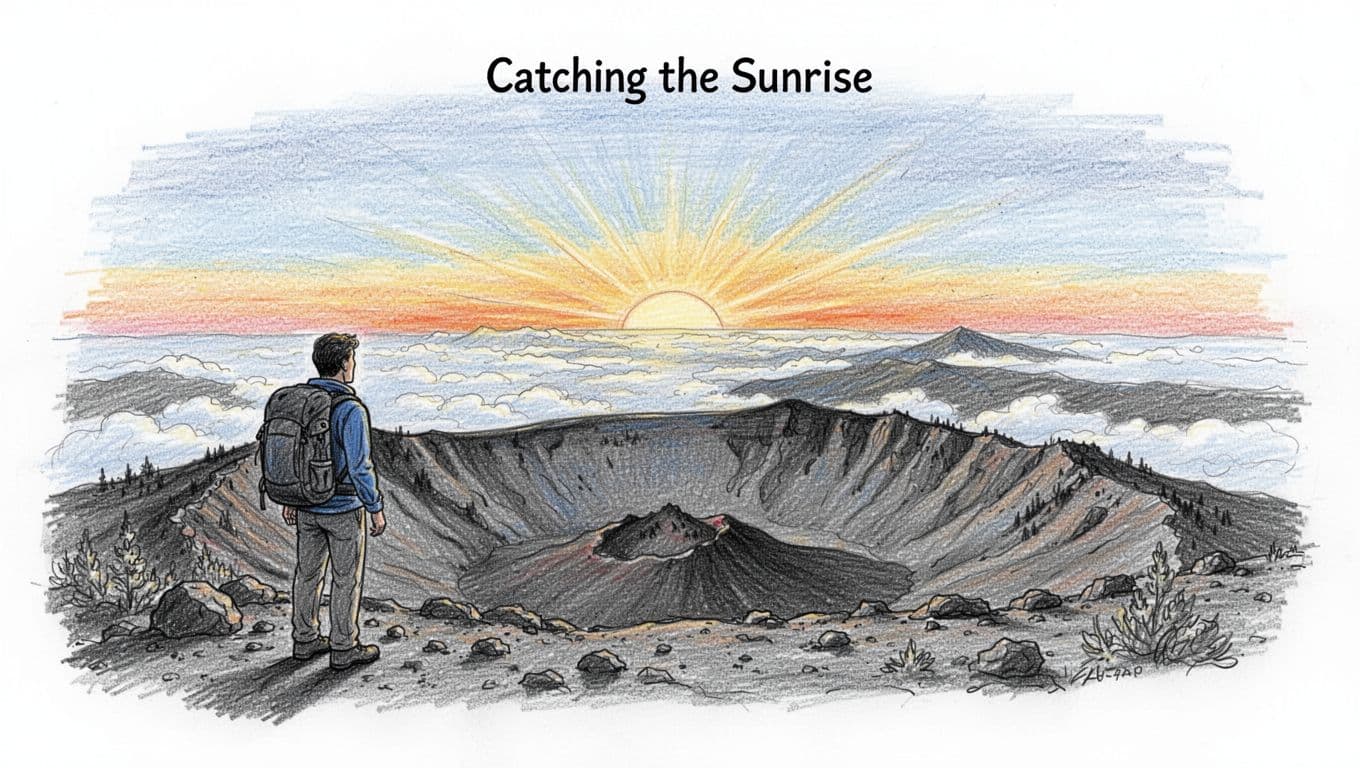
For sunrise itself, I try to arrive 45 to 60 minutes early at the Haleakala Visitor Center, the primary parking area. That gives me time to park, don your warm layers, enjoy stargazing at the summit, and settle in at the Red Hill summit, the highest lookout point, before you watch the sunrise over the volcanic landscape. The summit can sit around 35 to 45 degrees at night, and even daytime highs often land near 55 to 65 degrees. Add wind, and it feels colder.
Sunrise at Haleakala is not beach weather. Plan for cold hands, not flip-flops.
I also don’t linger too long after you watch the sunrise. The goal is to enjoy it, eat a quick snack, and start hiking while my legs still feel fresh.
The crater trail I recommend after sunrise
For most beginners, I’d pick Sliding Sands Trail and turn it into a controlled out-and-back. It gives you the classic Haleakala Crater look fast, and it doesn’t require shuttle logistics. That matters more than people admit.
A good target is 4 to 6 miles total, depending on how strong you feel. In other words, hike into the Haleakala Crater for a couple of miles on the Sliding Sands Trail, enjoy the cinder cones and wide-open Haleakala Crater views, spot rare silversword plants during the trek, then turn around before the climb back starts to feel nasty. Keep in mind though, descending is the easy part. Every step down becomes a step back up at altitude.
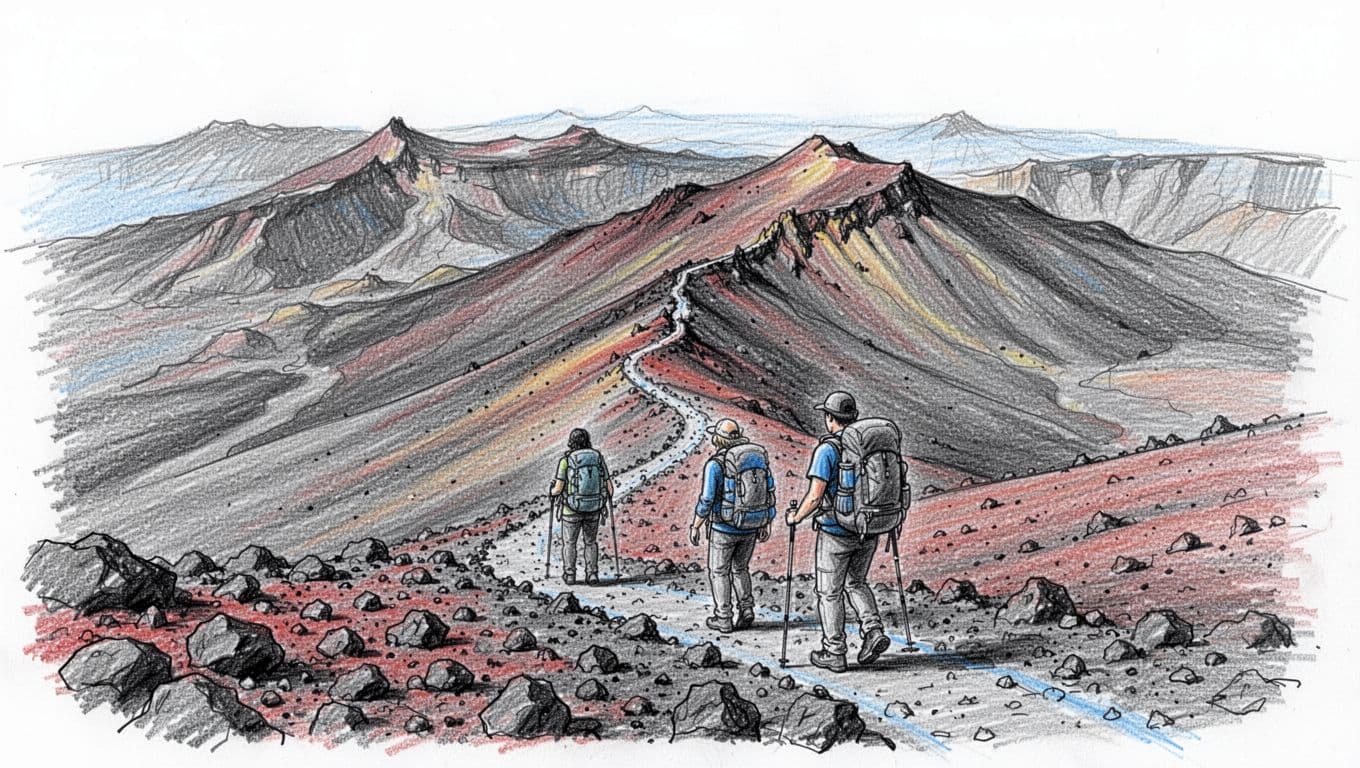
If you ask me, the mistake is chasing the full crater crossing on a one-day visit without a shuttle. It sounds epic, and it is, but it’s not the smartest play for a beginner. Halemau’u Trail is another solid option, especially if you want different Haleakala Crater angles; the shorter Pa Ka’oao Trail works well too for those not wanting a long hike, yet I still think Sliding Sands Trail wins for a first visit because the scenery hits hard right away.
When I checked current March 2026 info, Sliding Sands Trail and Halemau’u Trail had no reported closures. That’s good news, but I’d still plan a turnaround time before I start. On this hike, discipline beats ambition. After your trek, visit the Kalahaku Overlook for more scenic views.
What I pack, and the mistakes I’d avoid
I pack for two seasons in one morning after the drive to the summit through Upcountry Maui. That means warm layers, wind shell, water, sun protection, and real hiking shoes. I’d also bring gloves if you run cold, because standing still at sunrise can feel sharper than the hike itself. Consider Hosmer Grove as a potential quick stop for birdwatching along the way.
The other big thing is water. I’d carry at least 2 liters, and more if it’s sunny. The crater looks dry because it is dry, and the sun can bounce off that terrain hard. Articles about common Haleakala mistakes often mention temperature shock, and I agree completely.
My final caution is simple: don’t drive up half-asleep, then force a huge hike. If you’re wrecked after sunrise, take a shorter walk and save the longer adventure for another day. A shorter hike here still feels special. If you want to see the bamboo forest, Seven Sacred Pools, or hike the Pipiwai Trail, those are located in the Kipahulu District and require a different day via the road to Hana.
Haleakala itinerary FAQ
Do I need a reservation for sunrise at Haleakala?
Yes. If you enter the summit district between 3:00 a.m. and 7:00 a.m., your vehicle needs a sunrise reservation. You’ll also pay the separate national park entrance fee unless you have a valid pass.
Is Sliding Sands hard for beginners?
It can be. The Sliding Sands Trail down feels manageable, but the climb back out is the real test. That’s why I recommend a shorter out-and-back instead of pushing too deep into the Haleakala Crater.
Is one day enough for Haleakala National Park?
Yes, as long as you focus on one side of the park. For me, the best one-day plan is sunrise plus a crater trail, not a rushed attempt to see everything; if sunrise feels too early, travelers can watch the sunset instead.
One great day at Haleakala is better than a packed, stressful one that squeezes in the Haleakala Visitor Center, Pipiwai Trail, and road to Hana. If you keep the plan tight, dress for the summit cold, respect the climb back out, and stop in Makawao Town for a meal on the way back down, this haleakala itinerary works beautifully.
If you’ve got one Maui day to spend above the clouds, this haleakala itinerary is the version I’d choose every time.