If you only have one day at White Sands National Park in southern New Mexico, the plan can stay simple: arrive early, hike before the heat builds, take it easy in the middle of the day, and save your best energy for sunset. That is the sweet spot, and it is how this one-day itinerary is built.
White Sands looks soft and easy from the road, but the dunes are exposed, bright, and tiring if you fight the sun. The best one-day plan works because it follows the light, not the clock. Here is how to spend a day in the world’s largest gypsum dunefield, plus the practical details to sort out before you drive in.
Before you go: what to know about White Sands
A few logistics make or break a White Sands day trip. Sort these out before you leave your hotel.
- The park can close for missile testing. White Sands sits next to the White Sands Missile Range, and the road into the park closes for visitor safety during tests, sometimes for up to three hours. US Highway 70 between Alamogordo and Las Cruces also closes during testing. Closures usually last one to two hours and happen a few times a week, so check the park closure page the day before you arrive to confirm hours.
- There is no water or shade in the dunes. Bring more water than you think you need, and use your car for shade at midday. The gypsum sand stays cool underfoot even in summer, unlike regular sand, but the sun exposure out on the dunefield is intense.
- The entrance fee is $25 per vehicle, valid for seven days. An America the Beautiful pass also covers entry, and you can buy a pass at the visitor center.
- Hours run from 7 AM to roughly sunset, with the park closing about 30 minutes after sunset most of the year and up to an hour after sunset in summer. Closing time shifts with the season, so check the current hours before a sunset plan.
- Sand sledding is a highlight. Pick up a waxed plastic saucer at the visitor center gift shop, where you can rent or buy one.
Start your White Sands itinerary with the right pace
There is no need to cram every trail and every pull-off into one day. White Sands is better when it feels unhurried. The dunes are the star, and they change by the hour, like a blank page that the sun keeps rewriting.
The biggest planning mistake here is treating White Sands like an all-day grind. It works far better as a slow build toward sunset. Getting there is easy from several directions: Alamogordo is about 20 minutes away, Las Cruces about an hour, and El Paso about an hour and a half. Just remember that US 70 can close for missile testing on the Las Cruces and El Paso approach.
Here is a simple way to shape the day:
| Time | What to do | Why it works |
|---|---|---|
| 7:30 to 9:00 AM | Enter park, visitor center, start Dunes Drive | Cool air and soft light |
| 9:00 to 11:30 AM | Main hike or short trail combo | Best walking window |
| 11:30 AM to 3:30 PM | Picnic, breaks, sledding, short stops | Less heat stress |
| 4:30 PM to sunset | Pick a dune stop and wander | Best color and shadows |
Dunes Drive is the spine of the visit. It runs eight miles one-way from the visitor center into the heart of the dunefield, so the round trip is about 16 miles and takes roughly 45 minutes without stops. The first stretch is paved and the back half is a hard-packed gypsum road that is fine for any car. Build in extra time for short walks, photos, and sledding along the way.
Morning to early afternoon: hike first, sled later
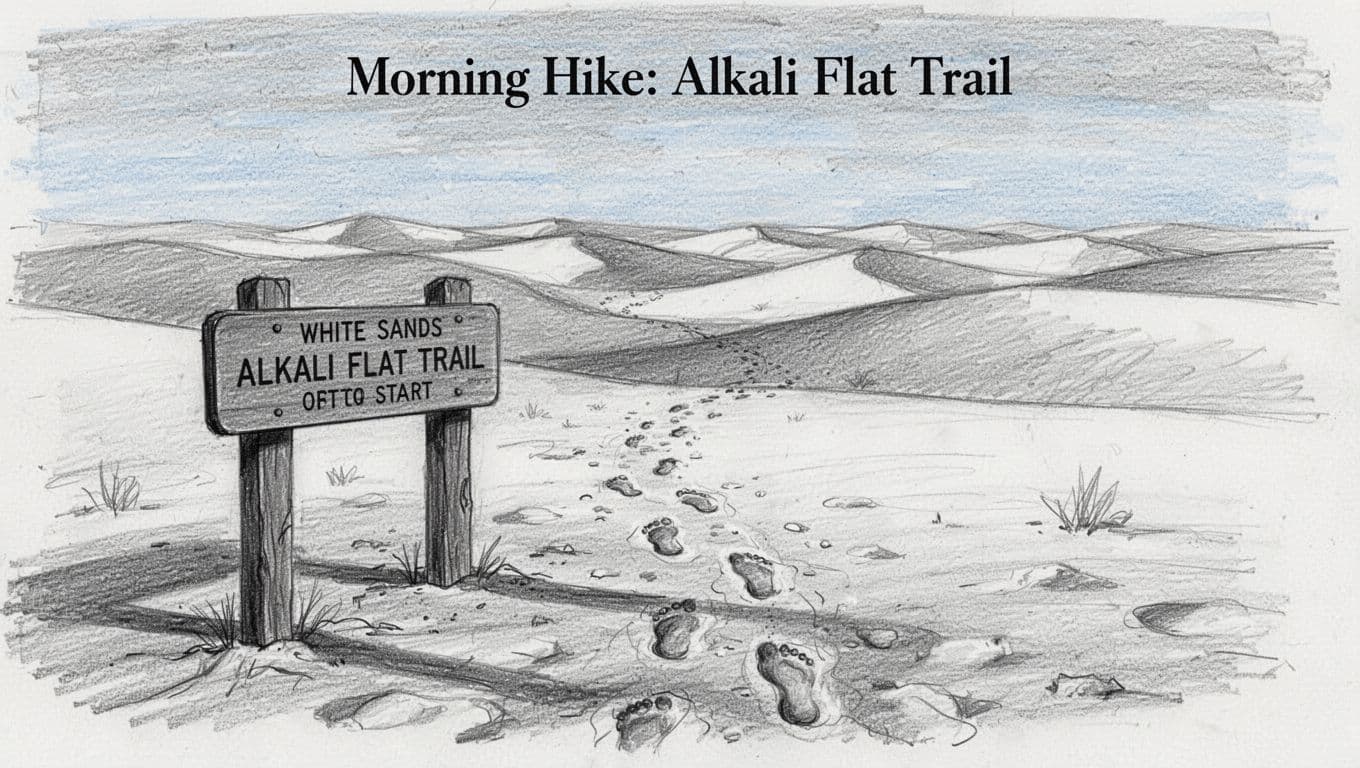
Start with the biggest walk in the morning. For the full gypsum dunes experience in the Chihuahuan Desert, the Alkali Flat Trail is the park’s most immersive hike. This five-mile round-trip loop climbs up and over steep dunes to the edge of an ancient lakebed and delivers the endless white-wave views people come for. It takes most hikers three to five hours, and it is rated strenuous. The route is marked with posts rather than a worn path, and it is easy to lose in a whiteout or blowing sand, so keep the next marker in sight and turn back if the wind picks up. The park advises against starting any hike once the temperature reaches 85 degrees Fahrenheit.
Newer hikers, or anyone with kids, have gentler options. The Interdune Boardwalk is a short accessible trail on a raised boardwalk, and the Dune Life Nature Trail is a one-mile family loop. The Playa Trail is another quick, level walk. The white gypsum reflects light like a mirror, so even a modest walk can feel bigger than it looks. Every trail except the Interdune Boardwalk is marked with colored posts and a symbol, so learn your trail’s marker before you set out.
By late morning, slow down. Eat lunch in one of the picnic areas, drink more water than feels necessary, and use the car for shade and recovery. That break matters, because the park gets much better again later.
Midday is the time for the fun stuff. Sand sledding on the dunes is simple, goofy, and worth doing at least once. It does not need to become an all-afternoon mission. A few good runs are plenty, especially when the sand is warm and the wind picks up. Sit or lie on the saucer with your feet pointing downhill, pick a dune with a clear run-out, and keep the path away from the road. The visitor center gift shop rents and sells the waxed saucers that work best.

That is why a split day works so well here. Hike when your legs are fresh, sled when the light is harsh, then save your attention for the evening.
Best sunset dune stops on Dunes Drive
Sunset is the payoff, so it is worth planning the whole day around it. The best sunset spots at White Sands usually are not dramatic named viewpoints. They are the pull-offs that let you walk a few minutes away from the road into the dunes and let the park go quiet around you. The park also runs ranger-led sunset strolls in season, which are a good option if you want company and context for that final hour.
Start looking for a sunset spot about 60 to 90 minutes before sunset. That leaves time to park, step into the dunes along Dunes Drive, and find a clean angle without rushing. A good approach is to stop beyond the busiest sledding areas, then walk just far enough that the car doors fall silent. Any dune that feels empty after a five to ten minute walk from a pull-off makes a fine spot.
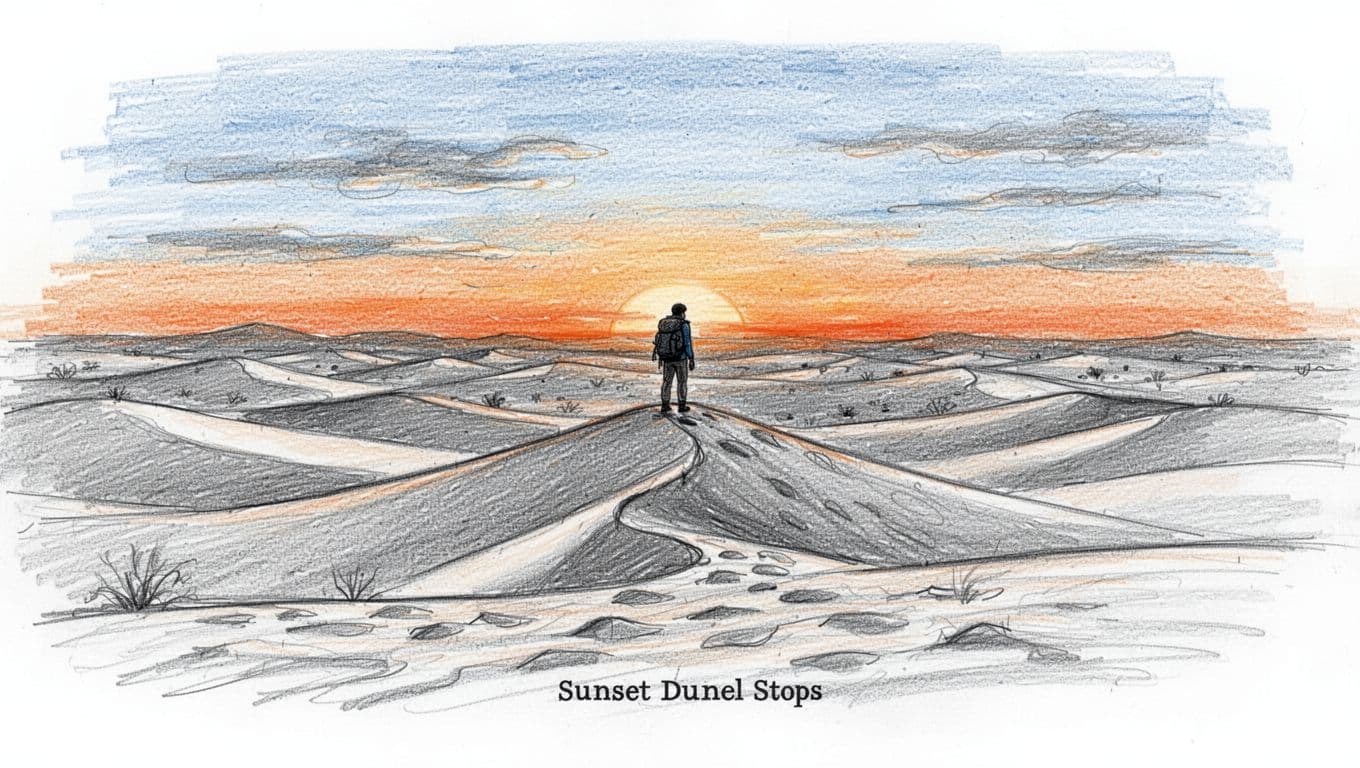
As the sun drops, the dunes stop looking flat. Ridges sharpen, shadows stretch, and the gypsum shifts from bright white to silver, peach, and blue-gray. It feels a little like standing inside a cloud that learned how to hold its shape.
A few practical things help here. Keep the car in sight or mark the route back, because the dunes look the same in every direction and the marked trails do not run to the pull-offs. Bring a light layer, since evening wind can surprise you. And stay for a few minutes after sunset if you can. The soft blue light right after sundown is often better than the last direct sun, and it sets the stage for stargazing as darkness falls. If you want to extend the evening with backcountry camping, check current permit and trail status first, as the backcountry sites are sometimes closed.
White Sands pairs naturally with the other desert parks nearby. If you are building a longer Southwest road trip, see this Carlsbad Caverns itinerary and this Guadalupe Mountains itinerary for the New Mexico and Texas neighbors, or look west to the best hikes in Arizona if the trip keeps going.
White Sands National Park FAQs
Is one day enough for White Sands National Park?
Yes. For most first-time visitors, one full day is the right amount. You can hike, sled, drive the dunes, and catch sunset without feeling rushed.
What is the best time to visit?
Aim for fall through spring, when temperatures are comfortable; summer days get hot. On the day itself, early morning near opening is ideal. The light is better, the sand is cooler, and you will have more energy for the main hike.
Is White Sands National Park dog friendly?
Yes, for leashed pets on the trails and along Dunes Drive.
Where should I stop for sunset?
Choose a Dunes Drive pull-off where you can walk five to ten minutes into open dunes. There is no need to overthink the exact spot. Distance from the road matters more than a named stop.
What should I pack?
Not much. Bring plenty of water, sun protection, sunglasses, snacks, and a light layer for the evening. Closed-toe shoes help, though many people enjoy walking barefoot in the cooler sand. Rent or buy a plastic saucer at the visitor center for sledding.