Planning Glacier National Park this year? Here is the short version: Going-to-the-Sun Road reservations are not required in 2026, whether you enter through the West Entrance or the St. Mary Entrance. The timed-entry system that ran in recent years is gone, which is good news if reservation rules used to stress you out.
Still, “no reservation” does not mean “no planning.” You need a Glacier entrance pass, the road’s full opening depends on snow, and Logan Pass is the pinch point again. There are also two brand-new 2026 rules at Logan Pass worth knowing before you go: a three-hour parking limit and a ticketed shuttle. Better to learn that here than in a parking line.
Here are the key takeaways:
- No vehicle reservation is needed anywhere in Glacier in 2026.
- You still need a park entrance pass. A private vehicle pass is $35 and covers seven days, and the park is cashless.
- Logan Pass parking is limited to three hours starting July 1, 2026 through Labor Day, September 7.
- A new ticketed shuttle to Logan Pass runs July 1 through September 7 and helps with longer hikes.
- The road’s full opening date still depends on plowing and weather.
The big 2026 change: vehicle reservations are gone
If you visited Glacier in the past couple of seasons, this is the part that changed most. The timed-entry rules that once covered busy areas are now discontinued. In 2026, that system is gone across the park, including Going-to-the-Sun Road, Many Glacier, Two Medicine, and the North Fork. The official 2026 vehicle reservation update from the National Park Service is very clear on that point.
That means there is no booking window, no timed-entry ticket, and no vehicle reservation fee for the road itself. If the road is open, you can drive it with a normal park pass. One caveat worth noting: vehicles can still be diverted from an entrance when an area gets too congested, so an early start is your best insurance.
This quick table sums it up:
| What you need | 2026 rule |
|---|---|
| Vehicle reservation | Not required anywhere in the park |
| Park entrance pass | Required ($35 per private vehicle, 7 days, cashless) |
| Logan Pass parking | 3-hour limit, July 1 through September 7 |
| Shuttle ticket | Only if you ride the Logan Pass shuttle ($1 per person) |
| Full-road access | Depends on snow and the road opening |
So yes, planning got easier. Glacier did not get smaller, quieter, or less popular, though. That is the trade-off first-time visitors should understand.
One more thing trips people up: the road does not open end to end on a fixed date. Snowpack, avalanche debris, and plowing progress still call the shots, and the alpine section is typically fully open by early July in a normal year. If you are visiting in June or early July, stay flexible. For a calmer first look at the park’s layout, this Glacier National Park map guide shows where to start.
What still matters at Logan Pass in 2026
The biggest catch is Logan Pass, perched atop the Continental Divide. Starting July 1, 2026 through Labor Day on September 7, private vehicle parking there is limited to three hours, and the limit is enforced around the clock. If you are stopping for photos, a quick snack, or a short walk to the Hidden Lake Overlook, three hours is workable. If you are planning a longer hike, it probably is not.
The mechanics are simple. Find an open space, park, then grab a free timestamped permit from the kiosk and put it on your dashboard. The goal is faster turnover so more people get a shot at Logan Pass during the day.
No reservation required does not mean no stress. Logan Pass just shifted from pre-booking pressure to on-the-ground parking pressure.
For longer days, the park is running a new ticketed-only shuttle to Logan Pass from July 1 through September 7. According to the Logan Pass Shuttle Service page, tickets are sold only on Recreation.gov, each carries a $1 processing fee, and one ticket is required per person aged two and older. Tickets release in two windows: a rolling 60-day-ahead batch starting May 2 at 8 a.m. Mountain Time, plus next-day tickets released daily at 7 p.m. Mountain Time beginning June 30.

The shuttle makes the most sense for the Highline Trail, long days around the Hidden Lake Overlook, or any Logan Pass plan that will not fit inside three hours. It offers express service to Logan Pass from both sides of the road: the west side boards at Apgar Visitor Center and Lake McDonald Lodge, and the east side boards at St. Mary Visitor Center and Rising Sun. It is not a full west-side replacement, though. Avalanche Lake and the Trail of the Cedars are not shuttle stops in 2026, so plan to drive to those.
How to plan a smooth Going-to-the-Sun Road day
The approach is simple. First, bring the right expectation. In 2026, the hard part is not getting a reservation. It is matching your day to the park’s crowd pattern.
For the classic drive, start early near the Apgar Visitor Center and treat Logan Pass as either a short stop within the three-hour window or a shuttle-based hike like the Highline Trail. Do not build a whole day around parking luck. That is like planning dinner around finding the perfect empty table at 7 p.m. in July. It might happen, but it is not worth betting on.
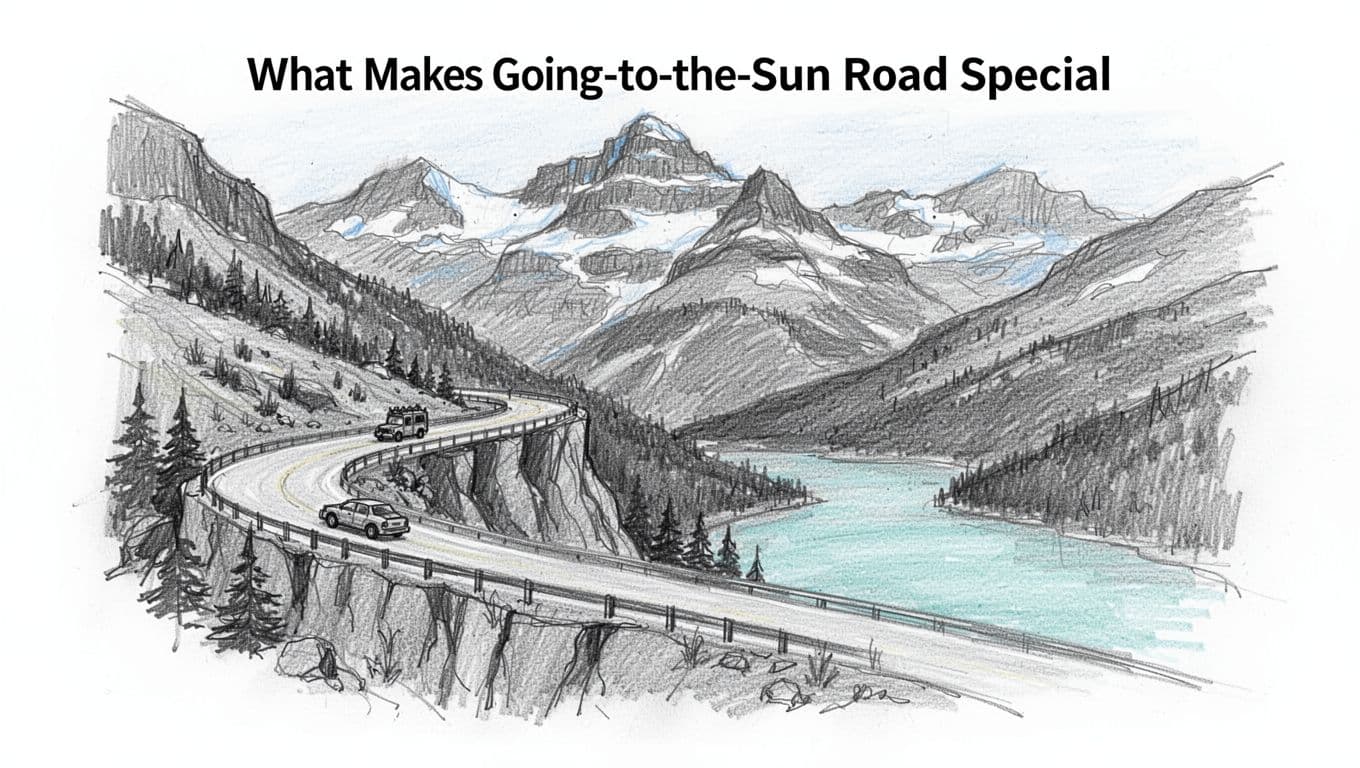
The best beginner setup is boring on purpose, and that is why it works. Drive one direction from a base like Lake McDonald Lodge, pick a few stops you actually care about, leave room for delays, and skip the urge to cram in every famous pullout. Glacier rewards a calmer pace. If you want a full day-by-day plan, this two-day Glacier National Park itinerary lays one out for first-timers.
Keep one backup plan outside the main road corridor, too. If Logan Pass feels too fussy, a red bus tour or a boat tour makes for a relaxed alternative, or point toward these stress-free Glacier day hikes that skip Going-to-the-Sun Road. That gives you a strong Plan B without turning the day into a scramble. Finally, check road status the night before and again that morning, since conditions, wildlife holds, and temporary crowd closures can change the tone of your day fast.
Going-to-the-Sun Road in 2026, in plain terms
If you were worried about Going-to-the-Sun Road reservations, you can relax. For 2026, vehicle reservations are gone, and that makes a first Glacier trip simpler to plan. The work that remains is matching your day to Logan Pass parking, deciding whether you need a shuttle ticket, and building in room for snow timing and summer crowds. For trails beyond the road, see the best hikes in Montana for picks across the state.
FAQs
Do I need Going-to-the-Sun Road reservations in 2026?
No. Glacier National Park is not requiring Going-to-the-Sun Road reservations or vehicle reservations anywhere in the park in 2026.
Do I still need to pay to enter Glacier?
Yes. You need a valid entrance pass. A private vehicle pass is $35 and is good for seven days, an annual Glacier pass is $70, and the America the Beautiful pass also covers entry. The park is cashless, so plan to pay by card.
Are shuttle tickets the same as vehicle reservations?
No. Vehicle reservations are gone. A shuttle ticket only applies if you choose to ride the ticketed Logan Pass shuttle, which runs July 1 through September 7. Each ticket is $1 per person and is sold on Recreation.gov.
Can I park at Logan Pass all day?
No. Starting July 1, 2026 through September 7, private vehicle parking at Logan Pass is limited to three hours, and the limit is enforced 24 hours a day.
Do Many Glacier or Two Medicine need reservations in 2026?
No. In 2026, Glacier dropped vehicle reservations park-wide, so those areas no longer require them either. Backcountry and wilderness permits are a separate process.