With one day in Haleakala National Park, the “house of the sun” rising more than 10,000 feet above Maui, the simplest plan wins: sunrise at the summit, then a crater hike before lunch. That combination delivers the biggest payoff with the least time stuck in the car.
Many first-time visitors try to cram in too much and spend half the day driving. A focused Haleakala itinerary avoids that trap and keeps attention on the Summit District, where the views feel almost lunar and the trails are the real prize.
Before you go: three things that catch first-timers off guard
A few planning facts matter more than anything else at Haleakala, and missing them can derail the whole day. Sort these out before the trip:
- A sunrise reservation is required for any vehicle entering the Summit District between 3:00 a.m. and 7:00 a.m. It costs $1 per vehicle, it is separate from the park entrance fee, and it sells out. Book it on Recreation.gov before you book anything else.
- The park has two districts that are not connected by a road inside the park. The Summit District (sunrise, crater trails) and the coastal Kipahulu District (Pipiwai Trail, the Pools of Oheo) sit hours apart, and Kipahulu is reachable only by the Hana Highway. You cannot reasonably do both in one day.
- The summit is cold, and it can drop below freezing with wind chill at any time of year. The elevation also thins the air enough to cause altitude sickness. Pack warm layers even in summer, and note that the park is cashless and sells no food, water for purchase, or gas.
The entrance fee is $30 per private vehicle and is valid for three days, covering both the Summit and Kipahulu Districts. The sunrise reservation is an additional, separate booking.
The one-day Haleakala itinerary that actually works
The blunt advice: do not pair a Summit District sunrise with the Kipahulu District on the same day. On a map it looks doable. In real life it becomes a long, tiring zigzag across Maui. Kipahulu, often folded into a Road to Hana trip, is a completely different world from the summit, and it deserves its own day.
Here is a pace that keeps the day smooth:
| Time | Plan | Why it works |
|---|---|---|
| Pre-dawn | Drive up to the summit | Beats the parking crunch; lots close when full |
| Sunrise | Watch sunrise from the summit area | Best light, coldest temps, biggest wow factor |
| Early morning | Snack, warm up, restroom stop | Refuel before the hike |
| Morning to midday | Hike Keoneheehee (Sliding Sands) Trail out-and-back | Best crater experience without overcommitting |
| Early afternoon | Drive down, grab a late lunch in Upcountry Maui | Done before fatigue stacks up |
This itinerary keeps the day focused and leaves room for weather, slow driving, and a climb back out that always takes longer than expected. That margin matters, because summit days feel easy at first and then turn humbling fast.
How to handle sunrise without wrecking the rest of the day
Every vehicle entering the Summit District between 3:00 a.m. and 7:00 a.m. needs a sunrise reservation. It costs $1 per vehicle and is separate from the entrance fee or pass. Reservations open on Recreation.gov up to 60 days ahead, and a portion of each day’s tickets is released two days (48 hours) in advance at 7:00 a.m. Hawaii time. Note that a visitor can hold only one sunrise reservation per three-day period, and the park cannot book it for you by phone or in person.
Mountain weather changes fast, so check current conditions and any road or trail closures right before the trip on the park’s official alerts page.
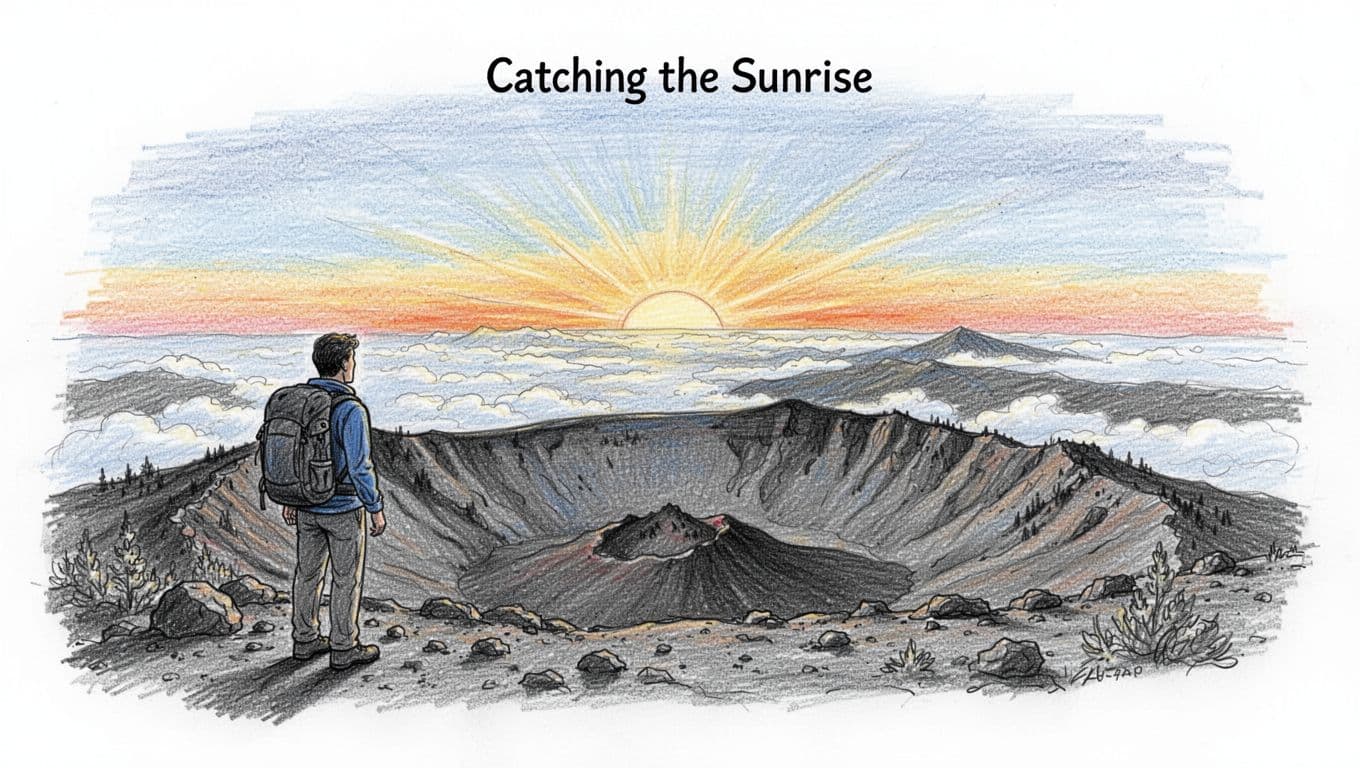
Aim to arrive 45 to 60 minutes before sunrise. The drive up the mountain is long and dark, with no streetlights or guardrails, and the stretch from the entrance gate to the summit alone takes about 30 minutes. Early arrival leaves time to park in a designated lot, pull on warm layers, take in the stars, and settle in before first light. For a quieter spot, the Leleiwi and Kalahaku overlooks see fewer crowds than the main viewing area near the Haleakala Visitor Center.
Temperatures at the summit commonly run between 30 and 65 degrees Fahrenheit and can dip below freezing with wind chill at any time of year. Add wind, and it feels colder still.
Sunrise at Haleakala is not beach weather. Plan for cold hands, not flip-flops.
Do not linger too long after the sun is up. Enjoy it, eat a quick snack, and start hiking while your legs are still fresh.
The crater trail to hike after sunrise
For most beginners, the Keoneheehee Trail, better known as Sliding Sands, is the trail to pick, run as a controlled out-and-back. It delivers the classic Haleakala crater view quickly and needs no shuttle logistics, which matters more than people admit. The trailhead sits in the Haleakala Visitor Center parking lot.
A good target is 4 to 6 miles total, depending on how strong you feel. Hike a couple of miles down into the crater, take in the cinder cones and the wide-open views, watch for the rare silversword plant, then turn around before the climb back starts to feel rough. Descending is the easy part. The park advises planning for roughly twice as long to hike out as it took to hike in, because every step down becomes a step back up at altitude on soft, beach-like cinder.
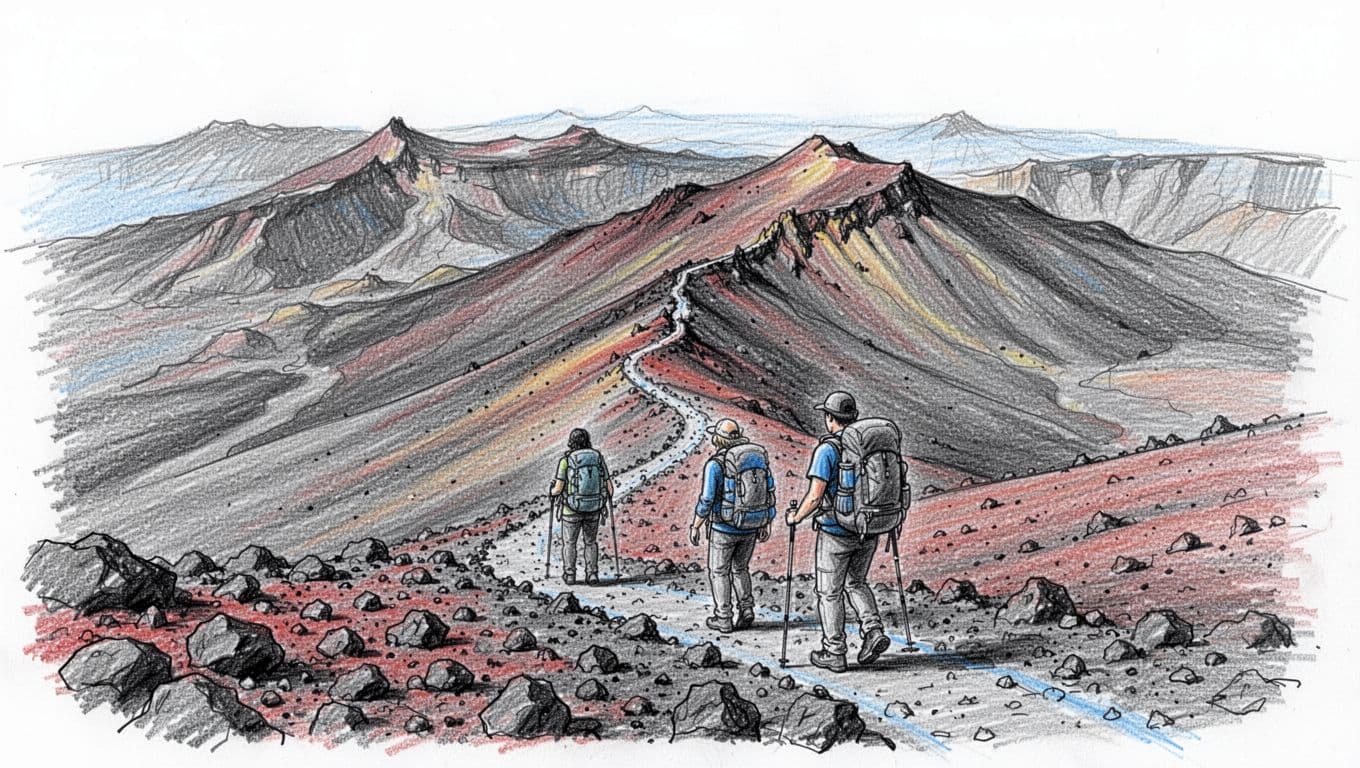
The common mistake is chasing the full crater crossing on a one-day visit without a shuttle. The point-to-point route from Sliding Sands across the valley floor to the Halemauu Trailhead runs about 11 miles, and the park cannot offer hiker shuttles, so it is a poor fit for a first visit. Halemauu is a strong shorter option if you want different crater angles, with a viewpoint about 1.1 miles in and the natural land bridge often called Rainbow Bridge just beyond. The short Pa Kaoao Trail near the visitor center works well too. Even so, Sliding Sands wins for a first visit because the scenery hits hard right away.
Whatever the choice, set a turnaround time before starting. On this hike, discipline beats ambition. The Kalahaku Overlook makes an easy scenic stop on the drive back down.
What to pack, and the mistakes to avoid
Pack for two seasons in one morning. That means warm layers, a wind shell, plenty of water, sun protection, and real hiking shoes. Gloves help if you run cold, because standing still at sunrise can feel sharper than the hike itself. Hosmer Grove, a short loop near the summit entrance, makes a good quick stop for spotting native forest birds along the way.
Water is the other big thing. Carry at least 2 liters, and more on a sunny day. The crater is genuinely dry, and the sun bounces off that terrain hard. Drinking water is available at the visitor centers, but there is none for sale on the trail. Temperature shock, from freezing wind at dawn to strong UV by mid-morning, trips up more visitors than the distance does.
One last caution: do not drive up half-asleep and then force a huge hike. If you arrive wrecked after sunrise, take a shorter walk and save the longer adventure for another day. A short hike here still feels special. The bamboo forest, the Pools of Oheo (Oheo Gulch), and the Pipiwai Trail all sit in the Kipahulu District and call for a separate day via the Hana Highway. For the bigger picture across the state, the Hawaii Volcanoes National Park one-day itinerary covers Maui’s Big Island counterpart, and the roundup of the best USA day hikes helps if you are stitching together a longer trip.
Haleakala itinerary FAQ
Do you need a reservation for sunrise at Haleakala?
Yes. Any vehicle entering the Summit District between 3:00 a.m. and 7:00 a.m. needs a $1 sunrise reservation booked in advance on Recreation.gov. It is separate from the park entrance fee, which still applies unless you hold a valid pass.
Is Sliding Sands hard for beginners?
It can be. The hike down feels manageable, but the climb back out at altitude is the real test, and the soft cinder makes it slower going. A shorter out-and-back, rather than pushing deep into the crater, keeps it reasonable for most first-timers.
Is one day enough for Haleakala National Park?
Yes, as long as you focus on one district. The strongest one-day plan is sunrise plus a crater trail in the Summit District, not a rushed attempt to see everything. Travelers who find sunrise too early can aim for sunset instead, which needs no reservation.
One great day at Haleakala beats a packed, stressful one. Keep the plan tight, dress for the summit cold, respect the climb back out, and stop in a town like Makawao for a meal on the way down. For more trails to pair with a Maui trip, see the guide to the best hikes in California across the wider Pacific region.