One day at Hawaii Volcanoes National Park on Hawaii’s Big Island is enough, as long as the plan stays focused. The smart move for a first visit is simple: start at the summit, add one memorable trail, then finish with the coastal drive.
That route is the sweet spot for a Hawaii Volcanoes itinerary. You get crater views, a lava tube, steaming ground, and the wild black-lava coastline without turning the day into a rushed mess. Below is the version I’d plan for a first visit.
Key takeaways
- Arrive at Kīlauea Visitor Center by 8:00 a.m., because summit parking fills by mid-morning.
- Hit the open summit overlooks for Halemaʻumaʻu Crater views, then walk through Nāhuku (Thurston Lava Tube).
- Drive Chain of Craters Road in the afternoon, 19 miles down to where the road ends at the sea.
- Entrance is $30 per vehicle for 7 days, and the park is cashless (credit or debit only).
- Kīlauea has been erupting in episodic Halemaʻumaʻu fountains since December 23, 2024. Check the park conditions page and the USGS Kīlauea update before you go.
Before you go
A few things to lock in before driving up:
Entry is $30 per private vehicle, $25 per motorcycle, or $15 per pedestrian or cyclist, and the pass is good for 7 days. The park is cashless, so bring a credit or debit card.
The drive is about 45 minutes from Hilo and about 2 hours from Kona. Volcano Village sits just outside the entrance and makes the easiest base if you’re not staying in town.
Eruption-wise, Kīlauea has been intermittently erupting inside Halemaʻumaʻu crater since December 23, 2024, in episodic lava-fountaining episodes. The active vent area is closed to visitors, but open overlooks at the summit can give a view when fountains are running. Check the USGS Hawaiian Volcano Observatory update the morning of your visit.
Crater Rim Drive is only partially open. Sections of the loop and the old Jaggar Museum site have been closed since the 2018 summit collapse, so plan for the open overlooks rather than a full loop. Volcanic gas (vog) and ash (tephra) can also irritate eyes, skin, and lungs at the summit, and anyone with asthma or heart issues should check the park air quality alert page before driving up.
One more thing worth knowing: Nāhuku (Thurston Lava Tube) is in the middle of a bridge replacement through late June 2026. The tube is still walkable, but one-way only from the east exit, with the rainforest approach and the first 50 feet of the cave closed during construction.
Start with the right game plan
The biggest mistake first-timers make is treating Hawaii Volcanoes National Park like a single hike. It isn’t. This park is better thought of as a string of short stops connected by scenic driving, with one or two walks layered in. Volcano Village is the obvious base for proximity to the entrance.
That matters because you only have one day. The goal is variety, not mileage. Better to see the caldera, walk through a lava tube, and drive to the coast than spend six hours on one trail, even with the massive backdrop of Mauna Loa rising over the park.
Stop by Kīlauea Visitor Center first thing. Rangers post the current eruption status, air quality, and any same-day closures, and that intel is worth more than any pre-trip blog.
Parking near the summit often fills by 10:00 a.m., so an early start saves time all day.
If you want a second opinion on pacing, this one-day park route from Big Island Itineraries lines up pretty well with a first-visit structure.
Morning stops that give you the biggest payoff
Start at Kīlauea Visitor Center, then head to the open summit overlooks along the still-accessible sections of Crater Rim Drive. A huge hike isn’t needed to feel the scale here. Halemaʻumaʻu Crater is the main event, and first thing in the morning is when it feels the most dramatic.
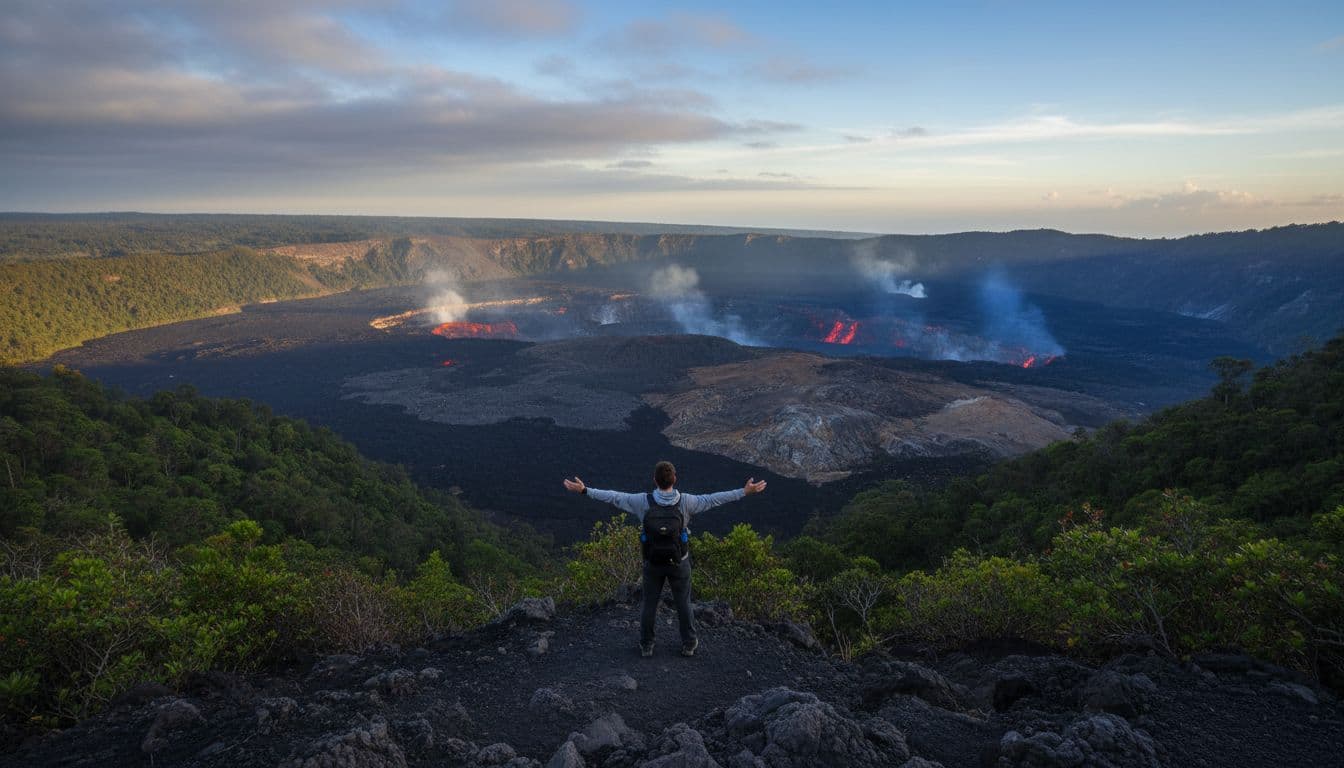
From the overlooks, add a few quick stops nearby: steam vents, sulfur banks, Devastation Trail, and any open rim viewpoints. Pop into Volcano House for a coffee and the lobby window view of the caldera. These stops are short, easy, and perfect for beginners.
Next, drive to Nāhuku (Thurston Lava Tube). It feels different from everything else in the park: one minute you’re in lush rainforest, the next you’re walking through a dark lava tunnel. With the current bridge work, expect a one-way route from the east end, but the tube itself is still very much worth the stop.
If there’s still energy left, add part of Kīlauea Iki Trail. The full 4-mile loop drops into a solidified lava lake and is one of the best hikes in the park, but it can eat up a big chunk of the day. If time is tight, walk a shorter rim section to look down into Kīlauea Iki and keep moving.
By late morning, you’ve already seen the park’s best contrasts: Halemaʻumaʻu views, steam, rainforest, and lava rock. That’s a strong first half of the day.
Spend the afternoon driving to the coast
After lunch, commit to Chain of Craters Road. For first-timers, it’s the easiest way to understand how big and strange this park really is. The road drops 19 miles from the summit through old lava flows down to where it ends at the sea, buried by past flows that overran the original route. The scenery keeps changing the whole way.
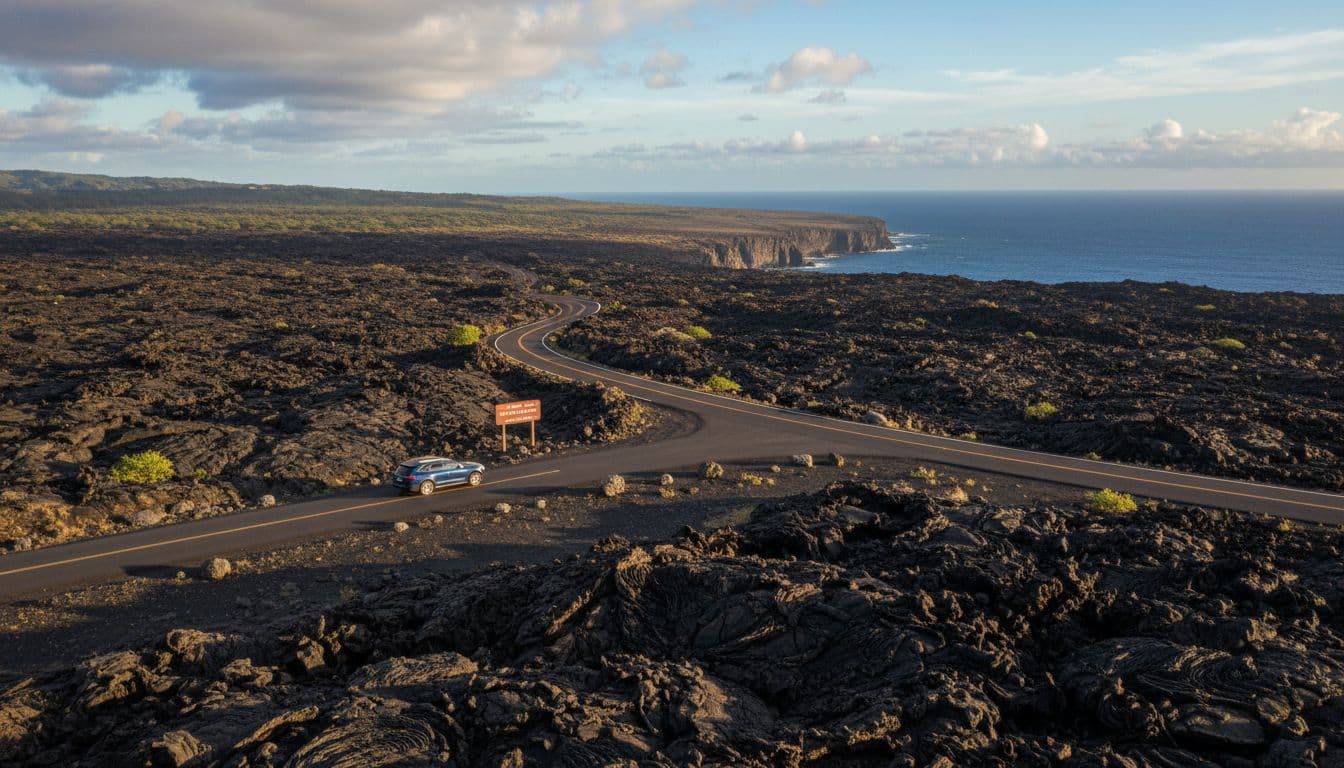
Don’t rush it. Pull over at the overlooks, read a few signs, and let the landscape sink in. This stretch feels almost lunar in places, then suddenly opens to sea cliffs and crashing surf. If there’s extra time, the Puʻuloa Petroglyphs trail is a worthwhile add-on. If you’re fading, skip it and keep driving.
The turnaround point is Hōlei Sea Arch at the end of the road. It’s an easy win, especially late in the day when the light gets softer. For a lot of people this ends up being the surprise favorite, because it doesn’t look like what they expected from a volcano park.
If eruption conditions line up, some visitors return to the summit overlooks at night to catch a possible glow from Halemaʻumaʻu when fountains are active. That’s never guaranteed, so I wouldn’t build the whole day around it. If you want another sample route, this day plan from Hawaii.com also leans into a late-day finish.
What to pack and what to skip
The park sits at 4,000 feet at the summit and drops to sea level on Chain of Craters Road, so weather changes fast. Pack sturdy hiking shoes, a rain jacket, water, sun protection, and a long-sleeve layer for the summit. A dust mask is smart if there’s any tephra advisory posted.
Skip the temptation to add a beach stop, a Mauna Kea visit, or a Hilo tour on the same day. Those need their own day. Hawaii Volcanoes rewards a focused visit. If a beginner-friendly trail itinerary helps, this list of beginner-friendly hikes in the USA covers what to look for in trail picks.
For a first visit to Hawaii Volcanoes National Park, the best one-day plan is simple: summit overlooks in the morning, Nāhuku and a short Kīlauea Iki section before lunch, then Chain of Craters Road in the afternoon down to Hōlei Sea Arch. That route gives you the full personality of the park without burning the whole day in one place.
For Maui’s national park, see the Haleakala National Park one-day itinerary. For another big-name one-day plan, the Grand Canyon South Rim itinerary follows the same focused-day approach.
FAQ
Is one day enough for Hawaii Volcanoes National Park?
Yes, for a first visit on the Big Island, one day is enough. You can see the open summit overlooks of Halemaʻumaʻu Crater, walk Nāhuku, and drive Chain of Craters Road to Hōlei Sea Arch without feeling cheated.
What if I’m staying in Kona?
You can still do it, but start earlier. The drive from Kona is about 2 hours each way, compared to roughly 45 minutes from Hilo. Leaving before sunrise is the safest way to keep the day relaxed.
Can I see lava on a one-day visit?
Maybe. Kīlauea has been erupting in episodic Halemaʻumaʻu fountains since December 23, 2024, but episodes are short and separated by pauses of days or weeks. Visible lava or glow depends on whether a fountain happens to be active, plus weather and viewing access. Check the USGS update the morning of your visit, and ask a ranger at Kīlauea Visitor Center.
How much does it cost to enter the park?
Entry is $30 per private vehicle, $25 per motorcycle, or $15 per pedestrian or cyclist. The pass is valid for 7 days. The park is cashless, so bring a credit or debit card.
What should I bring for this itinerary?
Bring water, sun protection, a rain jacket, a warm layer for the summit, and sturdy hiking shoes. Weather can shift fast between summit and coast, and volcanic rock chews up flimsy footwear.