If you’re planning a California road trip and only have a weekend, you don’t have to “do it all.” The cleanest first-timer plan is simple: give Day 1 to Sequoia National Park, then spend Day 2 on the Kings Canyon National Park side. That split keeps the trip scenic, beginner-friendly, and far less rushed. Set in the Sierra Nevada and managed jointly as one park unit, these two parks pack giant sequoias, deep granite canyons, and world-class natural wonders into a small footprint.
Because park roads are slow and the elevation can hit harder than expected, a good Sequoia and Kings Canyon itinerary needs focus. This one is built for people who want giant sequoias, easy-to-moderate walks, and a real sense of both parks without a packed driving schedule.
Key takeaways
- Day 1 goes to Giant Forest in Sequoia, because the payoff starts fast at the General Sherman Tree and the Congress Trail.
- Day 2 centers on Grant Grove in Kings Canyon, with more canyon driving only if the seasonal roads are open.
- One $35 vehicle pass covers both parks for up to seven days, since they’re run as a single unit.
- Early starts matter more than extra stops, especially in summer when parking fills fast.
- Check the NPS current conditions page before you go, because high-country roads are seasonal.
This is the quick version of the trip:
| Day | Focus | Best stops |
|---|---|---|
| 1 | Sequoia National Park | Giant Forest Museum, General Sherman Tree, Congress Trail, plus one bonus viewpoint or Moro Rock |
| 2 | Kings Canyon National Park | General Grant Tree, Grant Grove, optional deeper canyon drive to Cedar Grove if open |
That split keeps backtracking low and gives each park its own personality.
Before you go
- Entrance fee: $35 per private vehicle, valid for 1 to 7 days. One pass covers both Sequoia and Kings Canyon, plus the Hume Lake area of Sequoia National Forest. An America the Beautiful annual pass also works.
- The parks are cashless. Bring a card or a digital wallet for entrance fees, and fuel up before you arrive.
- Best season for full access is late spring through fall, when the high-country roads are open. Summer is beautiful but crowded, and parking at the Giant Forest Museum and General Sherman Tree fills early on weekends and holidays.
- Coming from Fresno, you’ll reach the Big Stump entrance on Highway 180 in about an hour, which puts you near Grant Grove. To start with Sequoia first, enter at Ash Mountain on Highway 198 near Three Rivers and drive the Generals Highway up to Giant Forest.
- The Generals Highway connects the two parks. It’s winding, slow, and can close or require tire chains in winter snow, so check road status before a cold-weather trip.
- Campgrounds are reservation-only in spring, summer, and fall, and they fill well ahead of weekends. There are no vehicle entry reservations required.
Two seasonal roads are worth checking before you commit to deeper drives. The Kings Canyon Scenic Byway (Highway 180) into Cedar Grove typically closes in early to mid-November and reopens in late April or early May, then stays open through fall. The Crescent Meadow and Moro Rock roads in Sequoia are also seasonal and aren’t plowed in winter. If you’re visiting outside peak season, build around Giant Forest and Grant Grove first, then treat the canyon drive and Moro Rock as a bonus once you confirm they’re open.
If you want a second California park on the same trip, this plan pairs naturally with a two-day Yosemite itinerary, which sits a few hours north and uses the same $35 vehicle pass structure.
Day 1: See the giant sequoias first
Start at the Giant Forest Museum. For first-timers, it gives the fastest sense of scale in Sequoia National Park and helps you orient before the trails.
Arrive early, drive the Generals Highway, and head straight to the General Sherman Tree, the largest tree on earth by volume. Yes, it’s busy. Still, that first look is worth it. The main trail down to the tree is short, roughly half a mile each way, but the paved return climb back to the parking area is steep at elevation, so pace yourself. From there, walk the Congress Trail, a 2 to 3 mile loop that starts near Sherman. It’s the best upgrade you can make, because the crowds thin and the forest feels bigger and quieter. Tokopah Falls near Lodgepole makes a good alternative if you want a longer walk with water.
The rule for a short trip is simple: one main walk, one bonus stop, then stop adding things.
If you want low-stress trail ideas around this area, this roundup of beginner trails around Giant Forest helps when your group wants something shorter than the Congress Trail. For a fuller list of short routes, the Sequoia half-day hikes guide covers more options.
By late morning, take a break near Lodgepole or a picnic area, then choose one afternoon add-on. If the Moro Rock and Crescent Meadow road is open, Moro Rock is the standout: a concrete-and-stone stairway of about 350 steps climbs roughly 300 feet over a quarter mile to the top, where the view stretches across the Great Western Divide. In summer, that road is usually reached by the free park shuttle, and it can be closed to private vehicles on weekends and holidays when the shuttle is running. Nearby Tunnel Log, a fallen giant you can drive through, sits along the same loop. If the road is closed, stay in Giant Forest and add the Big Trees Trail, an easy loop through the meadow. You don’t need a big hike here. The trees carry the day on their own.
One more option if you plan ahead: Crystal Cave reopened for guided tours in 2025 after several years closed following the 2021 KNP Complex Fire and storm damage, and the Sequoia Parks Conservancy has confirmed tours for the 2026 season. Tours run spring through fall, take about 50 minutes, and require tickets bought in advance online, at least 36 hours ahead. Tickets are not sold at the cave, the access road is gated at night, and the half-day round trip eats into a tight schedule, so only add it if you’re committed to it.
Day 2: Do Kings Canyon the smart way
Kings Canyon National Park is easy to underestimate. People hear the name, then spend too much time driving and too little time stopping. For a short trip, the better move is to center Day 2 on Grant Grove, then go deeper only if conditions and energy line up.
Start at the General Grant Tree, known as the Nation’s Christmas Tree. It’s famous for a reason, and the short paved loop is perfect on tired legs. After that, drive up to Panoramic Point for a wide overlook with minimal effort, or wander the North Grove area or Big Stump if you want a quieter trail. This side of the park feels calmer than Giant Forest, which is welcome on day two.
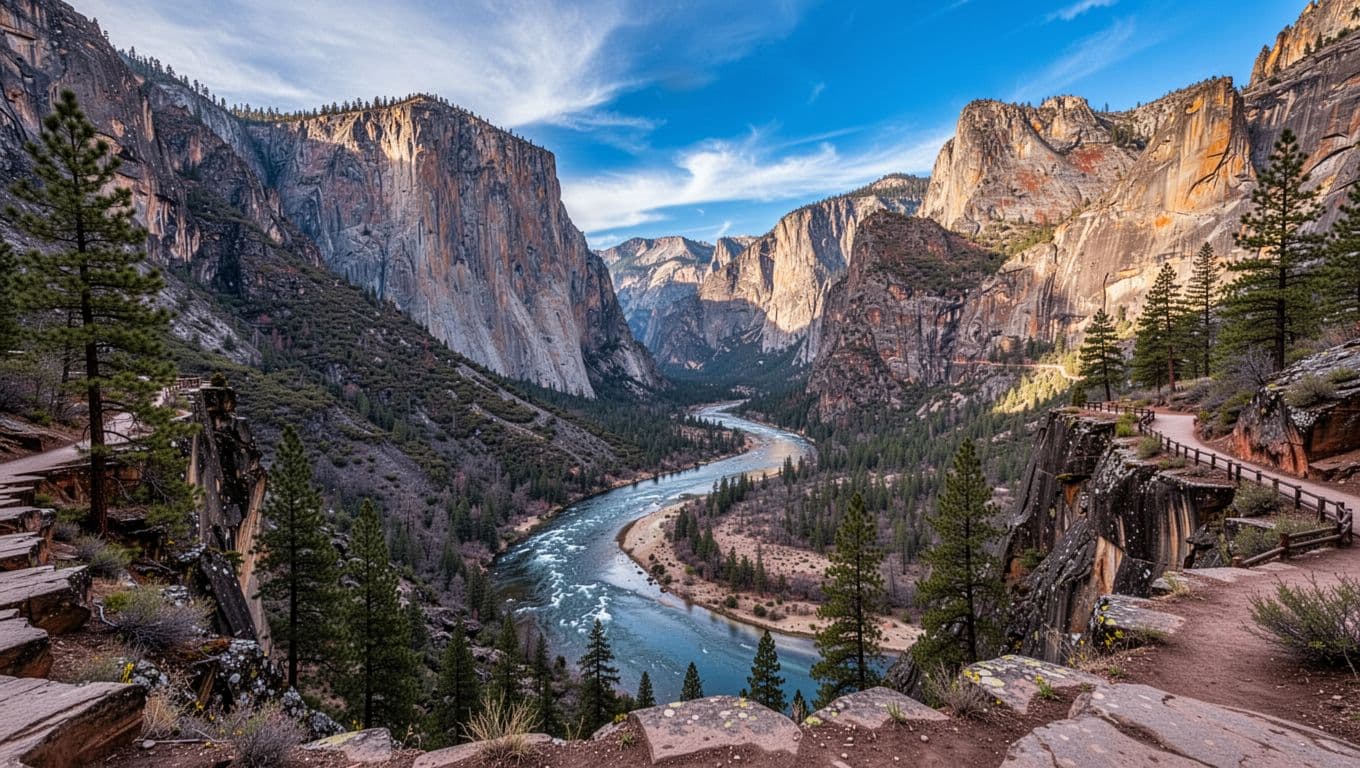
If the Kings Canyon Scenic Byway (Highway 180) into Cedar Grove is open, and you don’t mind more time in the car, drive farther into the canyon for the bigger granite scenery. The road drops past Junction View toward Cedar Grove, with the Kings River running alongside. In Cedar Grove, start with the easy Zumwalt Meadow loop, where the canyon walls rise straight up around a quiet meadow. From there, Roaring River Falls is a short walk, and stronger hikers can push toward Mist Falls. If the road is closed, or if you only want an easy day, stay around Grant Grove and enjoy the forest. Don’t force a deep canyon run on a packed weekend. That turns a good trip into a long commute.
For more trail choices and park timing across the state, this roundup of the best California hikes by season is a useful cross-check, and the best hikes in Yosemite guide is worth a look if you’re extending the trip north.
Where to stay, and what not to overcomplicate
If you can book one night inside the parks, do it. Wuksachi Lodge near Giant Forest or the Grant Grove cabins cut a lot of drive time. If those are full, staying near Three Rivers outside the Ash Mountain entrance still works, as long as you start early.
Keep your gear simple. Bring layers, water, snacks, and decent shoes. Carry a card for park fees, fuel up before entering, and don’t count on charging an EV inside the parks. These parks feel more rugged and remote than Yosemite, and altitude is the sneaky issue. Even short walks can feel harder up here, so slow down and plan fewer stops than the map suggests.
FAQs about a first-timer Sequoia and Kings Canyon trip
Is 2 days enough for Sequoia and Kings Canyon?
Yes, if you stay selective. Two days is enough for the highlights in both parks, especially Giant Forest and Grant Grove with their giant sequoias. It is not enough for every major road, trail, and canyon spur, so pick a few stops and keep the driving light.
Which park should I prioritize first?
Start with Sequoia National Park. The giant trees in Giant Forest hit fast, which makes a first trip feel worth it right away. Then shift to Kings Canyon National Park on day two for a quieter finish around Grant Grove.
Can beginners do this itinerary?
Yes. It’s built around short walks and manageable drive blocks. Check a visitor center for current trail conditions, and if you can handle a few miles at elevation with breaks, you’ll be fine.
Should I stay in one place or move lodging?
If you’d rather not pack twice, stay in one place near Giant Forest or Grant Grove. If you want the easiest mornings, split the trip and sleep closer to each day’s focus. For most first-timers, simplicity beats perfect geography.
Is Crystal Cave open in 2026?
Yes. After several years closed due to fire and storm damage, Crystal Cave reopened in 2025, and the Sequoia Parks Conservancy has confirmed guided tours for the 2026 season, spring through fall. Tours require tickets bought online in advance, at least 36 hours ahead, and tickets are not sold at the cave.
Two days here goes fast, so keep the plan tight on purpose. Less driving, fewer stops, and one great walk per day is what makes this weekend work, and it’s the version that leaves first-timers wanting to come back.