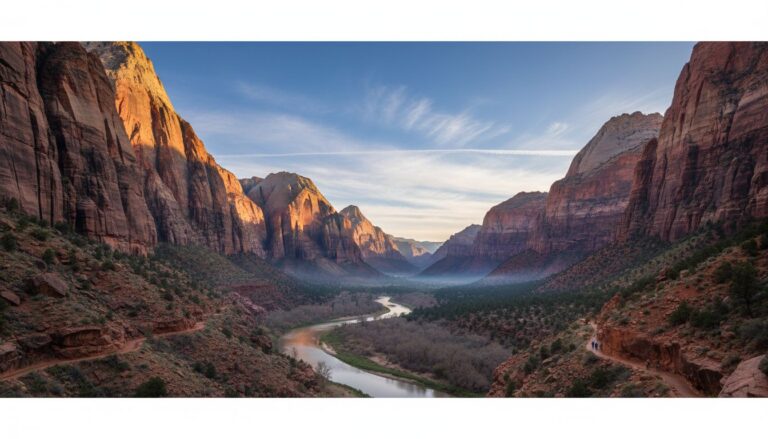
Nebraska hiking trails are a lot less flat than people think. Give the state a chance, and you’ll find sandstone bluffs, pine-covered ridges, tallgrass prairie, river valleys, fossil beds, and a few waterfalls across the Great Plains.
Nebraska has no traditional national parks, but it does have nationally protected places such as national monuments.
The best hikes Nebraska can deliver aren’t always long or brutally steep. That’s the good news for beginners. You can get a huge view, a real workout, or a quiet riverside walk without needing mountaineering experience.
Pick your trail based on the scenery you want, then start early and bring more water than feels necessary.
Key takeaways
- Scotts Bluff and Agate Fossil Beds National Monument are the top western Nebraska picks for big geology.
- Fontenelle Forest, Platte River State Park, and Mahoney State Park make easy weekend options near Omaha and Lincoln.
- The Niobrara Valley is your move for waterfalls, river views, and a change of scenery.
Western Nebraska trails beyond the interstate
Western Nebraska is where the state stops feeling like a drive-through and starts feeling wild. The distances between trailheads are bigger out here, so plan for more driving between hiking trails. These monuments offer a quieter alternative to crowded national parks, so don’t try to cram every stop into one day.
Saddle Rock Trail at Scotts Bluff National Monument
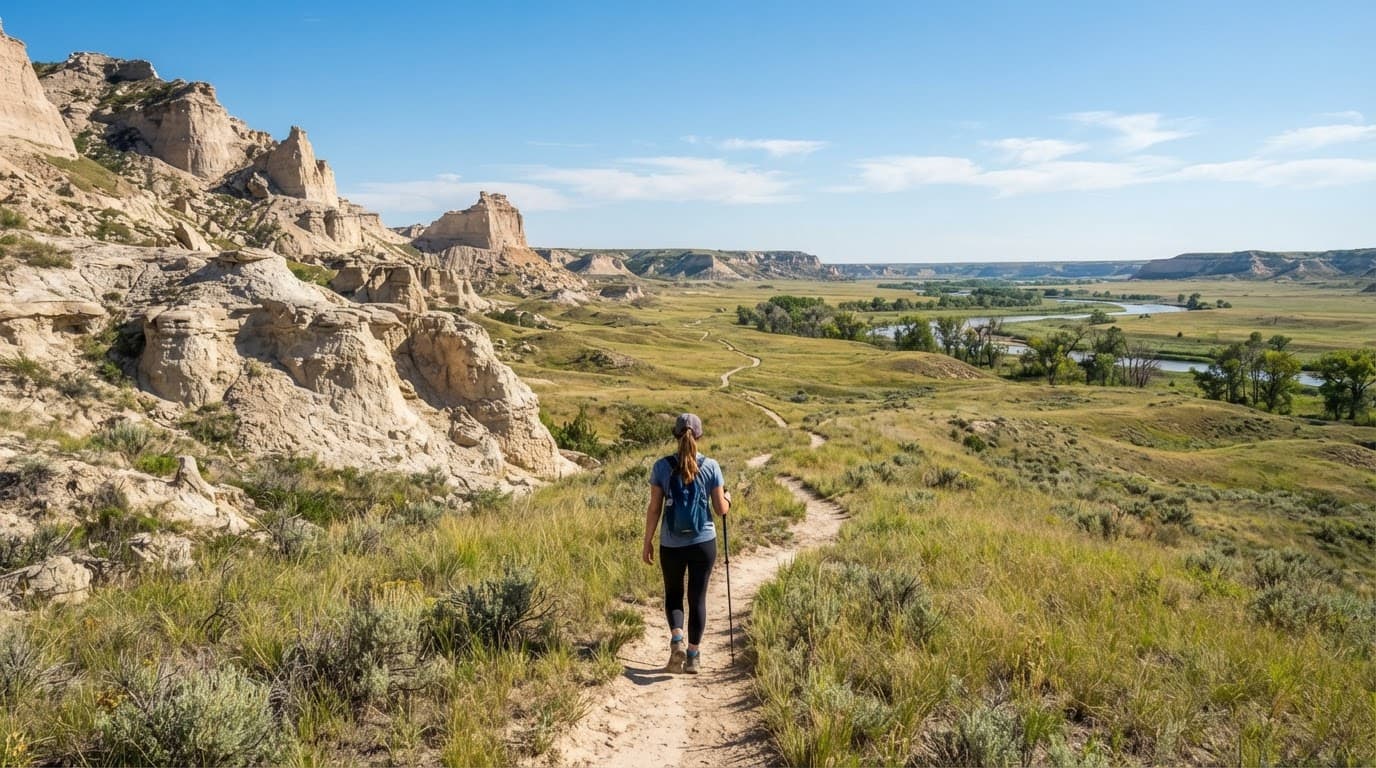
If you only do one western Nebraska hike, make it Saddle Rock Trail. This classic route at Scotts Bluff National Monument climbs from the visitor center to the summit through exposed slopes, a hand-carved tunnel, and wide views over the North Platte River Valley.
This out-and-back trail is 1.6 miles one way, or about 3.2 miles when hiked up and back. That sounds short. Don’t underestimate it. The climb is steady, the summer sun is serious, and exposed sections can wear out a first-timer who starts too fast.
The official route details are worth checking before you leave home because temporary closures and trail work do happen. If conditions are good, this is a moderate-to-strenuous hike with one of Nebraska’s biggest payoffs.
A short uphill trail without shade can feel harder than a longer forest hike. Start early, slow down on the climb, and save some water for the walk back down.
If Scotts Bluff is part of a bigger western road trip, my Badlands National Park one-day itinerary is an easy next stop across the South Dakota border.
Agate Fossil Beds National Monument for prairie and ancient geology
This isn’t a summit hike. It’s better than that if you like a trail with a story.
The one-mile Daemonelix Trail has fossil exhibits beside the path, including the corkscrew-shaped burrows left by ancient beavers. The 2.8-mile Fossil Hills Trail goes farther into the prairie toward historic fossil dig sites. Both are open, dry, and peaceful in a way that makes you notice every change in the grassland.
Use the official trail map and route information to choose your route. I like Daemonelix for families and Fossil Hills for hikers who want a longer prairie walk. Bring a hat either way. Shade is hard to find.
For a different western Nebraska setting, consider Nebraska National Forest in the Sand Hills. It offers open scenery and short walks, but check current conditions before you go, especially after wind or rain.
Eastern Nebraska trails for an easy weekend hike
You don’t need to drive to the Panhandle for a good hiking day. The Omaha and Lincoln area has several state parks and accessible hiking trails, with wooded hills, river overlooks, and boardwalks for beginner hikers.
Platte River State Park has the best all-around variety
Platte River State Park near Louisville is the right call when your group can’t agree on what kind of outing they want. The park has hiking and biking trails through wooded hills, plus river scenery and enough elevation changes to make the route feel like more than a neighborhood walk. For more developed amenities, Mahoney State Park is a nearby alternative with picnic areas, family amenities, and easy access.
It is especially good for a half-day hike. Pick a route, take your time at the overlooks, then stay for a picnic or add another short section. The official park trail map and details will help you sort out the best option before you arrive.
A Nebraska State Park Permit is required for vehicle entry. Check the current permit price and trail conditions before the drive, especially after heavy rain. Muddy hills and leaf-covered roots can get slick fast.
Fontenelle Forest and Schramm Park keep things simple
Fontenelle Forest in Bellevue is my favorite pick for a low-stress first hike near Omaha. Its boardwalks and dirt trails wind through mature forest and rolling ravines, giving you a completely different feel from the open prairie trails out west.
The forest is a solid family option, but there is one big catch: dogs are not allowed on its trails. Look through the official recommended hikes before you go, and budget for admission at the nature center.
Bringing a dog? Head to Schramm Park State Recreation Area instead. The short River View Trail ends with a look across the Platte River, and leashed dogs are welcome. You still need a state park vehicle permit, but it is an easy, close-to-town outing when you want fresh air without a huge commitment.
Hitchcock Nature Center in Iowa’s Loess Hills
Just across the Missouri River, this Iowa site isn’t a Nebraska park. Its short climbs and overlooks through the Loess Hills make it a manageable family hike. Check current route information for Hitchcock Nature Center before you go.
Waterfalls, river views, and the Pine Ridge
Nebraska’s river valleys hold some of its best surprises. These hiking trails focus less on huge elevation and more on water, wildlife, and terrain unlike the Nebraska most people picture.
Smith Falls and Fort Falls in the Niobrara Valley
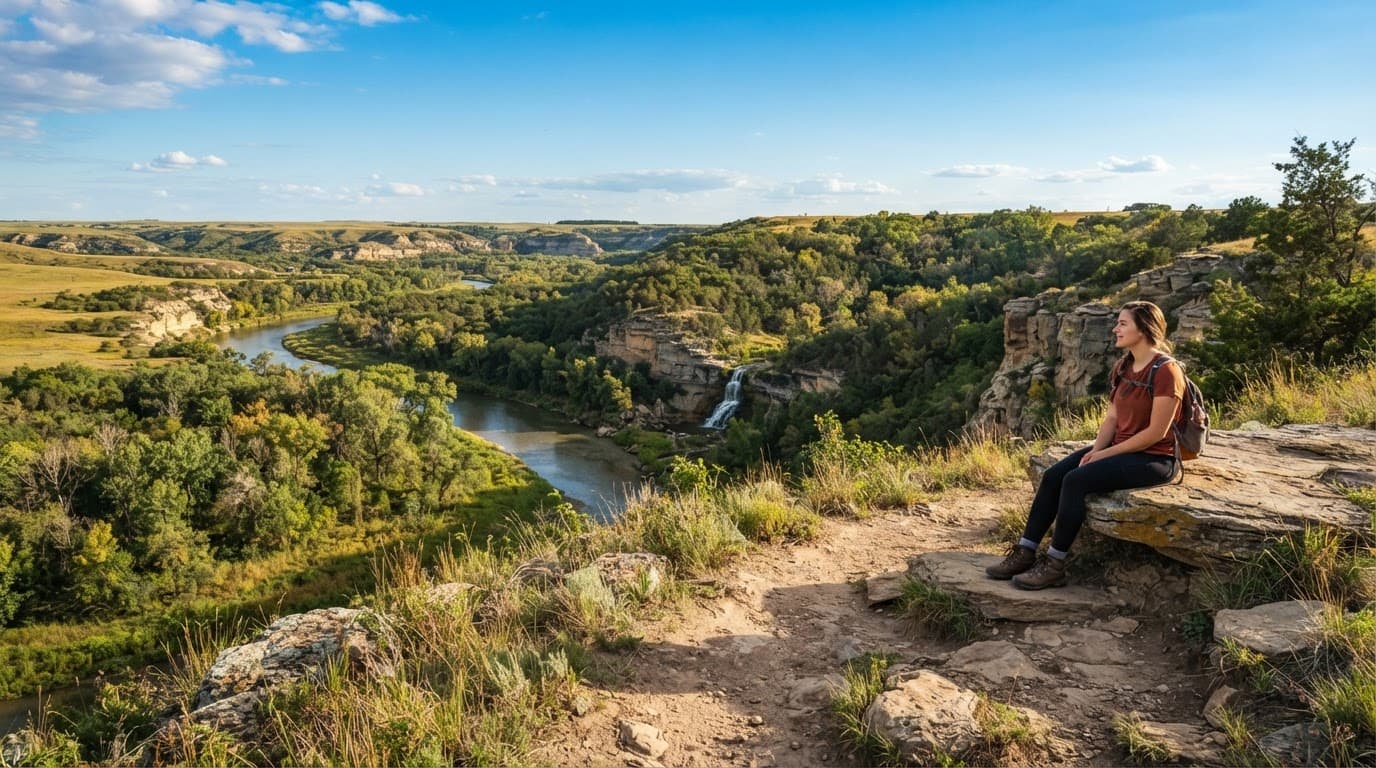
Near Valentine, the Niobrara region offers forested riverbanks, sandy bluffs, and two worthwhile waterfall stops. These areas provide a quieter, smaller-scale alternative to crowded national parks.
Smith Falls is the quick win. The walk to the falls is only about 0.25 miles, but stay on the established trail because the area protects rare plants and erosion is a real problem. Fort Falls requires a little more walking, about 0.9 miles, and its 45-foot cascade is a great reason to spend a full day in the area.
The National Park Service lists both routes in its Niobrara waterfall hike ideas. Don’t assume every access point is free or pet-friendly. The river itself has different rules than individual state, refuge, and private sites.
Chadron State Park for Nebraska’s bigger climbs
Chadron State Park sits in the Pine Ridge, where ponderosa pines, ridges, and dry draws replace the wide-open prairie. It is Nebraska’s oldest state park, and it feels unlike eastern Nebraska’s state parks and trail systems.
For a regular day hike, use the park trails and keep your plans flexible around weather. Review or download a current trail map before committing to a longer route. For a serious challenge, look into the longer Pine Ridge Trail backpacking route. Elevations on that route range from roughly 3,700 to 4,590 feet. Outdoor Nebraska’s backpacking report describes more than 5,700 feet of climbing over the trip.
That is not the place to test brand-new boots or attempt your first overnight on a whim. It is a real backcountry outing. Bring suitable gear, watch the weather, and plan accordingly for this outdoor adventure.
Match the trail to the day you have
Choosing among hiking trails depends less on your fitness level than on your goal and available time. Pick one route style, then let the rest of the day stay easy.
| If you want… | Start with… | Why it works |
|---|---|---|
| A signature Nebraska view | Scotts Bluff summit route | Sandstone, a tunnel, and a huge river valley overlook |
| A family-friendly walk | Bellevue boardwalks | Boardwalks, woods, and flexible route options |
| Waterfall photos | Smith Falls or Fort Falls | Short trails with a strong payoff |
| Open Sand Hills scenery | Nebraska National Forest | Wide horizons, grass-covered dunes, and a quieter pace |
| A bigger hiking challenge | Chadron’s bigger climbs | More climbing, pine forest, and backcountry terrain |
Handle heat, ticks, and trail footing
Nebraska summer hiking is mostly a heat-management game. Get on the trail early, wear sunscreen and sunglasses, and carry water for longer than you think you’ll be out. A hike that feels fine at 8 a.m. can get rough by noon.
Trail runners with solid tread work well in dry weather, and a loop trail can simplify planning. After rain, choose hiking shoes or lightweight boots with real grip. Smooth casual sneakers are fine for a city walk, but they are a bad bet on wet dirt, uneven rock, or steep bluff trails.
Ticks are common in tall grass and wooded trail edges. Stick to the path, use repellent, wear long socks or pants when conditions call for it, and do a full tick check after the hike. Also download a trail map before driving into western Nebraska. Cell service can disappear when you need it most.
Final Thoughts
Nebraska rewards hikers who look past the highway and give the trail a little time. You don’t need to wait for a trip to national parks to find a varied outdoor weekend. A tunnel through Scotts Bluff, ancient fossils at Agate, a quiet Platte River overlook, or a Niobrara waterfall can turn an ordinary weekend into a memorable outdoor adventure.
Start with one trail that fits your group, respect the heat, and wear shoes that can handle the ground. The best hikes Nebraska offers are far more varied than their reputation suggests.
If you’re still picking where to start, my best beginner hikes in the USA guide covers easy, scenic starter trails with the same low-stress approach.
FAQs
Which Nebraska hikes work well for first-time hikers?
The Bellevue forest, Schramm Park, the Louisville park, Mahoney State Park, and the Daemonelix Trail at Agate Fossil Beds are strong beginner choices. These hiking trails offer short, manageable routes with worthwhile scenery and easier logistics.
How hard is the Saddle Rock Trail at Scotts Bluff?
The route is 1.6 miles one way and climbs steadily to the summit. Most hikers can handle it with breaks, but the lack of shade makes it tougher during hot afternoons. Go early, carry water, and check conditions at the visitor center.
Are dogs allowed on Nebraska hiking trails?
Many properties allow leashed dogs, but rules vary by destination. Some wooded preserves don’t allow pets, and nearby sites can have separate regulations. Check the current pet policy for each destination before loading up the car.
When is the best time to hike in Nebraska?
May, early June, late September, and October are the sweet spots for most trails. Spring brings green prairie and cooler temperatures, though ticks are active. Fall usually means more comfortable hiking weather, fewer bugs, and better views across the open landscape.
Does Nebraska have national parks?
Nebraska doesn’t have a designated national park. Its national monuments, national forest, state-run parks, and recreation areas still provide substantial hiking opportunities.