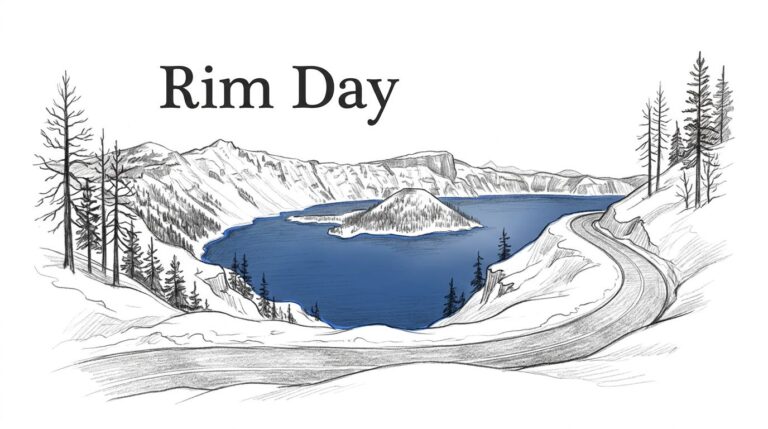
A Crater Lake map is the first thing to study before you go, because this is one of the most map-dependent national parks in the country. The lake fills a 6-by-5 mile caldera, with one 33-mile road circling the rim. Half the year that road is buried in snow, and one of the most famous trails in the park is closed for multi-year rehabilitation. A first visit goes much better with current closure info in hand.
The most important fact to know for any 2026 visit: Cleetwood Cove Trail is closed all of 2026, 2027, and 2028. It’s the only trail down to the lake itself, and no boat tours run during the closure. That changes what a Crater Lake trip looks like for the next three years.
Before you go
- Entrance fee: $30/vehicle for 7 days (May 22 to October 31). Winter rate is $20/vehicle
- Lake depth: 1,943 feet, the deepest lake in the United States
- Lake surface elevation: 6,178 feet; rim elevations run 7,000 to 8,000 feet
- The park averages around 43 feet of snowfall a year, one of the snowiest places in the country
- Best season: late June through early October. The full Rim Drive opens later than that depending on snow
- Two visitor centers: Steel Information Center (open year-round, 9 am to 5 pm) and Rim Visitor Center (seasonal, summer only)
- Crater Lake Lodge at Rim Village is open seasonally, typically mid-May through early October
Current closures (2026)
- Cleetwood Cove Trail and Marina — closed all of 2026, 2027, and 2028 for major rehabilitation. No public access to the lake shore, no boat tours, no Wizard Island access during this period
- Rim Drive — full loop opens in late June or early July depending on snow. The west side (Rim Village to Discovery Point) opens earlier. The east side (Discovery Point to Park HQ) typically still has segments closed into May or June
- East Rim Drive rehabilitation — in 2026, sections around Crater Peak, Sun Notch, and Vidae Falls have construction-related access limits. Check the NPS conditions page before driving the east rim
- Watchman Peak Trail — closed when snow/ice make it unsafe; opens later in summer
- North Entrance Road — closes for winter, typically reopens late June or early July
The best starting areas, ranked
| Starting area | What you get | Best for |
|---|---|---|
| Rim Village | Direct access to the iconic west-side view, Crater Lake Lodge, the Sinnott Memorial Overlook, and the Garfield Peak trailhead | First-time visitors, short trips, scenic-photo days |
| Steel Information Center | Current park conditions, exhibits, year-round open hours, the Mazama Village turnoff | Planning, weather days, or before driving the rim |
| East Rim pullouts | Quieter views and a different angle on the caldera; access to Mt Scott trailhead | Photographers and visitors who want fewer crowds (when the east rim is open) |
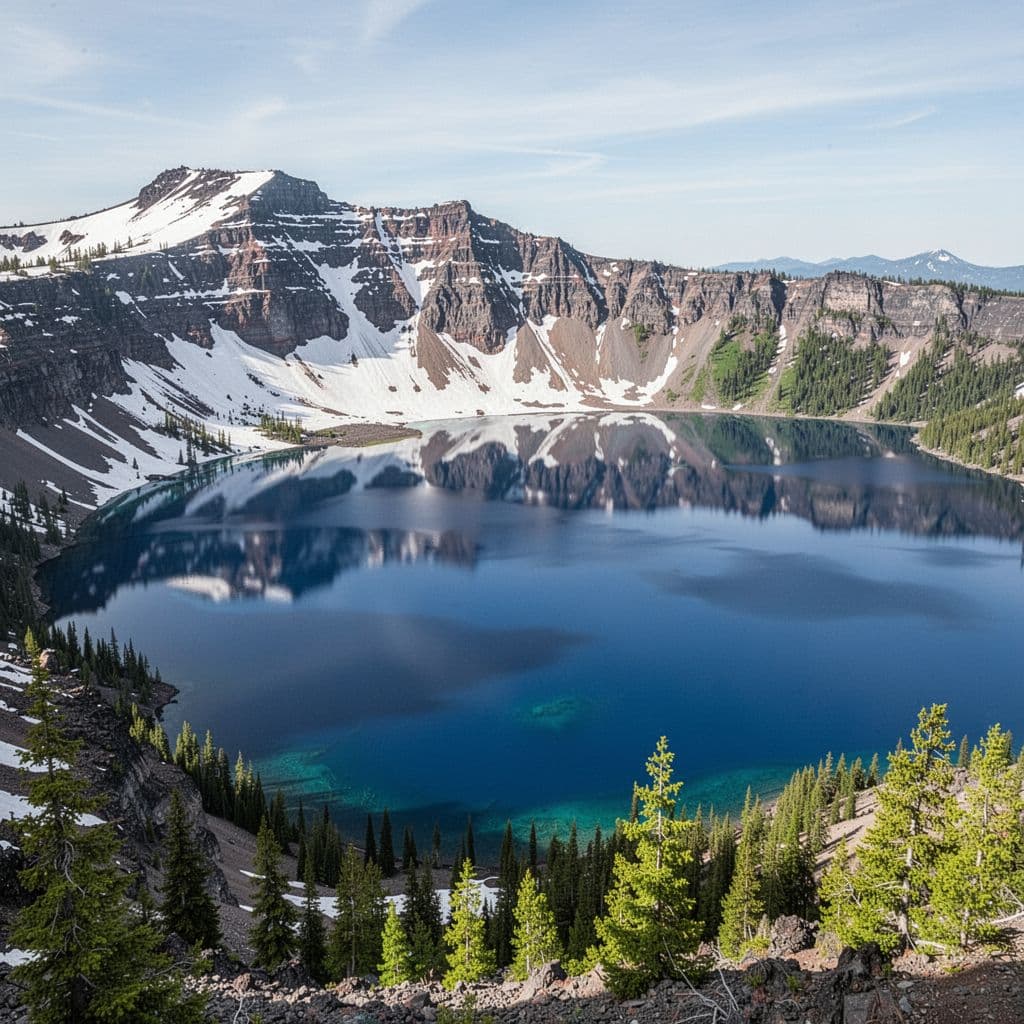
Rim Village
This is the obvious first stop for most visitors. Rim Village sits on the south rim with parking near the lodge, the Sinnott Memorial Overlook (a short paved walk to a great first-look at the caldera), and the Garfield Peak trailhead. From the village, the west side of Rim Drive opens earliest in the season and gives the cleanest access to Watchman Overlook and Discovery Point.
Steel Information Center
The Steel Information Center is open year-round, 9 am to 5 pm, and is the right first stop when conditions are uncertain. Rangers post the day’s road status, closures, and weather notes. In shoulder seasons (May, June, October), this is the only place to find out what’s actually drivable that morning.
East Rim Drive
When fully open (typically mid-summer through early fall), the east rim has quieter pullouts like Phantom Ship Overlook, Pumice Castle Overlook, and Cloudcap Overlook (the highest paved point on Rim Drive). Some 2026 east-rim segments may be affected by ongoing construction; check the NPS conditions page before committing to a full east-rim drive.
The hikes worth marking
- Sinnott Memorial Overlook — paved walk from Rim Village, the easiest “first look” at the lake
- Discovery Point — short walk from a pull-off on the west rim to the spot where prospectors first sighted the lake in 1853
- Watchman Peak — 1.6 mi RT, ~420 ft gain to a fire lookout with one of the best aerial views of Wizard Island. Opens when snow clears the trail
- Garfield Peak — 3.4 mi RT, ~1,000 ft gain from Rim Village; a strenuous but rewarding climb to a 8,054-ft summit
- Mt Scott — 5 mi RT, ~1,250 ft gain to the highest point in the park at 8,929 feet; east side
- Sun Notch — 0.8 mi RT to a clear view of Phantom Ship; east side
- Plaikni Falls — 2 mi RT, easy, a quiet waterfall on the south side
Cleetwood Cove (the trail to the lake shore) is not on this list because it’s closed through 2028. There’s no public access to the lake’s edge during the closure.
A simple plan for a first visit
For a one-day visit in peak summer when the full rim is open:
- Stop at the Steel Information Center for current road conditions
- Drive to Rim Village; walk to the Sinnott Memorial Overlook for the first look at the caldera
- Add the Watchman Peak hike (if open) for the best Wizard Island view from above
- Lunch at Rim Village or back in Mazama Village
- Drive Rim Drive (clockwise from Rim Village) with stops at Cloudcap, Pumice Castle, and Phantom Ship overlooks
- Optional add: Sun Notch on the east side, or Plaikni Falls if you want one easy walk
For a longer plan or a multi-day visit, see the Crater Lake one-day itinerary. For broader Oregon planning, the best Oregon hikes roundup has options closer to Portland and along the coast.
Spring and early summer (May-June)
May and June at Crater Lake are not what most visitors expect. Snow can still be 10 feet deep at the rim. The North Entrance Road is closed. Most of Rim Drive is closed. Watchman Peak Trail can be impassable. Garfield Peak is often still buried.
What’s accessible in late spring:
- The west side of Rim Drive from Mazama Village up to Rim Village and west to Discovery Point
- Sinnott Memorial Overlook at Rim Village
- Steel Information Center for current status
- Snowshoeing and cross-country skiing in much of the rest of the park
If a snowy-rim experience is what you’re after, May and early June can be spectacular. If you want the full Rim Drive and the bigger hikes, plan for July through September.
What to bring
- Warm layers (the rim is 1,500 to 2,000 feet higher than most people realize)
- A rain jacket or wind shell, even in summer
- Shoes with real tread, especially for any rim-edge or peak trail
- Sun protection (UV is intense at altitude)
- Water and snacks (food options in the park are limited to Rim Village and Mazama Village)
- A credit or debit card; some park services are cashless
Frequently asked questions
Is Cleetwood Cove Trail open?
No. Cleetwood Cove Trail and marina are closed for major rehabilitation all of 2026, 2027, and 2028. It’s the only trail down to the lake shore, so there’s no public access to the water during the closure. The boat tours and Wizard Island access also pause during this period.
How deep is Crater Lake?
1,943 feet at its maximum depth, making it the deepest lake in the United States and one of the deepest in the world. Surface elevation is 6,178 feet.
What’s the best first stop?
Rim Village. The Sinnott Memorial Overlook is a short paved walk from the parking lot and gives the classic caldera view. From there, the rest of the day can build outward depending on what’s open.
Can I drive the whole rim?
Only in summer. The full 33-mile Rim Drive typically opens in late June or early July and closes in October when snow returns. In spring, only the west side from Mazama Village to Discovery Point is reliably open.
Is Crater Lake good for beginner hikers?
Yes for short walks and overlook trails. Sinnott Memorial, Discovery Point, Plaikni Falls, and Sun Notch are all easy. Watchman Peak is a moderate climb with a big payoff. Garfield Peak and Mt Scott are strenuous and not recommended as a first hike of the season.
Are boat tours running?
No, not through 2028. The boat tours depart from the Cleetwood Cove marina, which is closed during the multi-year trail and marina rehabilitation.