Olympic can fool you. On a phone screen, everything looks close. On the ground, the park is huge, and the roads force you to think in zones, not highlights.
That’s why I use an olympic national park map to cut choices, not add them. If you’re new to the park, I’d focus on one north-side area first, then add one west-side stop if time allows.
Key takeaways
- I’d start with the north side first, not the whole park.
- Hurricane Ridge is the top pick when the road is open.
- Lake Crescent and Elwha are my best low-stress backups.
- In April 2026, Hoh is closed by flooding, so I’d pivot to Quinault or Ruby Beach.
How I read an Olympic National Park map
The biggest mistake I see is trying to “do Olympic” in one sweep. That usually turns into a windshield tour. The park works better as three zones: north, west, and south.
Before I lock anything in, I check the official Olympic maps and the NPS trip planning page. Both make one thing obvious, most roads loop around the mountains, not through them.
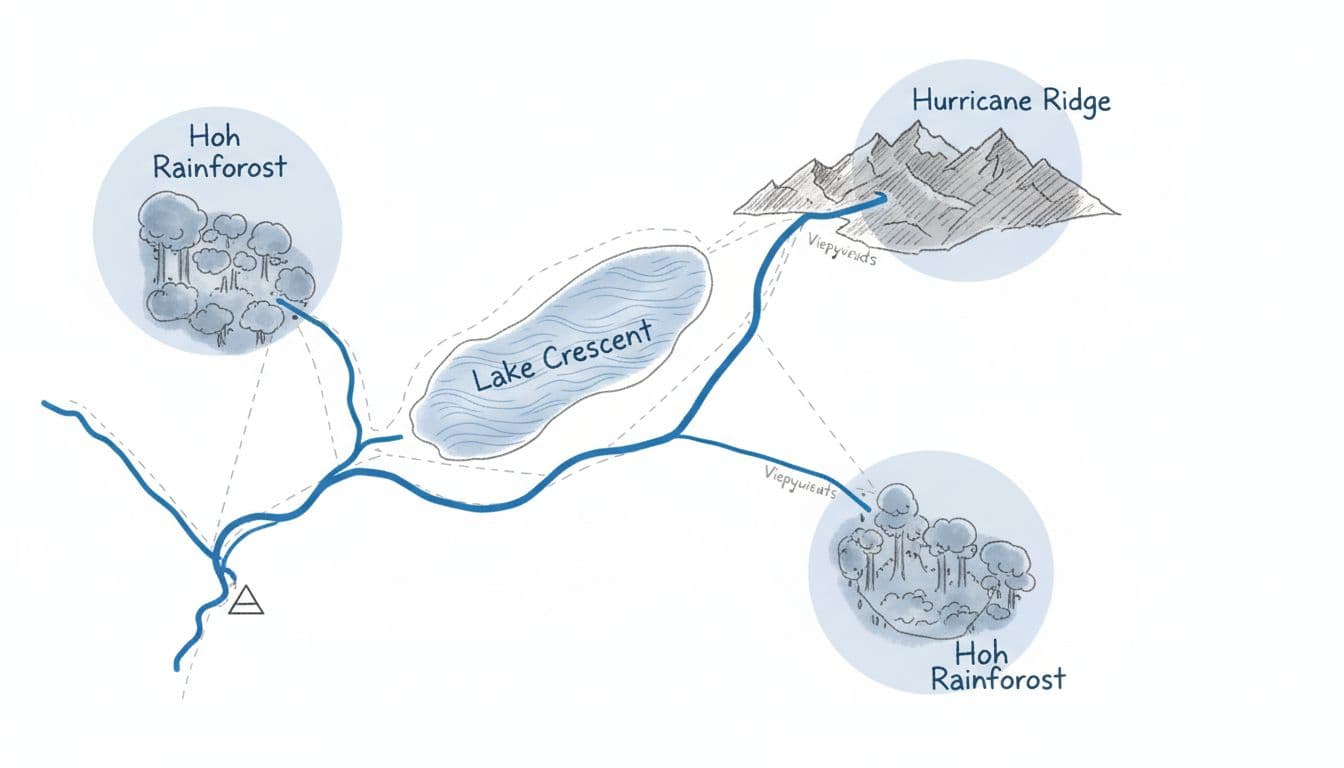
Here’s the quick way I size up the map:
| Zone | Why I start here | April 2026 note |
|---|---|---|
| North | Best mix of mountains, lakes, and easy access | Hurricane Ridge is weather-dependent |
| West | Best for coast and classic rainforest stops | Hoh is closed, Ruby Beach is open |
| South | Best quiet rainforest backup | Quinault is open, South Shore has limits |
If you remember one rule, don’t cross the peninsula twice in one day.
That simple shift saves a lot of frustration. In other words, pick a base, build around it, and let the map work for you.
The first areas I’d circle on the map
Hurricane Ridge gives the fastest payoff
If the road is open, Hurricane Ridge is my first circle on the map. You get huge mountain views without a huge hike, and that matters on a first trip. It’s also close to Port Angeles, which makes logistics easier.

Right now, though, I’d stay flexible. In early April 2026, Hurricane Ridge Road is opening only on some days, often on weekends, based on weather. Also, Hurricane Hill Road past the parking area is closed, so I’d treat the ridge as a scenic high-value stop, not an all-day hiking zone.
Because of that, I never plan Hurricane Ridge without a backup.
Lake Crescent and Elwha are my smartest backup zone
Lake Crescent is the place I trust most when weather or snow messes with higher roads. It’s easy to reach, beautiful in any light, and beginner-friendly. If you want a mellow first day, this area is hard to beat.
I like this zone because it gives you choices. You can keep it light with lake viewpoints and short walks, or add a simple trail like Marymere Falls. Nearby, the Elwha area is also useful right now. Cars still can’t drive past the washout near Madison Falls, but walkers and bikers can go farther if they want.
For beginners, that north-side combo is the sweet spot. You get scenery, manageable driving, and a good safety net if the mountain plan falls apart.
Rainforest and coast, where I’d pivot right now
In a normal season, I’d tell you to circle Hoh early on your olympic national park map. It’s iconic for a reason. The mossy forest feels like stepping inside a green cathedral.
Still, April 2026 is not a normal moment for Hoh. Flooding has closed the road, trails, parking, and restrooms, so I wouldn’t build a first trip around it right now.
My pivot would be Quinault for rainforest vibes and Ruby Beach for the coast. Quinault is open, and it gives first-timers a softer, quieter version of Olympic’s forest magic. That’s a good trade if you want old growth without the long west-side gamble. Keep in mind, South Shore Road has a closure at milepost 8, so I’d plan around open access on the lake.
Ruby Beach is still worth circling too. US 101 has one-way traffic control nearby because of erosion work, but the beach remains accessible. If you’ve never seen Olympic’s coast, this is one of the simplest places to get that first wild-ocean payoff.
For a short trip, I keep it simple. With two days, I’d base in Port Angeles, try Hurricane Ridge, then add Lake Crescent or Ruby Beach. With three days, I’d shift west for one night and add Quinault or another coastal stop. If you want that laid out day by day, my Olympic National Park 2-4 day hiking itinerary is the next step.
The best use of an olympic national park map is focus. Pick one north-side anchor, add one west-side area, and stop there.
That may sound conservative, but it’s the move that gives you better hikes, less driving, and more time to notice why Olympic feels so special. Before you go, check the morning road report and mark one backup plan.
FAQs
What area should I focus on first in Olympic National Park?
I’d start on the north side. Hurricane Ridge, Lake Crescent, and Elwha give you the best mix of views, short drives, and flexible backups.
Is Hurricane Ridge worth prioritizing in April 2026?
Yes, as long as the road is open that day. Weather can change fast, so I’d check conditions the same morning and keep Lake Crescent as Plan B.
Should I plan around Hoh Rain Forest right now?
No. As of early April 2026, Hoh is closed because of flooding. I’d switch to Quinault for rainforest scenery until Hoh reopens.
What’s the easiest first-trip combo on the map?
For most beginners, I’d pair Port Angeles-area stops with one west-side add-on. North side first, then Ruby Beach or Quinault, is a clean and realistic plan.