For your first Wonderland Trail backpacking trip, I recommend 10 to 14 days, a flexible overnight plan, and resupply stops chosen before you book. This 93-mile Wonderland Trail loop around Mount Rainier rewards preparation, but its steep climbs make ambitious itineraries harder than they look.
The biggest planning challenge is connecting available campsites without creating days you won’t enjoy. Start with realistic mileage, then let permits and food carries shape your route.
Key takeaways
- The Wonderland Trail circles Mount Rainier for 93 miles, with substantial climbing almost every day.
- Every overnight requires wilderness authorization and an assigned site.
- About two-thirds of permit capacity is available through advance booking; roughly one-third remains for walk-ups.
- Build resupply around the southwest pickup point and White River, and allow extra time for snow, weather, and uneven campsite spacing.
Understand the distance, difficulty, and season
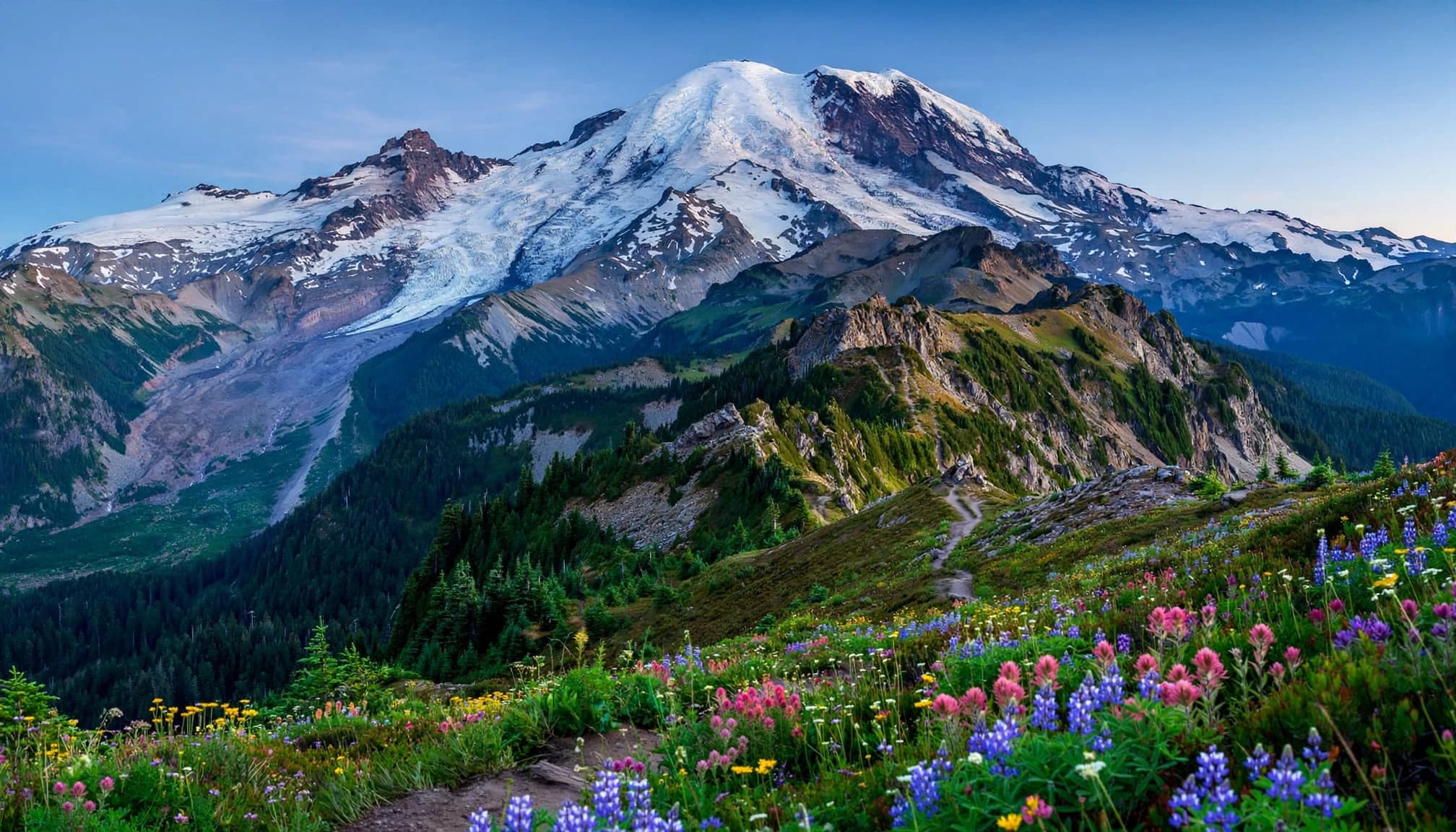
Expect mountain miles, not steady cruising
The Wonderland Trail is a 93-mile (150-kilometer) loop in Mount Rainier National Park, Washington. There are few flat stretches between its forested river valleys and high alpine passes.
The National Park Service’s trail overview lists roughly 27,000 feet of elevation gain and a similar amount of descent. That’s a serious workload with a loaded backpack.
Panhandle Gap, the highest point, sits around 6,750 to 6,780 feet. Snow and exposed weather can make this crossing more demanding than its elevation suggests.
Give yourself enough days
NPS recommends 10 to 14 days, generally covering 7 to 10 miles daily. For a first full circuit, that’s a much better starting point than a fast backpacker’s trip report.
Mid-July through September is the practical summer planning window, but snow doesn’t disappear on a fixed schedule. Earlier trips can involve steep snow crossings; September brings shorter days and colder nights.
I’d favor late July or August for a first attempt, as long as you’re comfortable with peak-season permit competition.
Getting your Wonderland Trail backpacking permit
Start with the early-access lottery
Every overnight requires wilderness authorization, and your itinerary assigns camps for each night. You can’t reserve a start date and choose your camps along the way.
About two-thirds of permit capacity is available through advance reservations on Recreation.gov. The NPS wilderness permit instructions describe a February lottery opening, with assigned early-access booking times during March and April. General reservations open April 25.
Winning gives you a booking opportunity, not a guaranteed complete loop. Later appointments may find the most convenient camp combinations already taken.
Have several acceptable start dates, both hiking directions, and alternate camps ready. Advance reservations must be made at least two days before departure.
Walk-ups are a useful backup
Roughly one-third of capacity remains first-come, first-served. A walk-up permit is issued for the start day or the day before, subject to availability.
Summer issuing locations include the Longmire, Paradise, and White River Wilderness Information Centers. The Henry M. Jackson Memorial Visitor Center doesn’t issue summer wilderness permits.
Arrive early and be willing to change your starting point or shorten the trip. A partial loop is a better outcome than accepting daily mileage beyond your ability.
The 2026 fee schedule lists a $6 reservation fee plus $12 per person, per night. Two hikers spending nine nights would pay $222 in reservation and camping fees.
Choose your direction and starting point
Clockwise or counterclockwise?
Both directions involve substantial climbing and descending. Some hikers prefer counterclockwise because certain steep sections become climbs rather than descents, which can feel better on sensitive knees.
That doesn’t make counterclockwise universally easier. Your campsite spacing, pack weight, and comfort on long descents matter more.
I’d choose the direction that produces manageable days and useful resupply timing. A beautiful route becomes less enjoyable when every afternoon ends with a race to camp.
Pick access that supports your itinerary
The five commonly named starting points are Longmire, Sunrise, White River Campground, Mowich Lake, and Box Canyon.
As the southwest access point, it combines permit services, trail access, and food caching. White River is useful for the same reasons. Sunrise starts higher, while Box Canyon offers southeast-side access.
Mowich Lake has a major 2026 limitation: the standard SR 165 approach is cut off by the Fairfax Bridge closure. Don’t treat Mowich Lake as a normal drive-up trailhead or food-drop location.
My Mount Rainier map guide explains how these park areas connect. Download road and trail maps before arriving; cell service is limited.
A ten-day campsite sequence to build around
This clockwise sequence starts at Longmire and finishes at the same access point. It’s a reservation starting point, not a promise that all nine overnight stops will be available together.
| Day | Destination | Main planning consideration |
|---|---|---|
| 1 | South Puyallup River | Start conservatively with a full food load. |
| 2 | Golden Lakes | Allow time for sustained climbing. |
| 3 | South Mowich River | Use the shorter stage for recovery. |
| 4 | Ipsut Creek | Follow the standard Ipsut Pass route. |
| 5 | Mystic Lake | Budget generously for climbing. |
| 6 | White River | Collect your resupply. |
| 7 | Summerland | Prepare for exposed high-country travel. |
| 8 | Indian Bar | Cross Panhandle Gap. |
| 9 | Maple Creek | Expect a substantial descent. |
| 10 | Longmire | Finish the loop. |
The takeaway is uneven daily effort. Ten days doesn’t mean ten equal hiking stages, and a shorter stage can still include a demanding climb.
Compare camp-to-camp distances and elevation profiles before accepting a permit. If one segment exceeds your demonstrated ability, change the camp sequence or add days.
The Spray Park alternate replaces the Ipsut Pass section with a higher, more exposed route through subalpine meadows, where wildflowers bloom in season. Treat it as a separate route choice with different mileage, climbing, and snow exposure.
For a first full-loop thru-hike, I’d prioritize a workable standard-route itinerary over squeezing in every scenic alternate.
Plan food caches and campsite storage together
Use dependable resupply locations
The NPS food-cache guidance lists Longmire and White River. Older brochures also name Sunrise and Mowich Lake, but those four-stop descriptions shouldn’t drive a 2026 resupply plan.
A start at the southwest pickup point with a White River food cache gives you a practical way to split the food carry. The stages won’t be equal, so count meals between pickup points rather than dividing your total food in half.
Pack caches in rodent-resistant plastic containers, such as sturdy lidded buckets. Cardboard and soft food bags don’t provide adequate rodent protection.
I’d label each container clearly with your name, pickup date, and destination. Keep food organized by hiking day so a resupply stop doesn’t turn into a trailside repacking project.
Store food properly every night
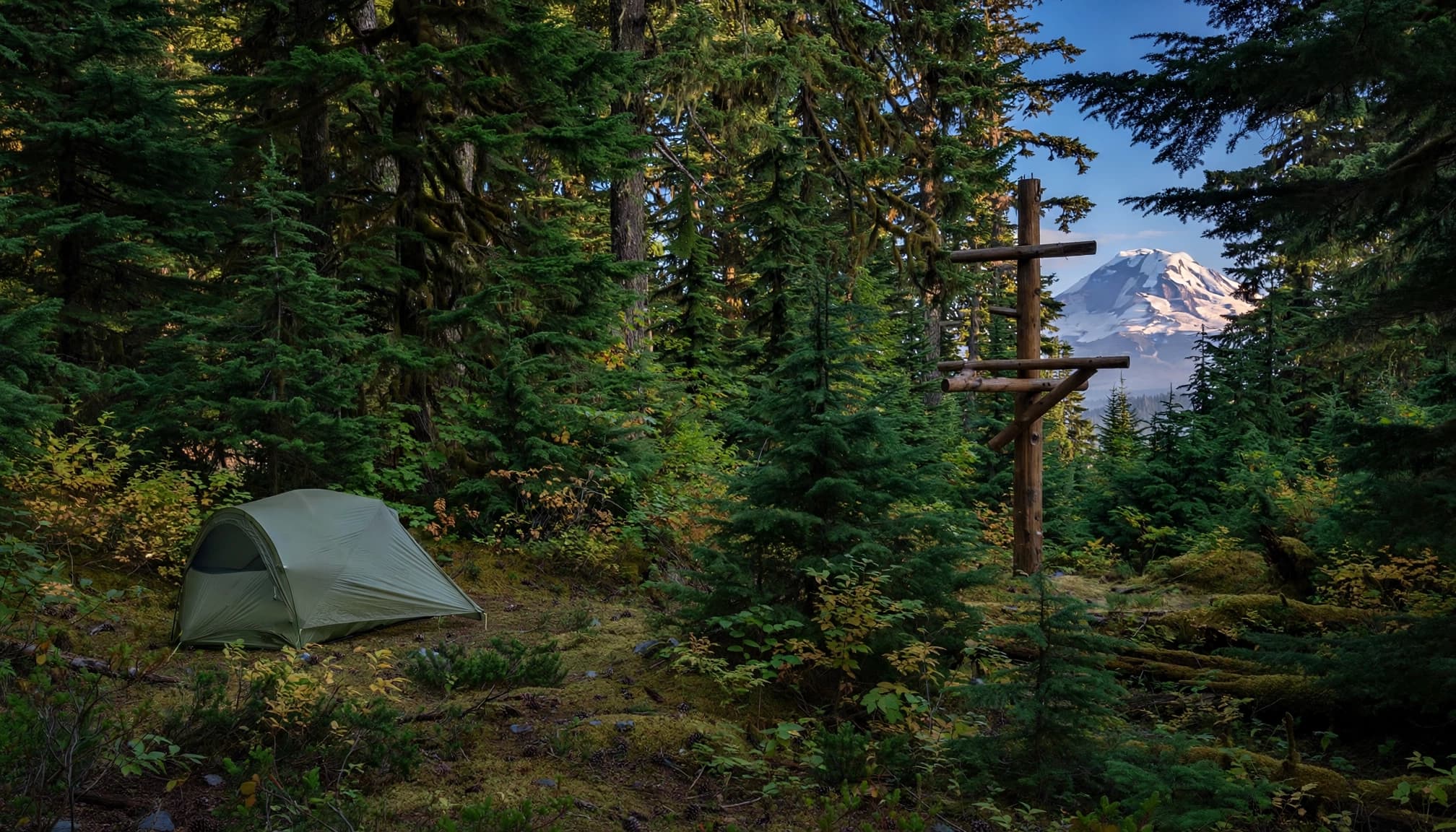
Wonderland camps have food-storage poles, often called bear poles, or boxes. Use the provided system for food, trash, toiletries, and other scented items.
A plastic cache bucket isn’t automatically an approved overnight bear-resistant container. Those are different storage jobs.
Backcountry camping is limited to the designated site in your assigned plan, and food-storage rules apply throughout the trip. Don’t stop early in a meadow or move farther along because another site looks nicer.
A permit reserves a sequence of nights, so one overambitious day can disrupt the rest of your trip.
Prepare for water, weather, and repeated climbs
Treat water and carry enough between sources
Each camp generally has an associated water source, but distance and convenience vary. Fill up with the next stretch in mind, rather than assuming water will appear whenever your bottles run low.
Treat backcountry water. A filter suited to bacteria and protozoa is a common choice, with backup treatment for equipment trouble.
Glacial water can carry heavy sediment that slows filtration. When a suitable clearer source is available, it can save time and extend your filter’s useful life. Download an offline map that includes water locations.
Train with the pack you’ll carry
I recommend back-to-back hiking days before attempting the Wonderland Trail loop. One strong Saturday doesn’t tell you how your feet and knees will feel on day six.
Build up with a loaded pack, sustained climbs, and long descents. The Skyline Trail at Paradise offers 5.5 miles and about 1,700 feet of gain, useful preparation but much shorter than a full Wonderland stage.
My Washington hiking guide includes options for building that progression.
Pack rain protection, warm layers, navigation, a headlamp, first aid, and sun protection. Trekking poles are worth considering for repeated descents. Under the park’s wilderness camping guidance, preparation includes understanding mountain hazards, not simply carrying equipment.
Wonderland Trail planning FAQs
Can I hike the loop without winning the lottery?
Yes. General reservations, cancellations, and walk-up availability provide other opportunities. However, a complete loop requires every overnight to fit together. Flexible dates and alternate camps help more than insisting on one exact itinerary.
Which Wilderness Information Center should I use?
Longmire is convenient for southwest starts, while White River works well for northeast access. Paradise also issues summer wilderness permits. Choose the issuing location that fits your approach, remembering that the Jackson Visitor Center is a different facility.
Is the Wonderland Trail suitable for beginners?
It’s suitable as a goal for developing backpackers, but I’d avoid making it your first overnight trip. Practice camping, water treatment, food storage, and consecutive hiking days beforehand. A shorter backpacking trip gives you room to solve equipment problems without committing to a mountain circuit.
Does a wilderness permit cover park entrance?
No. Wilderness camping authorization and park entrance are separate requirements. The NPS permit FAQs explain how the overnight permit fits into your visit. Budget for entrance separately rather than assuming your camping reservation includes it.
Build the itinerary you can enjoy
A successful Wonderland Trail backpacking trip starts with manageable camp-to-camp days. Give yourself enough time, accept useful alternate assigned sites, and plan food carries around dependable pickup locations.
I’d rather see you finish a comfortable circuit with time for the meadows than rush through an itinerary built around someone else’s pace. Get the permits, camps, and resupply working together, and you’ll have more attention left for the mountain.