If you ask me, the smartest way to do Yosemite Valley day hikes is to stop thinking like a driver and start thinking like a rider. Parking is the real uphill battle in Yosemite Valley, not the trail. So I park once, use the free shuttle bus to reach my trailhead, and let the bus save my legs at the end.
That approach works especially well for beginners. While these are Yosemite Valley day hikes, you should always carry the Ten Essentials regardless of trail length. You keep the big views, cut the parking stress, and make it easier to pair one easy walk with one bigger hike. As of March 2026, I still check shuttle service before every visit, because spring operations can shift with weather.
Key takeaways
- Park once and let the Valley shuttle bus handle the trailhead parking logistics.
- Start early, because the Valley feels far calmer before 8:00 a.m.
- For easy outings, I recommend Mirror Lake or Lower Yosemite Fall.
- For a bigger effort, I use the shuttle to Happy Isles and hike the Mist Trail, offering views of the iconic Half Dome.
- Always confirm current shuttle service and trail conditions the day before.
Why I plan Yosemite Valley hikes around the shuttle
Most visitors treat the shuttle like a backup plan. I do the opposite. In Yosemite Valley, the shuttle bus is the plan.
When spring service is active, Valley shuttles generally run from 7 a.m. to 10 p.m., with buses coming about every 8 to 22 minutes, depending on the route. That’s frequent enough for a hiking day, but I still verify the latest map and dates on the official Yosemite public transportation page, because weather can shift things fast.
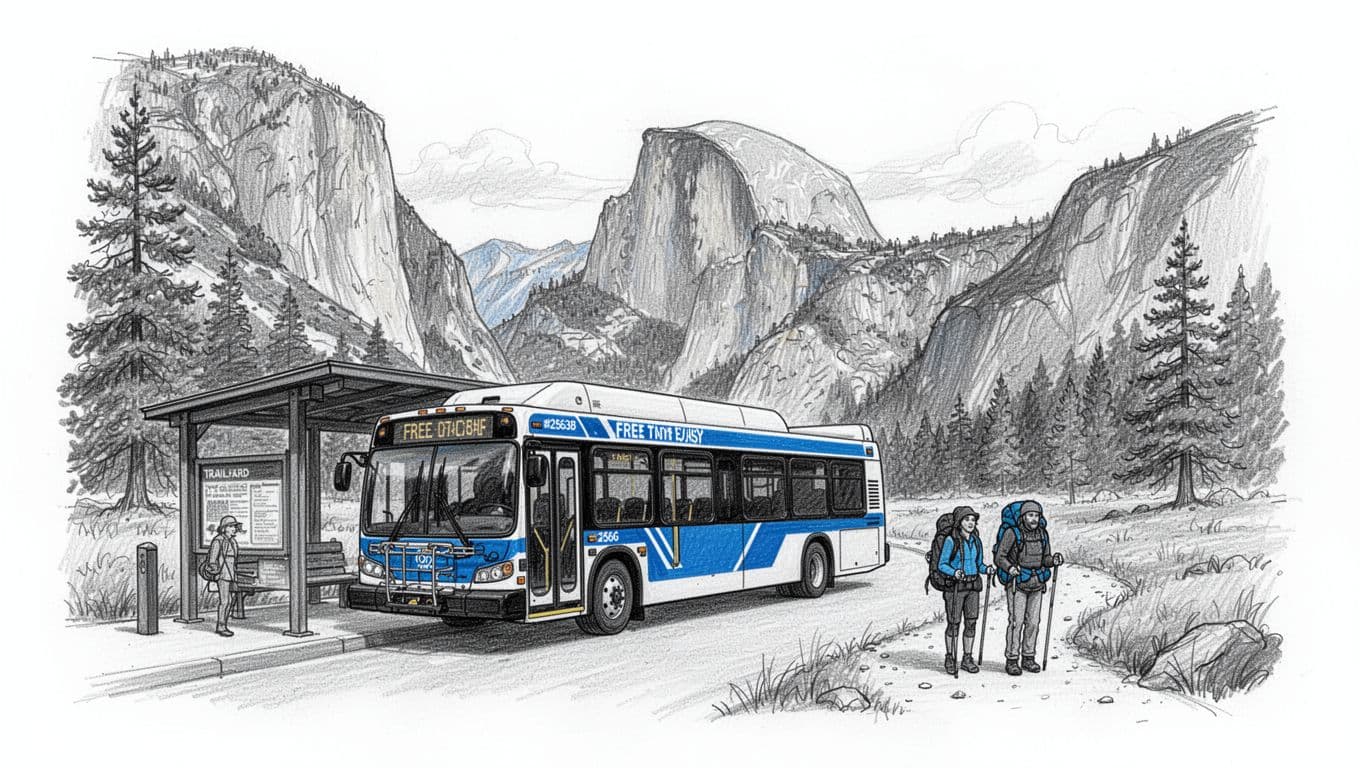
Here’s why this works so well. Yosemite Valley traffic builds like a dammed river. It looks manageable at first, then suddenly everything backs up. Trailhead parking is often full by 9 a.m. If I’m already parked and moving by shuttle bus, I can enjoy views of El Capitan and Cook’s Meadow instead of the bumper in front of me. I skip that mess.
My rule is simple: park once, shuttle first, hike second.
This also pairs nicely with my guide on how to avoid Yosemite crowds, because timing matters just as much as trail choice. Also, keep in mind that peak-hour entry rules can change by season. If I’m coming in by YARTS or other public transit, that can reduce some of the car-entry hassle too, and it’s a great way to respect the Yosemite Valley floor environment while practicing Leave No Trace principles.
The best Yosemite Valley day hikes from shuttle stops
For simple logistics, I want trailheads with frequent shuttle access, clear navigation, and a strong payoff early. That narrows the field in a good way.
Here’s the quick comparison I use:
| Hike | Round trip | difficulty level | Shuttle logic | Why I like it |
|---|---|---|---|---|
| Lower Yosemite Fall | 1.2 miles | Easy | Easy hop-on, hop-off stop | Fast payoff, great for first-timers |
| Mirror Lake | 2 to 4.4 miles | Easy | Start near the east end of the Valley | Flat, flexible, kid-friendly |
| Mist Trail to Vernal Fall or Nevada Fall | 1.6 to 5.4 miles | Moderate to hard | Best from Happy Isles | Biggest wow factor, significant elevation gain; John Muir Trail as alternative downhill route |
| Valley Loop half loop | 7.2 miles | Moderate | Good near Yosemite Falls area | More space, less stop-and-go foot traffic |
My beginner pick is still Mirror Lake. It’s forgiving, scenic with a great spot to see the face of Half Dome, and easy to shorten if your group runs out of steam. Lower Yosemite Fall is even easier with views of Yosemite Falls upper and lower sections, though it feels more like a great walk than a true hike.
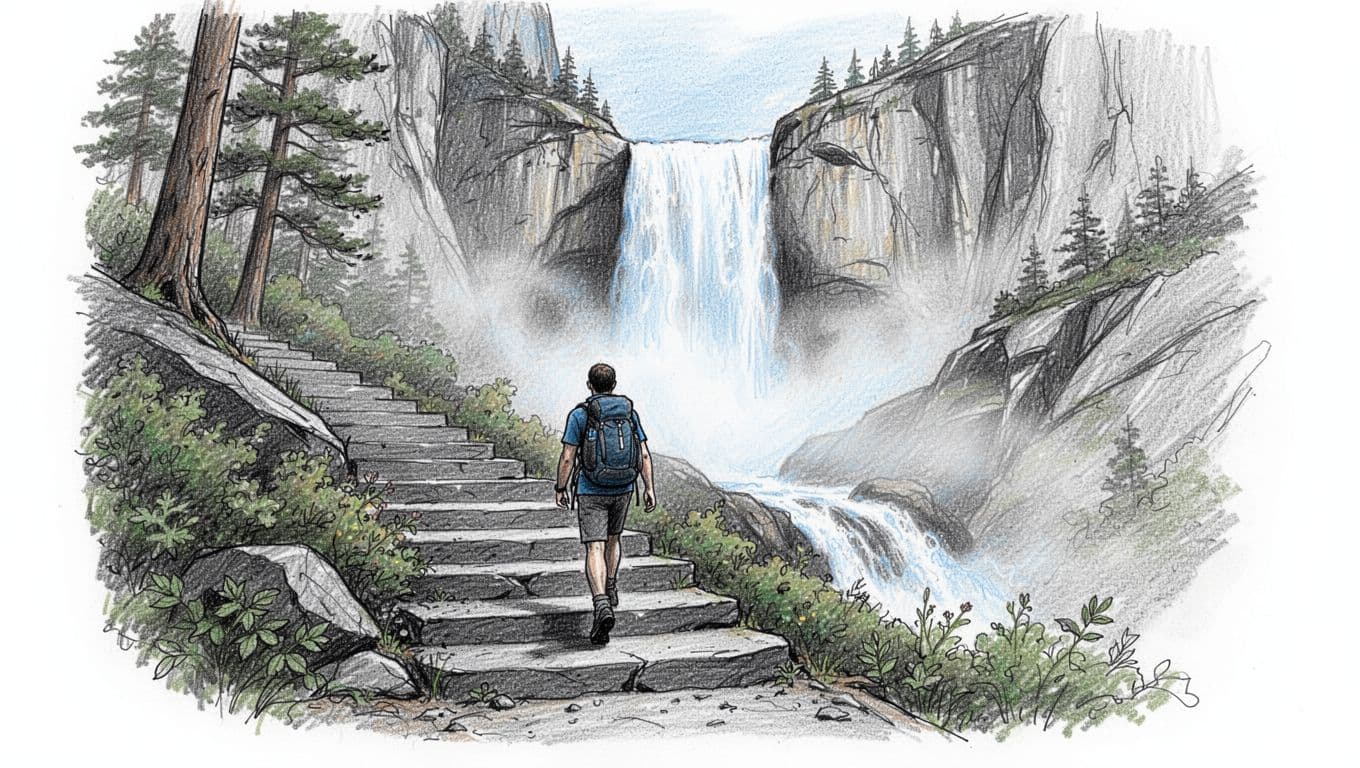
If you want one trail that feels classic Yosemite, the Mist Trail wins. Wet granite, loud water, stone steps, and huge views, it’s the trail I put first on most one-day itineraries. Just know the jump in effort is real.
For hikers who want a longer but flatter outing, the official Valley Loop trail page is worth checking. It’s one of the better ways to get a quieter feel without leaving the Valley.
I’d skip Four Mile Trail if your goal is a beginner-friendly shuttle day. It leads toward Glacier Point but has a high difficulty level, significant elevation gain, and the return is not simple. If you want a broader menu, my guide to the best hikes in Yosemite National Park covers the stronger step-up options.
For those heading higher, Glacier Point or Taft Point offer different perspectives than the valley floor.
My easiest shuttle game plan for beginners
When I only have one day, I keep the plan boring on purpose. Boring logistics make for a better hike.
Half-day version
I park wherever I find a legal space near Yosemite Village or Yosemite Falls, then ride to my first easy trail. My favorite pairing is Lower Yosemite Fall first, then Mirror Lake second, with a quick stop at Bridalveil Fall if time allows. That gives me one quick iconic stop and one calmer walk.
By lunchtime, I’m done chasing parking and done making decisions. That matters more than people admit.
Bigger day version
For a fuller outing, I take the shuttle straight to Happy Isles and hike the Mist Trail to Vernal Fall, or continue past Vernal Fall to Nevada Fall with the added elevation gain if the group has the legs. Hikers aiming for the Half Dome cables will need Half Dome permits, which is a much larger effort than these beginner hikes. On the way back, I don’t care where I left the car, because the shuttle handles that problem for me.
That’s the heart of the strategy. I use the shuttle bus to solve the annoying part of Yosemite, so I can focus on the beautiful part. Even on the shuttle bus, you should be prepared for wildlife; note that bear spray is actually not allowed in Yosemite, unlike other national parks.
If you want help matching trail length to your group, my Yosemite day hike planner makes that much faster. And if you’re still choosing dates, my take on the best time for Yosemite hikes can save you from bad timing.
The bottom line
The best Yosemite Valley day hikes get even better when I stop treating my car like part of the adventure. A simple shuttle strategy keeps the day lighter, smoother, and less crowded. Park once, start early, and pick a trail that fits your real energy, not your vacation ego. Yosemite Valley day hikes are just the beginning. Once comfortable with the shuttle bus system, visitors might look toward Glacier Point or the giant sequoias at Mariposa Grove for their next trip. Tioga Road and Tuolumne Meadows offer high-country alternatives with different difficulty level ratings when the snow melts.
FAQs about Yosemite Valley day hikes and the shuttle
What time should I start?
I like boarding or walking by 7:30 to 8:00 a.m. Earlier is even better in busy months.
Do I need a reservation for the Valley shuttle?
No. The Valley shuttle is free and doesn’t require a booking.
What’s the best beginner hike with this strategy?
Mirror Lake, located on the Yosemite Valley floor, is my favorite easy option. Lower Yosemite Fall is the easiest fast-payoff walk.
Is the Mist Trail good for beginners?
Only partly. The Vernal Fall footbridge is a fair beginner stretch, but its moderate difficulty level includes notable elevation gain to the top of the falls, getting steep and slippery.
Do I need Half Dome permits for these hikes?
Half Dome permits are required only for the cables, not for hiking the Mist Trail to Vernal Fall or Nevada Fall.
Can I rely on the shuttle in spring 2026?
Check the day before. Spring dates and route details can shift with weather, especially early in the season.
How do Yosemite Valley day hikes differ from high-country hikes?
Valley hikes stick to gentler terrain, while high-country options like Clouds Rest and Cathedral Lakes near Tioga Road feature more elevation gain.