Sleeping Bear Dunes National Lakeshore packs a full day of scenery into a small footprint, which is exactly why a one-day visit works so well here. The trick is starting early. The sand gets hot, the parking lots fill up, and the Lake Michigan Overlook is at its quietest before 10am.
This guide lays out a clean first-time itinerary: one dune stop, one scenic drive, one short hike, and one easy beach finish. It skips the kind of overplanning that turns a national lakeshore visit into a logistical project.
For a similar lakeshore day farther south, the Indiana Dunes itinerary follows the same rhythm.
For more options across the state, the Best Hikes in Michigan guide covers dunes, lakeshores, and forest views.
Before you go
- Entrance fee: $25 per vehicle, valid for 7 days. The park is cashless, so bring a card
- Pierce Stocking Scenic Drive is seasonal, typically open late May through late October. It closes to vehicles in winter
- The Dune Climb itself is open year-round
- Pets are prohibited on the Dune Climb and Dunes Hiking Trail year-round; leashed pets are allowed on Empire Bluff and Pyramid Point
- Empire is the main gateway town; the Philip A. Hart Visitor Center is on M-72 in Empire
- Traverse City (about 30 minutes east) is the most common lodging base
Start at the Dune Climb before the sand gets hot
The Dune Climb is the signature stop, and it’s the one that punishes a lazy start. The climb up the front face of the dune is short on the map but tough in loose sand, and the parking lot fills early on summer weekends. Aim to be in the lot by 8am, especially in July and August.
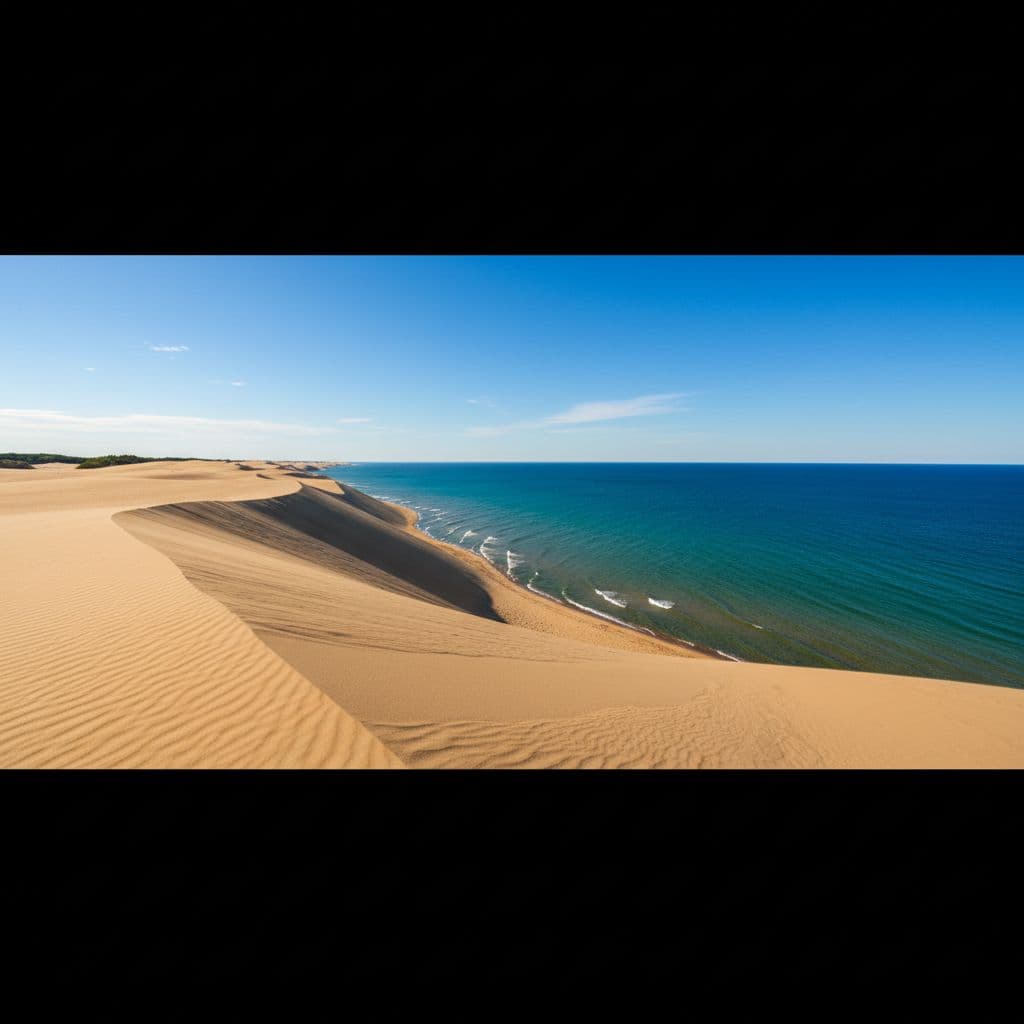
About that climb to Lake Michigan from the top: it’s roughly 3.5 miles round-trip and most hikers take 3 to 4 hours. The lake itself is not visible from the top of the front dune; you have to commit to a real out-and-back over open sand to reach the shoreline. The NPS posts warning signs at the Lake Michigan Overlook (Pierce Stocking stop #9) because rescues from people who descended without realizing how hard the climb back up would be are a regular occurrence, and the cost of a Coast Guard or NPS rescue can run into the thousands. Don’t descend to the lake from the overlook unless you’re prepared for that round-trip.
Bring more water than you think you need, wear closed-toe shoes (sand inside sandals is misery), and turn around partway up if you want a shorter day. The view of Glen Lake behind you on the way up is one of the best in the park.
For cyclists, the Sleeping Bear Heritage Trail (a paved multi-use path) runs right by the base of the dunes and connects Empire, Glen Arbor, Honor, and other towns.
Drive Pierce Stocking Scenic Drive next
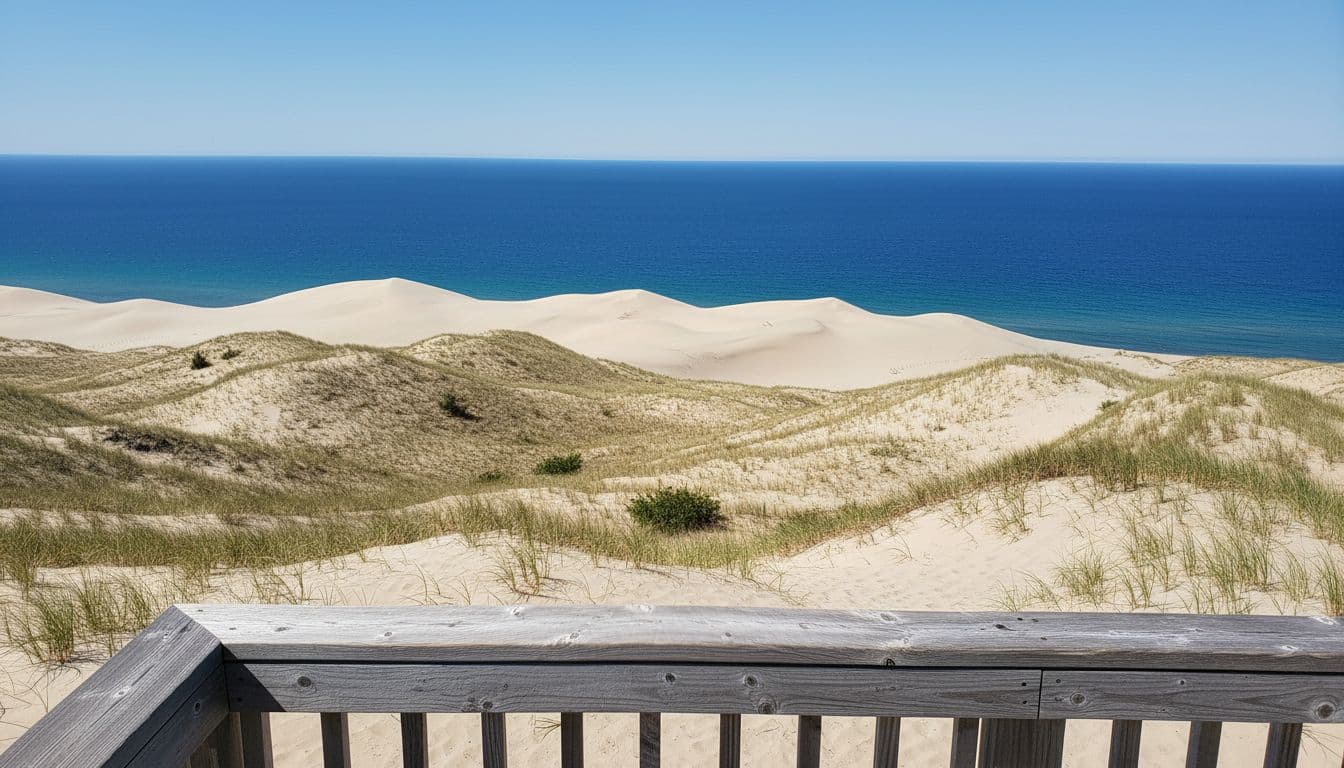
Pierce Stocking Scenic Drive is the easiest way to see the rest of the park’s biggest views. It’s a 7.4-mile one-way loop with 12 numbered stops, and most visitors take about 2 hours, including time to get out at the overlooks. The Lake Michigan Overlook (stop #9) is the headline view.
Heads-up on seasonality: the drive is closed to vehicles in winter (typically late October through late May). If you’re visiting in shoulder season, check the NPS site for the current opening date.
After the climb, the drive is a welcome change of pace. Roll the windows down, stop at the pullouts you want, and skip the ones you don’t. You can see the Manitou Islands offshore on a clear day.
Lunch in Glen Arbor, then one short hike
Glen Arbor sits about 15 minutes north of the Dune Climb and is the natural lunch stop. Cherry Republic is the obvious cherry-everything spot, and Art’s Tavern is the longstanding local burger choice. There are also a handful of cafes and ice cream stops within a few blocks.
For the afternoon hike, pick one, not three. Two trails work especially well for a first visit:
- Empire Bluff Trail — 1.5 miles round-trip, moderate, with a payoff view from a bluff above Lake Michigan. The trailhead is just south of Empire. Leashed pets allowed. This is the standard recommendation for first-timers because the effort-to-view ratio is hard to beat
- Pyramid Point — about 1.2 miles to a bluff over the lake and back, with a steeper climb. Quieter than Empire Bluff and a stronger workout
If you’d rather get on the water, Crystal River runs through the park north of Glen Arbor and is one of the more popular paddling spots in the area, with local outfitters renting kayaks and tubes. Otherwise, head to Glen Haven Beach, where the historic Sleeping Bear Point Maritime Museum sits a few hundred feet from the shore.
A simple day-by-clock itinerary
| Time | Stop | Why it works |
|---|---|---|
| 8:00 a.m. | Dune Climb | Cooler sand, easier parking, before the lot fills |
| 9:30 a.m. | Pierce Stocking Scenic Drive | Big views with minimal effort, including the Lake Michigan Overlook |
| 11:30 a.m. | Lunch in Glen Arbor | Easy food stop, a few good choices in a small footprint |
| 1:00 p.m. | Empire Bluff Trail or Pyramid Point | One short hike with a real view |
| 3:00 p.m. | North Bar Lake or Esch Beach | Warm-water swimming (North Bar) or quieter Lake Michigan beach (Esch) |
| 5:30 p.m. | Sunset on the Lake Michigan shoreline or at Point Betsie Lighthouse | The classic way to close the day |
If you’re visiting in shoulder season, shift the whole day later by an hour. In July and August, keep the early start as written. Days that try to add a second hike or a second drive tend to feel rushed by the afternoon.
What to bring
- Water, more than you’d carry for a city walk, since dune hiking is more exhausting than the distances suggest
- Sunscreen, sunglasses, and a hat (the open dunes reflect a lot of light)
- Closed-toe shoes for the Dune Climb and the trails; sandals fill with sand fast
- A light layer for the breeze coming off Lake Superior, which can be sharp even on warm days
- Snacks
- A credit or debit card (the park is cashless)
If the weather turns, the Sleeping Bear Point Coast Guard Station Maritime Museum at Glen Haven is the indoor backup plan, with shipwreck history and a restored U.S. Life-Saving Service station.
Frequently asked questions
How much does it cost to enter Sleeping Bear Dunes?
$25 per vehicle for a 7-day pass. Motorcycles are $20 and individual entries on foot or bike are $15. The park is cashless, so bring a credit or debit card. An America the Beautiful annual pass also gets you in.
Is one day enough for Sleeping Bear Dunes?
Yes, for a first visit. One dune stop, one scenic drive, one hike, and one beach finish covers the highlights. If you have a second day, add a paddle on Crystal River and a trip to Leland’s Fishtown for smoked whitefish.
What’s the best hike for first-timers?
Empire Bluff Trail. It’s 1.5 miles round-trip, moderate, and the bluff view at the end is one of the best short-effort payoffs in the park. The Dune Climb itself is a workout but isn’t really a hike with a destination unless you commit to the 3.5-mile round-trip to Lake Michigan.
Can you walk down to Lake Michigan from the Lake Michigan Overlook?
Technically yes, but the NPS warns against it, and they aren’t kidding. It’s about 450 vertical feet of loose sand down to the water, which is the easy part. Climbing back up is brutal and triggers a steady stream of rescues every summer. If you do it, plan on 3 to 4 hours, bring water, and don’t go in the heat of the day.
Are dogs allowed at Sleeping Bear Dunes?
On some trails, not on others. Dogs are prohibited on the Dune Climb and the Dunes Hiking Trail year-round. They’re allowed on leash on Empire Bluff Trail, Pyramid Point, the Sleeping Bear Heritage Trail, and most other trails. Always check the NPS site for any seasonal restrictions before you go.
Is Pierce Stocking Scenic Drive open year-round?
No. The drive is open to vehicles seasonally, roughly late May through late October. In winter it’s open to cross-country skiing and snowshoeing. Check the NPS site for the current opening date if you’re visiting in May or October.