Michigan is one of those states where a short hike can feel like three different trips. You can start in soft sand dunes, finish above a blue lake, and still make it back to the car before dinner. Whether you are exploring the scenic Lower Peninsula or finding solitude in Wilderness State Park, the landscape offers a unique variety for every outdoor enthusiast.
If you are new to the outdoors, that is good news. The hard part is not finding scenery, it is picking the right Michigan hiking trails before heat, sand, and distance turn the day into work.
Quick takeaways
- Empire Bluffs is the easiest place to start if you want a classic dune-and-lake payoff.
- Pictured Rocks is the strongest shoreline choice when you want cliffs, forest, and water in one trip.
- Hartwick Pines is the smart pick when you want shade and tall trees, not a sand slog.
Here is how I narrow the field when I am picking the best hikes Michigan has to offer.
How to choose the right Michigan trail
Michigan hiking is mostly a story about surface and exposure. Dunes are slower than they look. Shoreline cliffs make you work for every view. Forest trails are cooler, calmer, and easier on hot days. Whether you are exploring a protected nature preserve or a remote coastal path, many Michigan hiking trails in the Lower Peninsula connect to the expansive North Country Trail, offering endless options for your next adventure.
If you are choosing one route for your first day hike, think about the kind of day you want, not just the mileage. Michigan has enough variety that the wrong surface can feel harder than the right one at double the distance. The most scenic hiking trails roundup from Michigan.org is a useful broader list, but the parks below are the ones I keep coming back to for beginners.
| Trail type | Best pick | Why it works |
|---|---|---|
| First dune view | Empire Bluffs | Short climb, clear payoff, big Lake Michigan view |
| Shoreline drama | Pictured Rocks Chapel Loop | Waterfalls, cliffs, and a real all-day hike |
| Mixed sand and forest | Great Warren Dune Trail | Forest first, beach finish, solid variety |
| Cool shade | Hartwick Pines | Tall pines, easy footing, less sun exposure |
| Long sampler day | Ludington State Park loop | Dunes, inland water, and boardwalks in one place |
If you want a clean first-day plan on the west side, the Sleeping Bear Dunes one-day itinerary keeps the logistics simple.
On Michigan hiking trails, the hard part is rarely the distance. It is the sun, the soft sand, and the pace drop that sneaks up on you.
Sleeping Bear Dunes National Lakeshore is the cleanest first win
Sleeping Bear Dunes National Lakeshore is the obvious place to start if you want the classic dune and lake experience. Located just a short drive from Traverse City, this park offers more than 100 miles of trails, though most first-timers only need a few of them. The official Sleeping Bear Dunes trails page provides a comprehensive menu, and the Friends of Sleeping Bear trails page is useful when you want to compare options without guessing.
The formula here is simple: one overlook, one sand climb, and one beach stop. That is enough to make the day feel complete.
Empire Bluff Trail
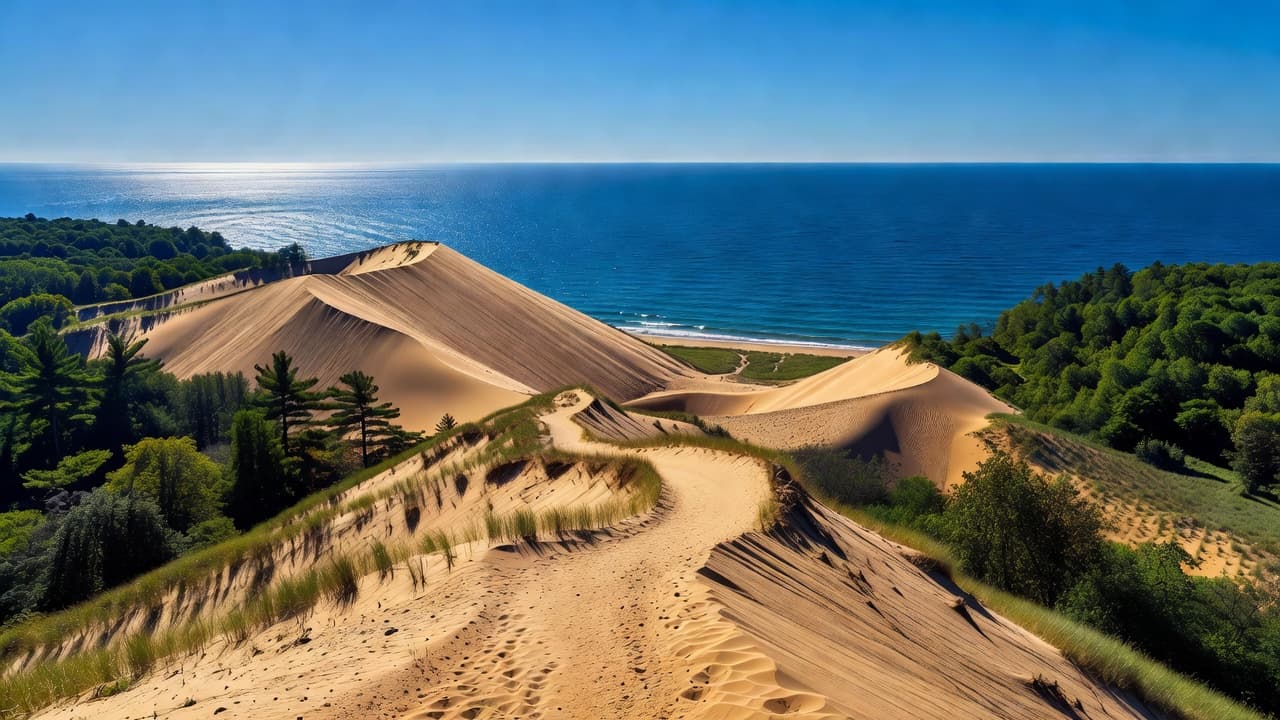
If you ask me, the Empire Bluff Trail is the easiest first hike to recommend in Michigan. It is about 1.5 miles round trip, and the climb is steady enough to feel like a real hike without becoming a project. You earn the view, but you do not have to spend all morning earning it.
The payoff is a broad look over Lake Michigan and the sand dunes below. It works especially well early in the day, when the sand is cooler and the light is cleaner. For beginners, this is the sweet spot. You get the scene, the exercise, and no regrets.
Pyramid Point Trail
Pyramid Point is the next step up if the Empire Bluff Trail feels too gentle. You can keep it short or stretch it into a small loop, and either way you get a bigger dune feel and a wider view over the lake and the Manitou Islands.
This is the trail I would pick when someone wants a little more effort but still wants the day to feel manageable. It is sandier, a bit quieter, and more exposed than the bluffs. That means it asks for a little more patience, especially in warm weather, but it pays you back with a better sense of scale.
Dune Climb and Sleeping Bear Point
The Dune Climb is the obvious workout in the park, and it deserves its reputation. Loose sand changes everything. A trail that looks short on paper can still leave your legs talking to you by the end.
Sleeping Bear Point has a similar feel, with steep sand, open exposure, and a ghost forest that gives the landscape a wilder edge. These are great trails if you want a true dune day. They are not the best choice if you arrive late, hungry, and already tired.
For a first visit, I would pair one overlook with one sand hike, then stop while the day still feels fun. That is the move.
Pictured Rocks National Lakeshore brings the biggest shoreline payoff
If Sleeping Bear is the easiest dune win, Pictured Rocks National Lakeshore is the place that makes people slow down. Located in the Upper Peninsula, the water of Lake Superior is a deeper blue, the cliffs feel sharper, and the forest pushes right up against the shoreline in a way that stays with you.
If you only have one day up there, the Pictured Rocks National Lakeshore day trip guide is the cleanest way to keep the route from getting messy.
Chapel Loop for the big day
Chapel Loop is the headline hike. It runs about 10 miles and serves as an excellent loop trail that ties together some of the park’s biggest names, including Chapel Falls, Chapel Beach, Chapel Rock, Grand Portal Point, and Mosquito Falls. Featuring some of the most stunning waterfalls in the region, this is one of the best all-day hikes in Michigan if you are ready for the distance.
It is a real commitment and a serious day hike for those prepared for the trek. This is not the trail I would hand to a first-time hiker who wants something casual. Start early, keep your pace steady, and treat it like the main event. If you do that, the route earns every mile. Interestingly, sections of the iconic North Country Trail run through this park, offering even more rugged terrain for dedicated explorers.
Shorter shoreline options that still work
Not every visit needs to be a big loop. Miners Castle gives you a cliff view with very little effort. Miners Falls is a short forest walk to a waterfall, which is a nice switch if the shoreline sun starts to wear on you.
The Au Sable Light Station area is another good option if you want a quieter shoreline day with a little history built in. It feels more remote than the easier stops, and that is part of the draw. If you are planning an extended trip to the Upper Peninsula, consider that the region also hosts other gems like Isle Royale National Park, Porcupine Mountains Wilderness State Park, and the famous Tahquamenon Falls.
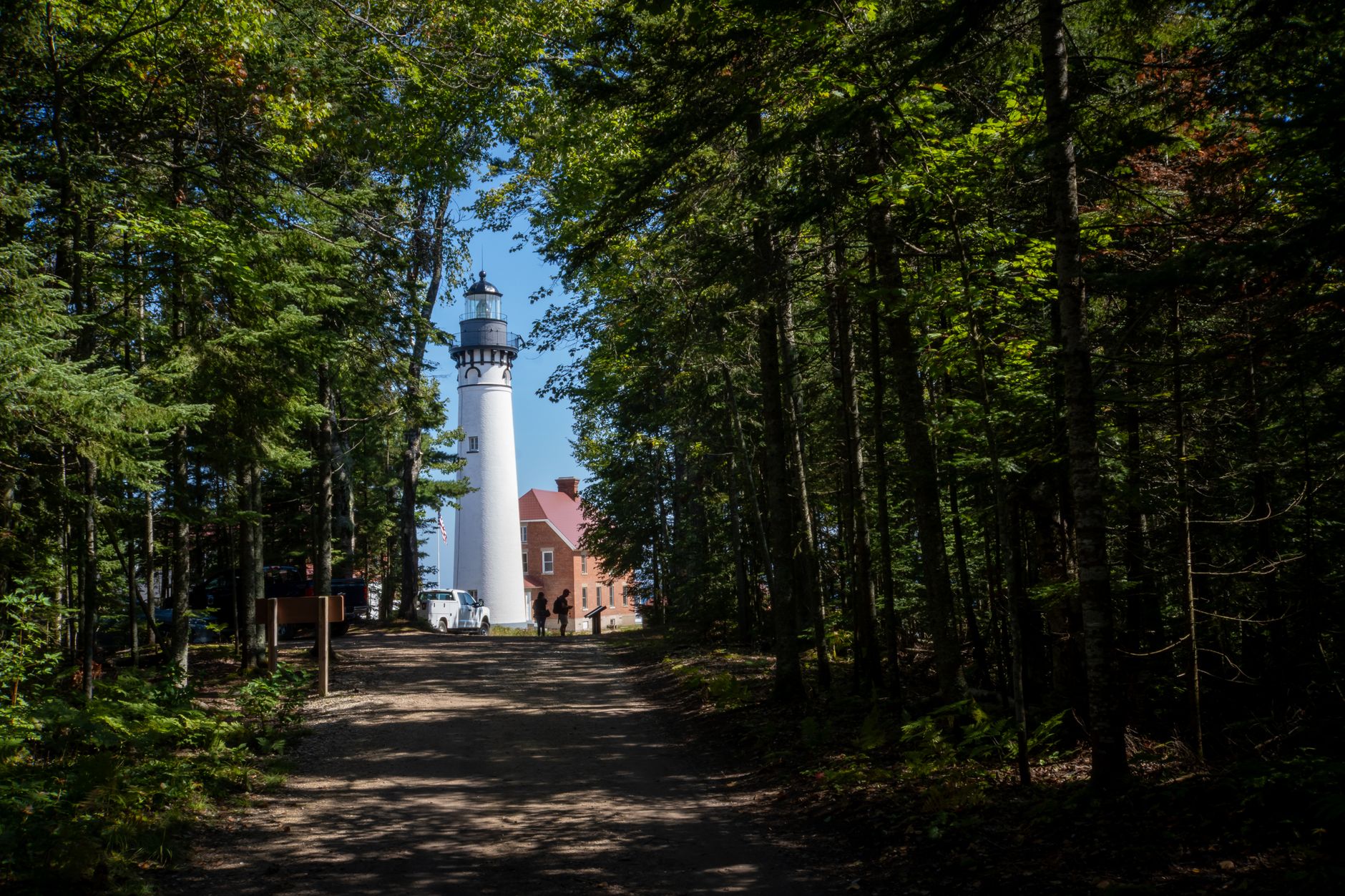
Photo by Ken Jacobsen
Pictured Rocks is the kind of place where you can choose your own level of effort and still leave impressed. That matters. A park does not need to punish you to be memorable.
Warren Dunes State Park is the best south-side sand test
Warren Dunes State Park is a strong choice if you want to experience massive sand dunes without driving all the way to the headline northern parks in the Lower Peninsula. These dunes are serious, but the park remains easy to work into a simple trip. While some travelers might compare the rugged, isolated feel of Wilderness State Park to the north, Warren Dunes offers a more accessible adventure for those staying near the Michigan border.
The Great Warren Dune Trail is about 4 miles and moves through oak and hickory forest before opening toward the beach. That forest to sand shift is what makes the route feel complete. You get shade first, then the wide open lake finish.
Mount Randall Loop is the beginner friendly loop trail at about 2.1 miles. It gives you dunes, forest, and Lake Michigan views without much drama. If you are traveling with mixed abilities, this is probably the smarter pick. Nobody gets bored, and nobody feels trapped in the sand.
For a quick weekend stop, Warren Dunes is better than it looks on a map. It gives you the dune feeling in a way that feels honest, not overbuilt.
Ludington State Park is the balanced all-around pick
Ludington State Park is the trail system I think of when someone wants variety more than one giant payoff. You get dunes, inland lakes, bridges, and boardwalks, so the scenery keeps changing even when the effort stays moderate. It serves as a fantastic gateway to other Michigan hiking trails in the region, such as the famous Manistee River Trail, which is located just a short drive away.
The longer loop trail can run more than 7 miles if you connect the Lost Lake Trail, Island Trail, and Lighthouse Trail. That sounds like a lot, but the terrain is friendlier than the pure sand routes found elsewhere. The mix is what makes it work. Because portions of the park interface with the North Country Trail, you have access to well-maintained paths that keep the experience engaging. If one section feels like a little too much, the next one usually eases off.
Ludington State Park is a good choice for beginners who want a half-day or full-day outing without feeling stranded in the middle of nowhere. You can also split the park into smaller pieces and still have a satisfying day. That flexibility is part of the appeal.
Hartwick Pines State Park is the shade answer
Not every journey among the best hikes Michigan has to offer needs a lake view. Some of the most rewarding miles happen under towering trees, where the air remains crisp and the footing is simple.
Hartwick Pines State Park functions as a protected nature preserve, offering a sanctuary of ancient white pines that provide a cathedral-like atmosphere. The dense canopy makes this one of the easiest choices for a hot summer day. The Au Sable River Foot Trail is an ideal route if you want a relaxed walk that still feels like a significant outdoor excursion. It crosses the river twice and maintains a gentle, friendly pace for hikers of all skill levels.
If your trip lands during a particularly warm stretch, this is the destination I would save for the afternoon. It provides the quiet, tree-heavy version of the state, which balances the busier dune trails nicely.
What to pack before you hit the trail
A dune hike needs a little more respect than the mileage suggests. The main mistakes are simple, as they involve underestimating the sun, the heat, and the way soft sand slows you down. Even if these shorter routes do not require the extensive gear needed for multi-day backpacking trails in Michigan, being prepared is essential.
- Water, more than you think you need
- A hat, sunscreen, and sunglasses
- Shoes with real grip
- A charged phone with offline maps
- Bug spray for forest edges and marshy sections
You do not necessarily need heavy equipment for most of these trails. Good sneakers or lightweight hiking shoes are fine for the easier routes, and they are often more comfortable on loose sand. However, if you prefer extra ankle support, sturdy hiking boots are a great alternative for stability on uneven terrain. If you are hiking dunes in June, start early and aim to be off the steep stuff by late morning.
Final thoughts
Michigan’s best hiking days usually come down to matching the trail to the weather. Dunes are best when you start early, lakeshores are best when you want a big view, and forest trails are best when the sun is punishing everyone else. Whether you are exploring local paths or segments of the North Country Trail, the sheer variety of Michigan hiking trails ensures there is something for every skill level.
If you want one simple rule for the whole state, pick the surface that fits the day rather than just the most famous name on the map. That is how you get the best hikes Michigan has to offer without turning your outdoor trip into a chore.
If you’re looking for more Midwest hiking variety, the Ice Age Trail in Wisconsin offers bluffs, kettles, and quiet forest day hikes with the same kind of scenic diversity. For more Great Lakes shoreline and waterfall views, the best Minnesota hikes along the North Shore are a natural next step.
FAQs
What is the best hike in Michigan for beginners?
Empire Bluff Trail is the cleanest first pick if you want an easy introduction to dune hiking. It is short, the climb is manageable, and the view feels earned without being exhausting. If you want shade instead, Hartwick Pines is the safer call.
Are dune hikes in Michigan hard?
They can be, mostly because the sand dunes slow everything down. A short trail can feel much longer on loose sand, especially in the heat. Dune Climb and Sleeping Bear Point are the most tiring of the beginner-friendly options, so it helps to start early and keep water close.
Can you hike Michigan dunes in June?
Yes, and June is a good month for it if you plan around the sun. Morning is the best time on exposed trails for a day hike. By midday, the sand can get hot and the effort level jumps fast. If you want a more forgiving day, choose a forest trail or a shorter overlook.
Which Michigan hike has the best lake views?
Sleeping Bear Dunes National Lakeshore is the easiest place to get a classic Lake Michigan overlook, while Pictured Rocks National Lakeshore gives you the strongest shoreline drama on Lake Superior. Many of these routes overlap with the North Country Trail. If you want one quick lake view with minimal effort, Empire Bluffs is hard to beat. If you want cliffs and water together, go to Pictured Rocks.
Do I need special shoes for Michigan hiking?
Not usually. Sneakers with decent grip or light hiking shoes work for most of the trails in this article. Sand-heavy routes are more about comfort and patience than fancy gear. Save the heavy boots for rougher terrain.