A Death Valley map undersells the scale until you’re driving it: at 3.4 million acres, this is the largest national park in the lower 48. A stop that looks close on paper can be a 30-to-45-minute drive. The trick to a first visit isn’t seeing everything; it’s picking one or two corners of the park to know well.
This guide lays out which areas to start with, which to save for a second trip, and which famous-name stops are currently inaccessible. The closures matter: Death Valley has had major flood events in recent years, and several big-ticket sites are still closed to the public.
Before you go
- Entrance fee: $30 per vehicle, valid for 7 days. The park is cashless
- Park size: 3.4 million acres, the largest national park in the contiguous United States
- Lowest point in North America: Badwater Basin at 282 feet below sea level
- Hottest temperature ever recorded on earth: 134°F at Furnace Creek in 1913 (some sources dispute the reading, but it’s the official NOAA record)
- Best season: October through April. Mid-summer regularly exceeds 120°F and is genuinely dangerous, not just uncomfortable
- Furnace Creek is the main visitor center and lodging hub. Stovepipe Wells is the secondary hub
- Cell service is unreliable to nonexistent in most of the park. Download maps before you go
Current closures (as of 2026)
A few famous-name sites you’ll see on older maps and guides are not currently accessible. Check the NPS conditions page before your trip, but as of mid-2026:
- Scotty’s Castle — closed indefinitely since the 2015 flood. No pedestrian access allowed. No reopening date
- Darwin Falls — the access road has been completely washed out in places and is closed, likely until at least summer 2027
- Titus Canyon Road — partially open in 2026 but closed October 1, 2026 through September 30, 2027 for phase-2 repairs
- Lower Wildrose Road — closed through summer 2027 from storm damage
- Emigrant Campground — closed indefinitely
This is why a first-trip plan that sticks to the Furnace Creek-to-Stovepipe-Wells corridor (Highway 190 and Badwater Road) is the safest, most rewarding way to see the park right now.
The best beginner areas on the map
These stops are clustered along the central park corridor, accessible to passenger cars, and short on driving relative to payoff.
| Area | What it is | Best for |
|---|---|---|
| Furnace Creek Visitor Center | Central hub with lodging, gas, food, real-time road updates | First stop on day one |
| Zabriskie Point | 5-minute walk from the parking lot to one of the iconic park overlooks | Sunrise or sunset light |
| Badwater Basin | The 282-ft-below-sea-level salt flats; level boardwalk and salt-polygon walking | Quick stop, salt flats experience |
| Artists Drive | 9-mile one-way scenic loop with colorful mineral hills; stop at Artists Palette | Drivers more than walkers |
| Mesquite Flat Sand Dunes | Drive-up access; walk as much or as little as you want | Sunrise, sunset, photos |
| Dantes View | Drive to 5,475 ft for a panoramic look at the valley below | Orientation, cooler air |
| Mosaic Canyon | Roughly 4-mile round-trip canyon walk near Stovepipe Wells | A first real hike |
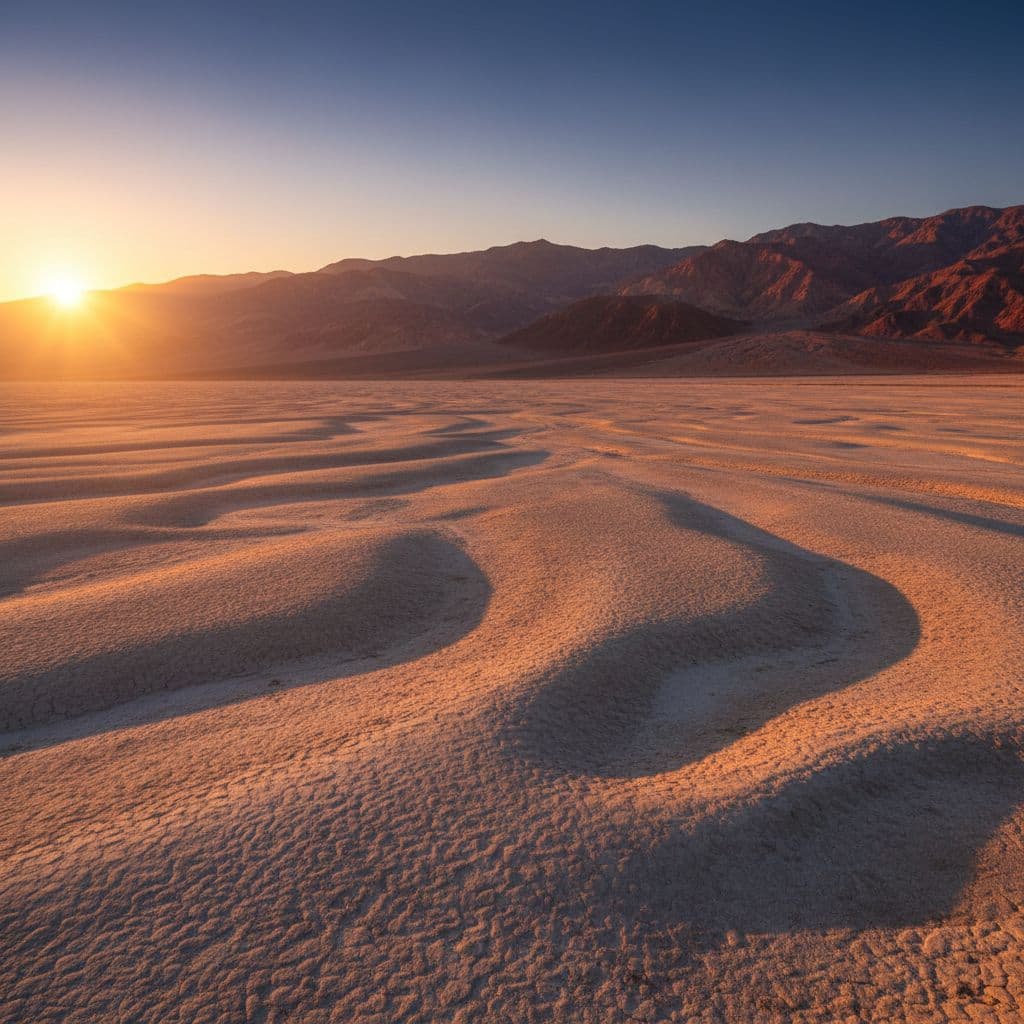
Furnace Creek is the obvious base. Lodging (the Inn at Death Valley and the Ranch at Death Valley), gas, food, the visitor center, and a centrally located position near the biggest sights along Badwater Road. From there, the rest of the park works outward in lanes.
How to read the park map before you go
Death Valley is a road-trip park first, a hiking park second. The map gets easier when you stop thinking about individual attractions and start thinking in road corridors.
- Highway 190 — the east-west spine that connects Beatty/Death Valley Junction in the east through Furnace Creek and Stovepipe Wells to Panamint Springs in the west
- Badwater Road — heads south from Furnace Creek to Badwater Basin and Ashford Mill, with Artists Drive as a side loop
- Daylight Pass Road / Beatty Cutoff — connects Stovepipe Wells north to Beatty, Nevada
- Scotty’s Castle Road / North Highway — heads to Ubehebe Crater (Scotty’s Castle itself closed)
For a first visit, plan around Highway 190 + Badwater Road. That single corridor covers Zabriskie Point, Furnace Creek, Badwater Basin, Artists Drive, Mesquite Flat Sand Dunes, and Stovepipe Wells, which is most of what people come to see.
Distance on the map is not the same as drive time. A stop that looks close can take 30 to 45 minutes to reach, and there’s almost no infrastructure between sites. Fill up on gas at every chance you get, especially before heading north to Ubehebe Crater (about 55 miles from Furnace Creek one-way).
Roads that need 4WD or high clearance
A passenger car can handle Highway 190, Badwater Road, Artists Drive, and the road to Ubehebe Crater. Some of the most-photographed sites in the park require a real off-road vehicle:
- The Racetrack — 27 miles of rough washboard from Ubehebe Crater. NPS explicitly warns standard rental vehicles aren’t suitable. Good tires, 4WD, and high clearance are usually required
- Titus Canyon Road (when open) — 27-mile one-way drive, high clearance recommended
- Eureka Dunes Road — high clearance recommended
Don’t underestimate how remote these roads are. A flat tire on the Racetrack road is a serious situation, not an inconvenience.
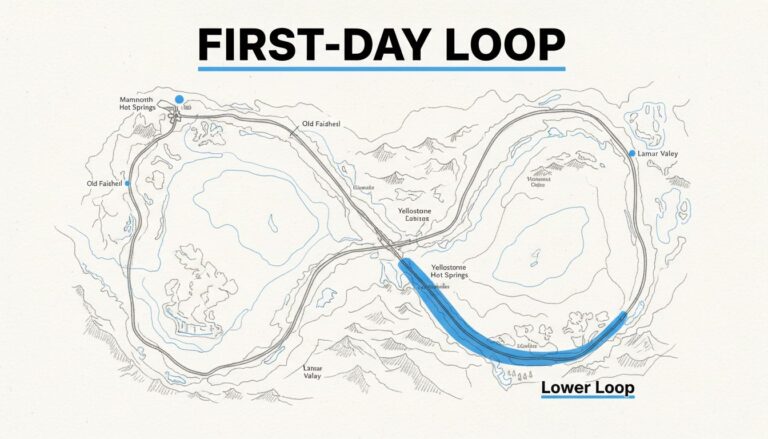
A simple route for a first day
If you only have one day, pick a tight loop on the central corridor:
- Stop at the Furnace Creek Visitor Center to get current road status, water, and a paper map
- Drive to Zabriskie Point for early light (this hits hardest at sunrise)
- Continue south to Badwater Basin before the heat builds, walk out onto the salt flats
- Drive Artists Drive back north and stop at Artists Palette
- Up to Dantes View for the high overlook (the air is dramatically cooler at 5,475 ft)
- End the day at Mesquite Flat Sand Dunes for sunset light
That order minimizes backtracking and uses the morning light for the east-side overlooks. A complete day-by-day version lives in the first-timer Death Valley itinerary if you want a longer plan.
A second day opens up the longer drives: Mesquite Flat Sand Dunes at sunrise, Mosaic Canyon for a real hike, then either Ubehebe Crater (a long round-trip drive) or back to Furnace Creek for the night.
Heat and season
Death Valley’s season window matters more than at almost any other US national park. From October through April, daytime highs are pleasant to warm. From May through September, daytime highs routinely exceed 110°F, and July averages a high of 116°F. The hottest temperature ever recorded on earth (134°F) was logged at Furnace Creek in July 1913.
In summer:
- NPS specifically warns against hiking below 3,000 feet after 10am
- Most ranger-led activities don’t run
- People die in Death Valley from heat exposure most summers; this isn’t a trail rumor
- If you go in summer, plan everything for sunrise to mid-morning, then drive air-conditioned to a higher elevation (Dantes View, Wildrose) for the afternoon
In winter:
- Nights can drop below freezing
- Rare wildflower superblooms happen after wet winters, typically peaking in late February or March
- Higher elevations (Wildrose, Telescope Peak area) can hold snow
Mistakes first-time visitors make
The biggest one is trying to do too much. The park is huge, the drives are long, and the heat compounds fatigue.
The second is reading distances on the map like they’re city blocks. Death Valley’s main corridor is essentially one paved highway with side roads, and many of those side roads are gravel or worse.
The third is showing up without enough water. NPS recommends a minimum of a gallon per person per day in cooler months and substantially more in heat. Buy water in Lone Pine, Beatty, or Pahrump before you enter the park; the in-park stores are limited.
And the fourth is planning a trip around Scotty’s Castle or Darwin Falls without checking the current closure status first. Both have been closed for years.
Frequently asked questions
How much does Death Valley cost to enter?
$30 per vehicle for a 7-day pass. Motorcycles are $25; per-person entry is $15. The park is cashless, so bring a credit or debit card. An America the Beautiful annual pass works.
What’s the best area to start with?
The Furnace Creek to Badwater corridor along Highway 190 and Badwater Road. That stretch covers Zabriskie Point, Badwater Basin, Artists Drive, and Mesquite Flat Sand Dunes, which is most of what first-timers come to see.
Can I see the main sights in one day?
Yes, if you stick to the central corridor. The Furnace Creek loop (Zabriskie, Badwater, Artists Drive, Dantes View, Mesquite Flat) is doable in a long day. Adding Ubehebe Crater or the Racetrack pushes it to a second day.
Is Badwater Basin worth visiting?
Yes. It’s the lowest point in North America at 282 feet below sea level, and walking out onto the salt flats is one of the iconic park experiences. The boardwalk is fully accessible; the salt-polygon area requires a flat 0.5 to 1-mile walk on uneven salt.
Is Scotty’s Castle open?
No. Scotty’s Castle has been closed since the 2015 flash flood. There’s no public access, including pedestrian access. NPS has not announced a reopening date.
Do I need 4WD for Death Valley?
Not for the standard first visit. Highway 190, Badwater Road, Artists Drive, and the road to Ubehebe Crater are all paved. The Racetrack Playa, Titus Canyon, and Eureka Dunes do require high clearance and 4WD with good tires.