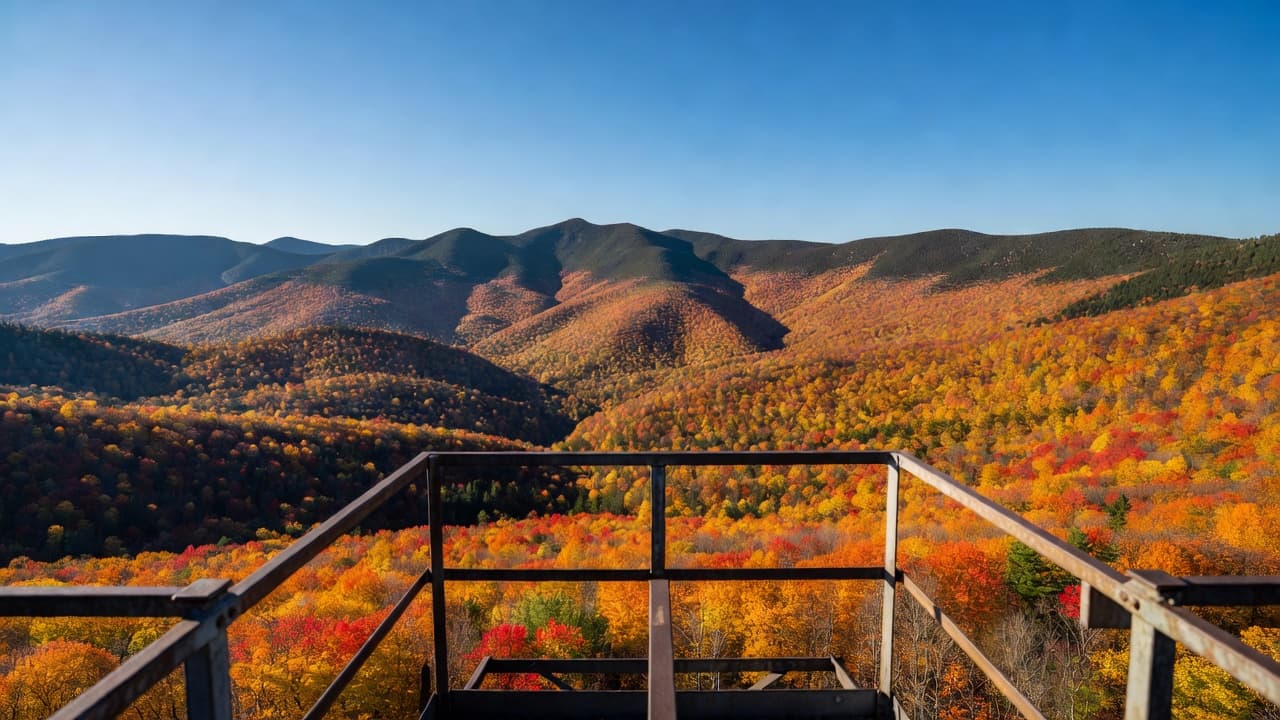
If you want the best Vermont fall hikes, go where the trees stop and the view opens up. That usually means choosing a summit with a fire tower on top.
Trail-level foliage is nice, but a tower rising above the maples and birches is better. You get the close-up color on the way in, then the full patchwork view from above, which is the part people remember.
If you are trying to pick one or two adventures instead of scrolling twenty tabs deep, start here.
Key takeaways:
- Mount Olga and Elmore Mountain are the easiest crowd-pleasers among Vermont hiking trails for most beginners.
- Belvidere Mountain and Stratton Mountain bring the biggest wow-factor views.
- Fire tower hikes work so well in fall because you get both things you came for, which are immersive trail color and a wide-open summit.
- Late September through mid-October is the usual sweet spot for peak foliage, though higher northern peaks often turn earlier than those in Southern Vermont.
- Start early if possible. Foliage weekends in Vermont can feel like everyone had the same idea.
Why fire tower hikes are the sweet spot in autumn
A lot of fall hiking lists blur together. Pretty woods, a decent summit, maybe a pond, or a rocky ledge. There is nothing wrong with that, but fire tower hikes add a clean payoff that beginner hikers can actually feel.
You spend the climb surrounded by brilliant fall foliage, then you step above the canopy.
That change matters. Forests across the Green Mountains are famously dense, which is part of their charm, but it also means many hikes stay boxed in by trees until the very last moment. Fire towers fix that. They turn a pleasant walk into a proper experience, offering incredible panoramic vistas that stretch for miles.
If you ask me, that is why these treks punch above their mileage.
Some towers also make great first summit goals. You are not only hiking to a view somewhere up there. You are hiking to an actual structure you can spot, reach, climb, and celebrate. For kids, newer hikers, and anyone who likes a clear finish line, that is a big deal.
There are trade-offs, though. Tower stairs can be slick after rain. Wind feels stronger on exposed summits. And if heights are not your thing, the deck itself may be the hardest part of the day, not the trail.
Still, the payoff is hard to beat. Many of these historical structures are maintained within Vermont State Parks, making them accessible and well-documented. For broader route ideas beyond this shortlist, the Green Mountain Club’s fall foliage hike roundup is a useful resource, and this Vermont fire tower bucket list is handy if you want more tower options after your first trip.
Quick picks for Vermont fire tower hikes
If you are looking for efficient day hikes, this is the cheat sheet I wish more people used before driving three hours for a quick trek into the woods.
| Hike | Effort | What makes it stand out | Best for |
|---|---|---|---|
| Mount Olga | Easy | Short hike, friendly grade, classic tower view | Families, beginners, casual leaf-peeping |
| Elmore Mountain | Easy to moderate | Great tower, strong lake-and-mountain payoff | First-time hikers who want a real summit feel |
| Spruce Mountain | Easy to moderate | Classic fire tower experience without a huge day | Short half-day trips |
| Belvidere Mountain | Moderate | Big 360-degree views, strong northern Vermont color | Clear-weather days and stronger hikers |
| Stratton Mountain | Moderate to harder | Huge southern Vermont panorama | Biggest view seekers |
The main pattern is simple. If you want the easiest hike with great summit views, lean toward Mount Olga or Elmore. If you want the most impressive panoramic vistas, Belvidere and Stratton move to the front.
If you only have one morning, I would pick Elmore first, then Olga. Both give you the tower payoff without turning the day into a sufferfest.
The Vermont fire tower hikes I’d pick first
Mount Olga is the easiest win
Mount Olga is the hike I recommend when someone says, “I want peak Vermont fall color, but I don’t want to overdo it.”
Fair. This is the right instinct for a lot of people.
The trail is short, approachable, and family-friendly, which makes it one of the best beginner fire tower hikes in the state. As a highlight of Vermont State Parks within the beautiful Molly Stark State Park, you still get the satisfaction of a summit and a tower climb, but without the long grind that can sour a fall hiking day before lunch.
This one is also a good play when you’re staying in southern Vermont and want something simple that still feels memorable. On a bright October morning, the whole thing has that postcard look people imagine when they say they want New England foliage. If you want a few similar easy ideas in the same part of the state, this guide to easy southern Vermont hikes is a helpful backup.
My one caution is pacing. Easy on paper can still feel steeper than expected if you’re in sneakers with flat, worn-out soles and it’s damp underfoot. Bring shoes with grip, take your time, and this is a fun one.
Elmore Mountain is the best all-around pick for beginners
If I had to choose one fire tower hike for most first-timers, it would probably be Elmore Mountain.
It has range.
Located conveniently near the Stowe area, the trail feels like a real hike, not a roadside stroll, but it usually stays within the comfort zone of beginners who bring water and don’t sprint the first climb. Then the summit delivers exactly what you want: a tower, open views, and that classic fall spread of woods, ridgelines, and Lake Elmore below. You can even catch a glimpse of Mount Mansfield in the distance.
This is the sweet spot hike. Not too short, not too punishing, not too obscure.
That’s a big reason it keeps showing up on Vermont fall hiking shortlists. The experience makes sense for a wide group of hikers. Couples doing a leaf weekend, families with older kids, and casual hikers who want one real climb can all enjoy this one.
A few practical notes matter. Wet rock near the summit can slow you down. The tower can be breezy even on mild days. And on a perfect foliage Saturday, you won’t have the place to yourself. Start early and you’ll have a better shot at parking, better light, and a quieter climb.

Photo by Matt Barnard
Spruce Mountain is a low-commitment classic
Spruce Mountain is a good answer for hikers who want the fire tower look without making the whole day about one trail.
That’s not an insult. It’s smart trip planning.
Some Vermont fall weekends work better with one shorter morning hike, a scenic drive, a cider stop, and maybe a second walk later. Spruce fits that kind of day well, as it is part of a wonderful network of hiking trails in the area. The tower gives the outing an old-school feel, and the views are broad enough to justify the climb without asking for a huge energy budget.
This is also one of the better test yourself hikes for beginners. If you’re new to hiking and wondering whether summit trails are your thing, Spruce is a clean place to find out. You get enough climbing to feel accomplished, but not so much that a slow pace turns into a problem.
What people underestimate here is the tower itself. The trail may feel manageable, then the exposed metal stairs suddenly make the summit feel more serious. If heights bother you, go one platform at a time and stop when you’ve had enough. The view is still good before the very top.
Belvidere Mountain has the best pure fire tower view
Belvidere Mountain is the one I’d save for a crisp, clear day when you want your photos to go off.
The summit view is the story here. This is one of Vermont’s standout fire tower panoramas, offering stunning 360-degree views over the Green Mountains and, on the right day, sightlines reaching all the way toward Lake Willoughby to the north. That’s why Belvidere gets so much love from serious foliage hunters. The color isn’t boxed into one valley or one lake basin. It spreads.
That wide view makes a difference in autumn. Instead of one bright hillside, you get layers of orange, yellow, and red stacked across ridges, which is the version of Vermont people usually hope to see.
It does ask a bit more from you than Olga or Elmore. I’d call it a moderate day for most hikers, not a beginner walk-up. If your fitness is average but you’re patient, you’ll probably be fine. If you’re bringing someone who doesn’t hike much, this may not be the first tower I’d use as their introduction.
Clouds also matter more here. A low ceiling can flatten the whole payoff. If the weather looks questionable, I’d pivot to a lower, shorter hike instead of forcing it.
Stratton Mountain is the biggest southern Vermont payoff
Stratton Mountain is for the person who wants a broad summit day and doesn’t mind earning it.
Located within the expansive Green Mountain National Forest, the view from the fire tower is the reason to make the trek. Southern Vermont opens up in a big way from here, and during peak color the ridges can look almost painted. It’s one of the strongest foliage panoramas in the state.
There are two versions of the Stratton idea, and this is where people get tripped up. If the resort’s fall gondola access is running, you can turn the summit into a much easier outing. If not, you’re looking at a longer hike, often tied to the Long Trail corridor. Know which version you’re doing before you leave the car.
That route choice matters because the easy version and the full hiking version are not remotely the same day.
For stronger hikers, I love Stratton. For casual leaf-weekend travelers with one free morning, I usually steer them toward Elmore or Olga unless they already know they want a longer climb. Bigger isn’t always better if you’re cooked by mile two.
When to go for peak foliage and fewer headaches
Timing matters almost as much as your choice of trails.
In most years, Vermont’s higher elevations and northern mountains begin their color transition first. Lower elevations and southern areas often experience peak foliage a bit later in the season. In plain English, early October is a strong all-around bet, but late September can be better for some northern tower hikes, and mid-October can still offer excellent fall foliage farther south. Compared to the notoriously soggy conditions of Vermont’s mud season, autumn provides reliable, dry footing that makes these fire tower climbs far more enjoyable.
Weather can change the whole feel of the day. A bluebird sky makes tower hikes sing. Wind, fog, or low cloud can erase the payoff fast. That does not mean you should cancel every imperfect forecast, but it does mean matching your hike to the conditions. On a cloudy day, I lean toward shorter routes. On a clear day, I spend my chips on Belvidere or Stratton.
Parking and crowds are the other half of the story. Vermont in the autumn is no secret. A trailhead that feels mellow in June can fill up fast on October weekends. Arriving early is the simplest fix. So is hiking on a Friday or a Sunday afternoon if your schedule allows.
One more thing, and this saves people grief every year: do not chase one perfect peak date too hard. A hike with 85 percent color, dry trails, and decent parking beats the so-called peak weekend when every pull-off is jammed and the sky is gray.
What to pack, and what beginners usually underestimate
You do not need a giant gear setup for most of these hikes. You do need to avoid the common mistakes.
Shoes come first. Trail runners or sneakers with decent grip are usually enough for early to mid-fall in Vermont. While heavy hiking boots are an option if you prefer extra ankle support, they are not strictly required for most beginners. Casual slip-ons, on the other hand, are a bad idea once leaves cover roots and wet rock. Fire tower stairs also get slick.
Layers matter more than people think. The trail up can feel warm fast. The summit deck can feel cold the minute the wind hits you. A light fleece or shell solves that problem without turning your pack into dead weight.
Bring water, even for the short hikes. Not gallons, just enough that a slow climb does not turn into a cranky one. A snack helps too. Fall air tricks people into thinking they do not need anything because they are not sweating much.
Because autumn in Vermont coincides with hunting season, it is a smart safety practice to wear blaze orange. A hat, vest, or even a brightly colored pack cover helps you remain visible to others in the woods.
Your phone is useful for photos, but do not count on it for flawless service or last-second route decisions. Download your map before leaving town. Tower hikes are usually straightforward, though some trail junctions and access roads can still confuse first-time visitors.
The other thing beginners underestimate is how much a tower changes the feel of a summit. The trail can feel calm and wooded, then the tower feels windy, exposed, and higher than expected.
Dry trail does not always mean dry tower stairs.
If rain moved through recently, take the metal steps slowly and use the handrail. Always keep an eye on trail conditions as you ascend, as moisture can make metal surfaces quite slippery. That is not being cautious for the sake of it. That is how you avoid turning a great foliage day into a bad experience.
Conclusion
The best Vermont fall hikes are the ones that provide both pieces of the season, from the vibrant colors close at hand to the expansive vistas from above. Fire towers across the Green Mountains do that better than almost any other kind of trail.
If you want the safest bet, start with Elmore Mountain or Mount Olga. If you want the bigger scenic swing, save a clear day for Belvidere or Stratton. Because these climbs often leave you with plenty of energy, consider rounding out your trip by exploring nearby local waterfalls or taking a scenic drive through the famous Smugglers’ Notch.
Pick the hike that matches your legs, not your ego. Vermont will do the rest.
FAQs
When is the best time for fall color on Vermont hikes?
Most years, late September through mid-October is the main window to experience peak fall foliage. Northern and higher trails often peak earlier, while southern Vermont can hold good color a little later. Weather patterns play a significant role, so a clear early morning can be better than obsessing over one exact date on the calendar.
What’s the easiest fire tower hike in Vermont?
Mount Olga is one of the easiest and most beginner-friendly choices. It is short, suitable for families, and still provides that classic tower-on-a-summit payoff. Elmore is also beginner-friendly, though it feels more like a traditional mountain hike.
Which Vermont fire tower hike has the best view?
If a panoramic summit view is your primary goal, Belvidere Mountain and Stratton Mountain are the strongest picks. Belvidere offers a standout 360-degree perspective, while Stratton provides an expansive sweep of southern Vermont. If you are looking for other iconic summits, peaks like Camel’s Hump, Killington Peak, and Mount Ascutney are also excellent choices, though they do not feature fire towers.
Are these hikes good for beginners?
Some are, while others require more experience. Mount Olga and Elmore are the best starting points for most new hikers. Spruce also works well as an introductory tower hike. Belvidere and Stratton are better options once you are comfortable with longer climbs and rougher trail conditions.
Do I need hiking boots for Vermont fall hikes?
Usually, they are not required. Trail runners or sneakers with solid grip are enough for many early autumn hikes if conditions remain dry. After heavy rain, or later in the season when trails get slick with leaves and mud, having supportive hiking boots can make the experience much more comfortable.
Are fire towers safe to climb?
Usually yes, provided the tower is open and you exercise caution. The main issues are wet stairs, wind, and exposure if you are uncomfortable with heights. Use the handrail, move slowly, and do not feel pressured to reach the top platform if it makes you feel uneasy.
What if the weather is cloudy on the day of my hike?
I recommend shifting to a shorter or easier tower hike instead of gambling on a big summit day. Dense fog can erase the primary reward on high-elevation treks like Belvidere or Stratton. Lower-effort options like Mount Olga or Spruce are much better bets when the mountain forecast looks mixed.