Rocky Mountain National Park looks simple on a map, then one packed trailhead or a closed road turns the plan sideways. For a first visit, the best move is to skip the idea of covering everything.
Focus on one zone first, and for most people that zone is Bear Lake. From there, Trail Ridge Road makes sense when it is open, then Wild Basin for a quieter day with easier parking.
Key takeaways:
- Bear Lake is the best first stop for most beginners.
- Trail Ridge Road is a highlight, but it is seasonal and usually closed outside late spring through mid-fall.
- Wild Basin is the next pick when you want easier parking and fewer crowds.
- Longs Peak is iconic, but it is better saved for a later trip.
Before you go
A few logistics decide how smooth the day feels, especially the timed-entry reservation. Sort these out before locking in a date:
- Entrance fee: $30 per vehicle for one day or $35 per vehicle for seven consecutive days. The park is cashless, so bring a card.
- Timed-entry reservation (2026): two permit types are sold on Recreation.gov for a $2 processing fee. The standard Timed Entry permit covers most of the park (Trail Ridge Road, Wild Basin, the west side) and is required from 9 a.m. to 2 p.m. daily, May 22 through October 12. The Timed Entry + Bear Lake Road permit adds the Bear Lake Road corridor and is required from 5 a.m. to 6 p.m. daily, May 22 through October 18.
- Reservation timing: each one covers a two-hour arrival window. Monthly batches release at 8 a.m. MDT on the first of each month, and a night-before batch opens at 7 p.m. MDT. Both sell out fast on summer weekends.
- No reservation? You can still enter most of the park before 9 a.m. or after 2 p.m., and the Bear Lake Road corridor before 5 a.m. or after 6 p.m.
- Gateways: Estes Park is the standard east-side base near the Beaver Meadows and Fall River entrances. Grand Lake is the west-side base.
- Best season: late June through September, when Trail Ridge Road is fully open and the high country is clear of snow.
For a full day-by-day plan that uses these zones, see this two-day Rocky Mountain National Park itinerary.
How to read a Rocky Mountain National Park map on day one
The trick with a Rocky Mountain National Park map is not to hunt for the biggest hike first. Look for the easiest win instead, which means a zone with short drives, strong scenery, and several backup options if a trailhead fills up.
Start with the official park maps, then cross-check the free Rocky Mountain maps on NPMaps for a broader view of roads, trailheads, and closures.
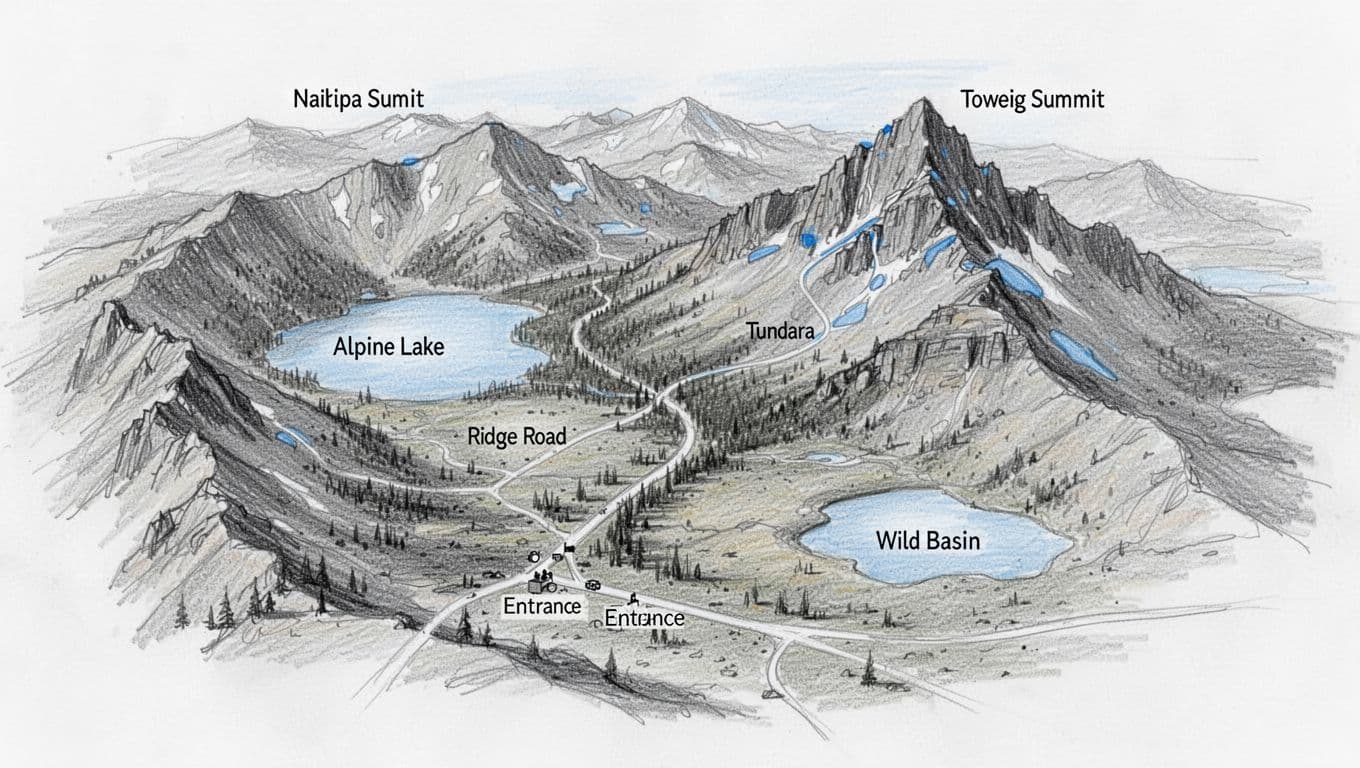
For a first visit, this is a quick filter for the four headline areas:
| Area | Best for | First-trip fit |
|---|---|---|
| Bear Lake | Classic lakes, short hikes, big payoff | Best starting point |
| Trail Ridge Road | Scenic driving, alpine views | Great if open |
| Wild Basin | Quieter trails, waterfalls, lower-key feel | Strong second choice |
| Longs Peak | Big effort, serious elevation | Save for later |
That table is the park in plain English. One more factor sits on top of it: timing. Trail Ridge Road and the higher trails open up only once the snow clears, so an early-season or late-season trip leans on the lower-elevation areas, and flexible plans matter even more.
Bear Lake is the best first focus
Bear Lake is the place to start. It offers the best mix of scenery, access, and beginner-friendly choices on the map.
It works so well because one trailhead opens up several strong options. You can keep it easy at Bear Lake itself, stretch to Nymph, Dream, and Emerald Lakes, or branch toward Alberta Falls. Stronger hikers can push further up the same corridor to Sky Pond. That range is gold for newer hikers.
With only one morning in Rocky, Bear Lake is where to spend it.
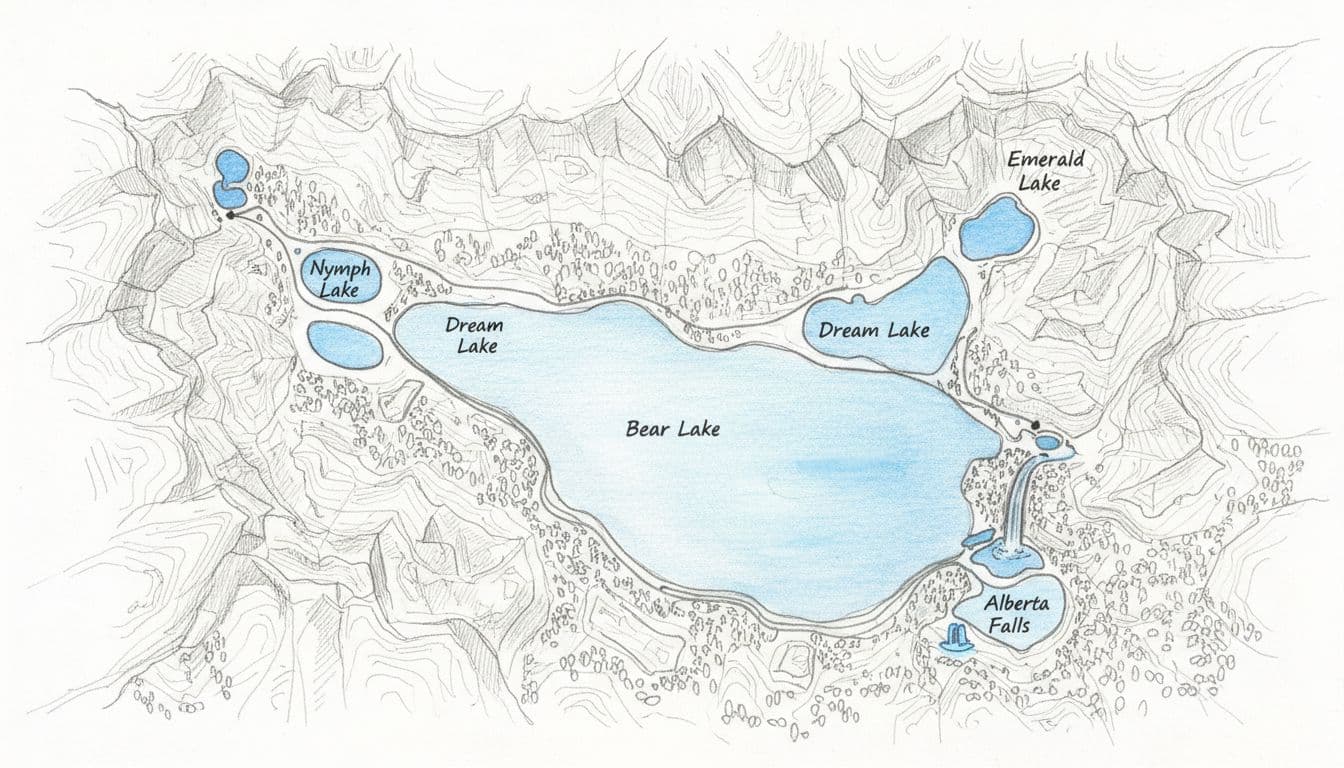
The area is also forgiving. If altitude hits early, you can turn around without feeling like the day was wasted. If weather moves in, you are not stuck on a long, exposed route. For beginners, that is a smart trade.
It pairs naturally with a guide to Rocky Mountain day hikes because the trail choices here scale well. You can keep the day short or build a bigger loop if you feel strong.
The catch is crowds. Bear Lake is the park’s busiest corridor in peak season, so parking and reservation rules need planning. The Bear Lake Road corridor has its own timed-entry window, so check the guide to RMNP timed entry permits before you lock in a day. When the lots fill, the free shuttle from the Park & Ride is the reliable way in.
Where to go next, and what to save for later
After Bear Lake, the rest of the map splits into three buckets: scenic drive, quieter hiking, and expert terrain.
Trail Ridge Road for the big-picture view
When it is open, Trail Ridge Road is the fastest way to grasp the park’s scale. The 48-mile route between Estes Park and Grand Lake climbs to 12,183 feet, making it the highest continuous paved road in the country. About 11 miles run above treeline, and the drive crosses the Continental Divide at Milner Pass, with pullouts, high-country views, and that above-the-clouds feel that sets Rocky apart from a lot of other parks.
The road is seasonal, typically open from around Memorial Day through mid-October depending on snow. A first trip outside that window will not have it, so treat Trail Ridge Road as a summer and early-fall priority and plan a half day for the full crossing. The Alpine Visitor Center sits along the way at 11,796 feet, the highest visitor center in the National Park System.
Wild Basin when you want less chaos
Wild Basin sits on the southeast side of the park and works well when Bear Lake feels too busy. It does not have the same instant fame, but that is part of the appeal.
For a first-timer who wants waterfalls, forest, and a calmer trailhead, this area makes a lot of sense. It is not the first pick, but it is a great second one. The standard Timed Entry permit covers it, since it falls outside the Bear Lake Road corridor.
Longs Peak for a later visit
Longs Peak gets attention for a reason, but it does not belong on most beginner itineraries. The area is beautiful, yet the hikes here ask more, whether that means fitness, altitude tolerance, or route planning.
For a first trip, it is the one to admire on the map and hike on a return visit.
Pick one zone and let the map get simpler
A good Rocky Mountain National Park map does not push you to do more. It shows what to ignore first.
That is the case for Bear Lake first, then Trail Ridge Road when conditions allow, then Wild Basin as a quieter backup. Start there, keep the plan flexible, and the park feels far less overwhelming.
For trails beyond Rocky Mountain National Park, see the best hikes in Colorado for picks across the state.
FAQs
What is the best area on a Rocky Mountain National Park map for first-time visitors?
Bear Lake is the best first choice. It has the strongest mix of easy access, short hikes, alpine lakes, and flexible turnaround points.
Is Trail Ridge Road worth prioritizing on a first trip?
Yes, as long as it is open. The road is seasonal, generally running from around Memorial Day through mid-October, so it is a summer and early-fall priority rather than an early-spring one.
Do I need a timed-entry reservation for Bear Lake?
Yes, during peak season. The Bear Lake Road corridor needs a Timed Entry + Bear Lake Road permit from 5 a.m. to 6 p.m. daily, May 22 through October 18, 2026. Outside those hours, no reservation is required.
What area should I pick if I want fewer crowds?
Wild Basin is the best quieter backup. It sees fewer visitors than Bear Lake and still delivers a strong Rocky Mountain feel.