Rogue River Trail Backpacking: Campsites & Shuttles
Rogue River Trail backpacking usually takes four to five days, covering about 40 miles from the upstream trailhead to Foster Bar. For your first trip, I recommend five days, especially if you’re still getting comfortable carrying overnight gear.
The canyon scenery is beautiful, but narrow ledges, rolling climbs, and remote camps make this more demanding than the mileage suggests. Start with your transportation plan, then build your overnight stops around a pace you’ll enjoy.
Key Takeaways
- Plan on 40 to 41 miles, usually over four to five days.
- Independent hikers don’t need a hiking permit or pay a trail fee; river users have separate permit requirements.
- Start on the north bank and arrange transportation to match your downstream finish.
- April through May and September through October offer better hiking conditions than midsummer.
- Camps are primitive, and bear-resistant food storage belongs in your plan.
Know the Route Before Choosing Your Camps
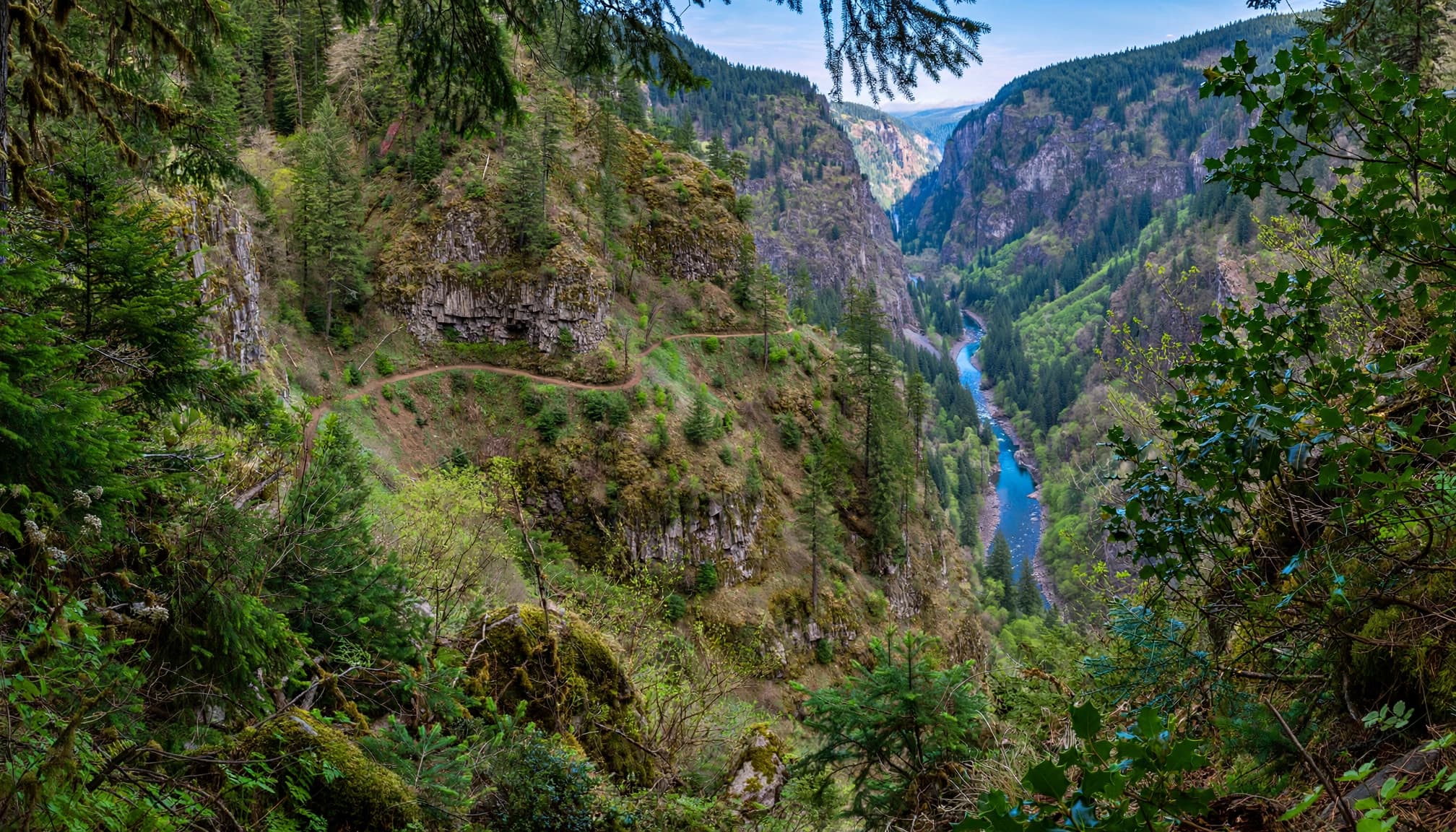
Congress designated part of the Rogue River as Wild and Scenic in 1968. The trail follows the north bank along the Wild and Scenic Rogue River through a rugged canyon. Steep canyon walls, forested stretches, and exposed river views line the route.
Start on the North Side at Grave Creek
Grave Creek Boat Launch, about 23 miles northwest of Merlin, Oregon, is the usual starting point. Approach on Merlin-Galice Road and cross the bridge to reach the north-bank trailhead.
There are no river bridges farther downstream. The waterfall hike to Rainey Falls on the south bank doesn’t connect with the through-route.
The downstream hiking endpoint is Big Bend, near Foster Bar. These names aren’t interchangeable meeting spots, so your shuttle arrangement needs a precise finish location. The BLM’s Rogue River Trail Guide maps the corridor and its access points.
Separate Hiking Rules From River Rules
Independent hikers carrying their own equipment don’t need a hiking permit, and there’s no trail-use fee. Boaters need river permits, including boat-supported hiking trips.
Parking and camping are separate matters. Grave Creek’s boat-ramp parking doesn’t allow overnight parking, so leaving your car there for the entire hike isn’t a workable plan.
A Four-Day Rogue River Trail Backpacking Plan
For a four-day trip, expect uneven stages rather than four identical 10-mile days. Established camps, water access, and suitable tent space should shape your stops.
These are approximate planning stages, not surveyed distances between individual tent pads.
| Day | Overnight area or finish | Approximate hiking |
|---|---|---|
| 1 | Horseshoe Bend area | 12 miles |
| 2 | Marial area, using Tucker Flat | 11 miles |
| 3 | Brushy Bar area | 7 miles |
| 4 | Big Bend/Foster Bar finish | 10 miles |
Camp approaches and your exact exit add variation. Keep the map handy when choosing a particular site.
The opening two days are substantial with a loaded pack. Oregon Hikers’ route description lists 39.8 miles and approximately 3,080 feet of elevation gain. That helps explain why descriptions calling this trail nearly flat can be misleading.
The climbs aren’t enormous, but they repeat. Add warm weather, loose footing, and a backpack, and those miles take time.
For five days, redistribute the whole route into shorter stages instead of adding a night after two exhausting opening days. Aim for roughly eight miles daily, with flexibility for the availability of overnight spots.
I wouldn’t choose this as a first-ever overnight hike. A shorter shakedown trip makes pack fit, blister prevention, and camp routines much easier to sort out.
Choose Camps for Tent Space, Water, and Food Storage
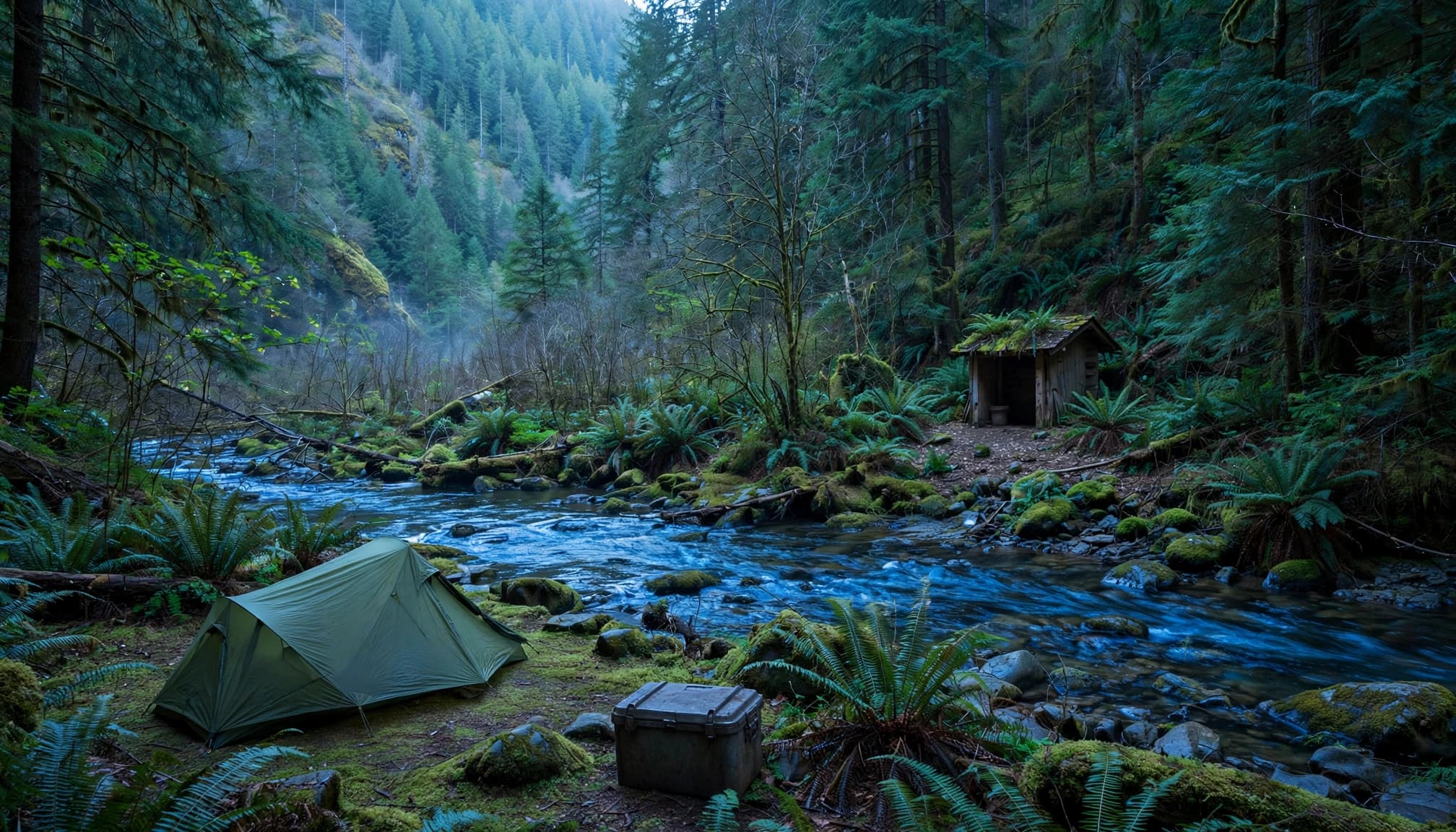
Facilities vary along the route. Tent camping requires checking each site’s actual facilities and available space. A mapped camp name doesn’t guarantee a toilet, food locker, or room for your entire group.
Look Beyond the River View
Established camps are primitive, and some require a descent from the main trail. Look for level, durable tent space, safe access, and enough room without clearing vegetation.
Tucker Flat has six rustic sites, toilets, and picnic tables, but no drinking water. Elsewhere, some camps have pit toilets while others have no facilities.
Carry a filter or another effective water-treatment system. Creeks offer shaded breaks and cold water, but treat water before drinking. Because the trail often stays high above the Rogue, the river isn’t always a convenient refill.
Fill up before leaving a usable source for a stretch with uncertain water access.
Carry Your Own Bear-Storage Solution
Black bears are active here, and a published trip report describes a black bear raiding camp at 3:15 a.m., a reminder to secure food.
BLM lists food-storage infrastructure at several locations, including boxes at Blossom Bar, Brushy Bar, and Camp Tacoma. Other sites have hoists or electric fences.
These facilities aren’t universal, and seasonal equipment is maintained May 15 through October 15. I recommend carrying a certified bear-resistant container rather than depending entirely on on-site infrastructure. Store food, garbage, and scented toiletries together, away from your sleeping area.
Camping Versus Lodge-to-Lodge Hiking
A booked room lets you carry less and finish the day with a meal and a bed. Camping gives you more flexibility, but you’ll carry shelter, cooking equipment, and food-storage gear.
The traditional lodge to lodge route includes five properties, each a small wilderness lodge with limited rooms. Meals and rooms are generally available during the May-through-October season, so reservations determine your overnight schedule.
A published Momentum River Expeditions itinerary gives these stages: 10 miles to Black Bar Lodge, 14 miles to Marial Lodge, 5.5 miles to Half Moon Bar Lodge, and an 11-mile final stage before returning to Galice Resort.
Keep those figures attached to that operator’s itinerary. They aren’t interchangeable with distances between backpacking camps.
Galice Resort isn’t the downstream hiking terminus. It’s a road-side return destination, so the return transportation is a separate part of that schedule. Access can also involve boat transfers. Confirm with the operator whether a transfer uses a raft or another boat, since a property across the river isn’t reachable by simply following a campsite spur.
For independent backpacking, build your route around public camps and the mapped trail. For this option, room reservations, meals, river transfers, and vehicle return need to fit together before departure.
Arrange the Shuttle Before Committing to Your Schedule
Local river outfitters offer a shuttle service that can leave your vehicle near the downstream finish. That’s convenient after several days on the trail, especially when you’d rather change shoes than wait for a ride.
There are two different arrangements: a vehicle shuttle moves your car between access points, while a passenger shuttle transports you. Be clear about which service you’re booking.
A practical booking sequence is:
- Choose your entry date, intended finish date, and exact downstream parking location.
- Arrange the vehicle move or passenger ride, including the meeting location and key handoff.
- Save the booking details, driving directions, and contact information offline.
Your arrangement should include the full charge, vehicle requirements, cancellation terms, and what happens if you finish late. A remote trail exit is a poor place to discover that you booked the wrong service.
Allow time for the road transfer, too. Spring and late-fall trips can require longer routes because higher shuttle roads may be snowbound.
For a two-car trip, leave one vehicle at an authorized downstream overnight parking area before starting. Foster Bar allows overnight parking; overnight parking isn’t allowed at the upstream boat-ramp parking.
The same transportation-first approach applies to my Lost Coast backpacking planning: the hiking mileage is only part of a point-to-point trip.
Pick Your Season and Pack for the Canyon
Spring and Fall Are the Better Windows
April through May and September through October are the usual sweet spots. Spring brings green hillsides and stronger creek flows, while fall often offers cooler hiking days.
April can bring early-season mud, downed trees, and difficult creek crossings. October brings shorter daylight and the possibility of wet weather. The Mountaineers’ route guidance describes November through April as the rainy season.
I recommend avoiding July and August if possible. Summer heat makes exposed stretches harder, even when the trail returns to shade later. Smoke and wildfire closures can also disrupt late-summer plans.
Prepare for Poison Oak and Exposed Footing
Poison oak is widespread, with shrubs reported up to six feet tall beside or over the path. Lightweight long pants and sleeves reduce contact. After exposure, wash skin promptly with soap and water, and clean contaminated clothing and gear.
Cliffside exposure, scree, and narrow canyon-wall sections deserve your full attention. Stop walking before taking photos, and don’t rush past another hiker on a narrow ledge.
Choose familiar footwear with dependable traction. My hiking boots for rocky trails guide can help narrow the options, but this isn’t the trip for untested boots.
Pack rain protection, an insulating layer, a headlamp, blister care, offline maps, and a paper backup. A satellite messenger is sensible in this remote corridor. Leave your route and expected finish with someone at home.
Rogue River Trail Backpacking FAQs
How Many Days Should Beginners Allow?
Five days is the better starting point for hikers with some overnight experience. Four days suits backpackers comfortable covering repeated 10-mile days on uneven terrain.
Daily distance matters less than whether your pace leaves time to find camp before dark.
Can You Hike Without Camping?
Yes, hiking between the properties is an option with room reservations and the necessary transfers arranged. Carry your own hiking essentials even when meals and bedding are provided.
Room availability determines the schedule, so this approach offers less freedom to change overnight stops.
Is the Trail Always Beside the Water?
The route follows the Rogue River corridor, but it often stays high above the water. Expect wooded sections between canyon views rather than continuous riverside walking.
Side creeks provide many of the more accessible places to rest and collect water.
Is the Rogue River Trail Difficult?
It’s a demanding multi-day hike rather than a technical climb. Remoteness, exposure, repeated ascents, heat, and pack weight matter more than the relatively modest elevation profile.
Comfort on narrow trails is important.
Give Yourself Time to Enjoy the Rogue
For a first Rogue River backpacking trip, I’d prioritize a manageable daily pace over finishing quickly. Five days leaves more room for creek breaks, campsite decisions, and slower sections.
Arrange the shuttle first, choose realistic overnight areas, and carry reliable food storage. The canyon is far more enjoyable when you aren’t racing the daylight to reach camp.