
Most coastal hikes let you decide how far to go after you park. On Cumberland Island, you commit before you even board the ferry.
Cumberland Island hiking is flat, beautiful, and more demanding than it looks on a map. There’s no convenience store, no quick ride back to your car, and plenty of bugs ready to test your patience.
For a first visit, keep the plan simple: stay near Sea Camp, explore the southern end, and let the wild horses, beach, and Dungeness ruins do the heavy lifting.
Key takeaways
- A two-night stay at Sea Camp is the sweet spot for most first-time visitors.
- Reserve your campsite and ferry separately, then confirm your return sailing before packing.
- Southern trails offer the best introduction to the beach, forest, history, and wildlife.
- Northern wilderness camps are rewarding, but muddy trails, ticks, and longer distances make them better for a second trip.
Cumberland looks flat, but sand, humidity, bugs, and a loaded pack can turn modest mileage into a long day.
Cumberland Island hiking starts with the right trip
Cumberland Island National Seashore has more than 50 miles of trails and roads, along with 18 miles of undeveloped beaches on the Atlantic. The park’s visitor FAQ is a good last-minute reference for current basics, but your first decision is still the big one: a day trip, frontcountry camping, or backcountry camping.
I recommend two nights at Sea Camp for most beginners. That gives you time to settle in, walk through maritime forests, see the Dungeness ruins, and enjoy the beach without rushing.
A day trip works if you’re short on time. Just don’t try to see the whole island. The ferry schedule sets the pace, and the island is much bigger than it first appears.
If Cumberland is part of a longer state trip, you can pair it with one of these best waterfall hikes in Georgia before heading back toward the mountains.
Getting to the island from St. Marys
The public ferry leaves from the Cumberland Island Mainland Visitor Center in St. Marys, Georgia. The ferry ride takes roughly 45 minutes, enough time to realize you forgot the one thing you actually needed.
Check in about an hour before departure. Unclaimed reservations can be released 30 minutes before the boat leaves, so don’t treat arrival time casually. On the return trip, be at the dock early. The ferry won’t wait because you spotted one more horse near the trail.
Book the ferry before locking in your itinerary
Camping reservations and ferry tickets are separate bookings. Before reserving a campsite, check available ferry dates and return times, then build your hike around those sailing windows.
The ferry regularly sells out, especially in spring, fall, and holiday periods. Check the current ferry camping details before committing to flights or lodging in St. Marys.
Winter trips need extra attention
From December 1 through February 28, ferry service does not run on Tuesdays or Wednesdays. Weather can also affect service, so give yourself a buffer if you have a flight or long drive after your return.
A ferry-dependent trip always goes better when you avoid tight connections. Island time is great. Missing your ride home is less great. For another island trip where the ferry shapes the whole day, my Virgin Islands St. John hiking guide covers trails and ferry planning together.
The best southern routes on Cumberland Island
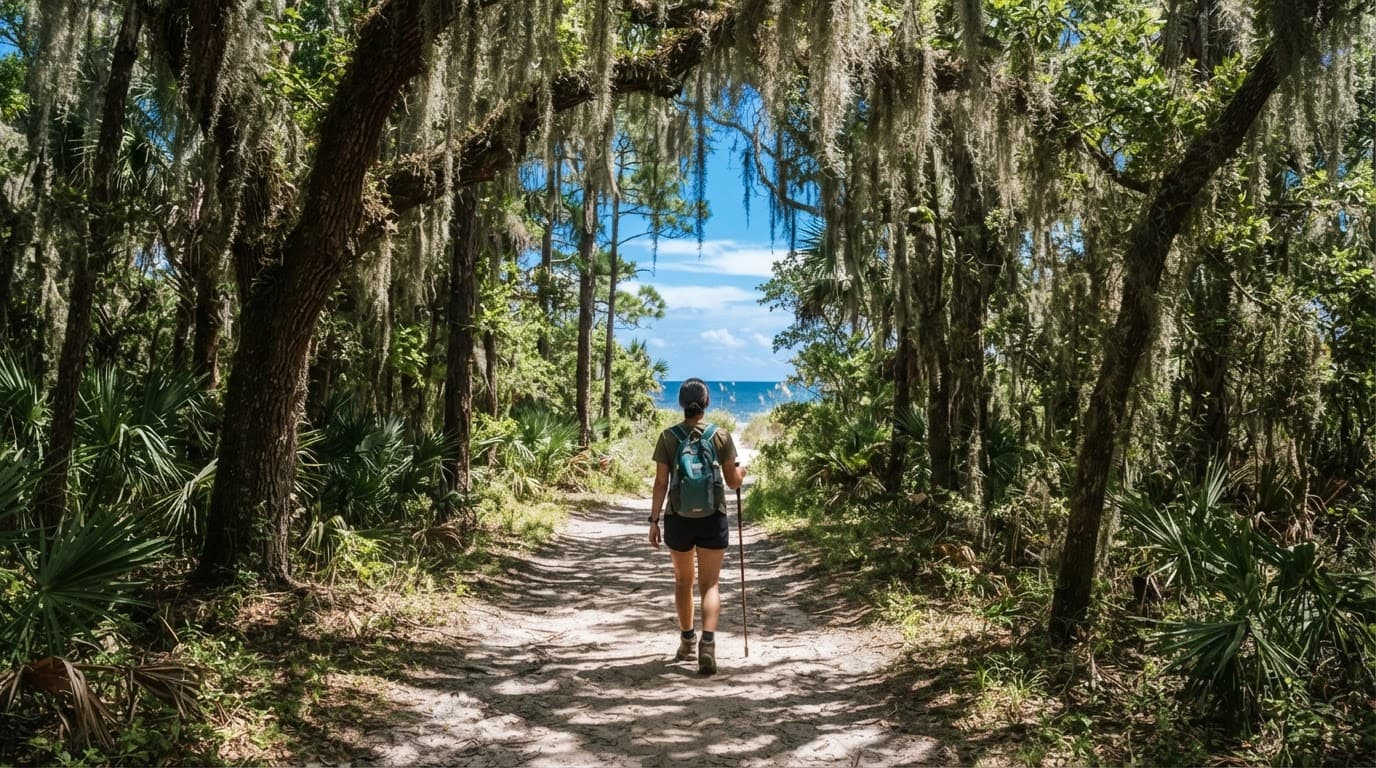
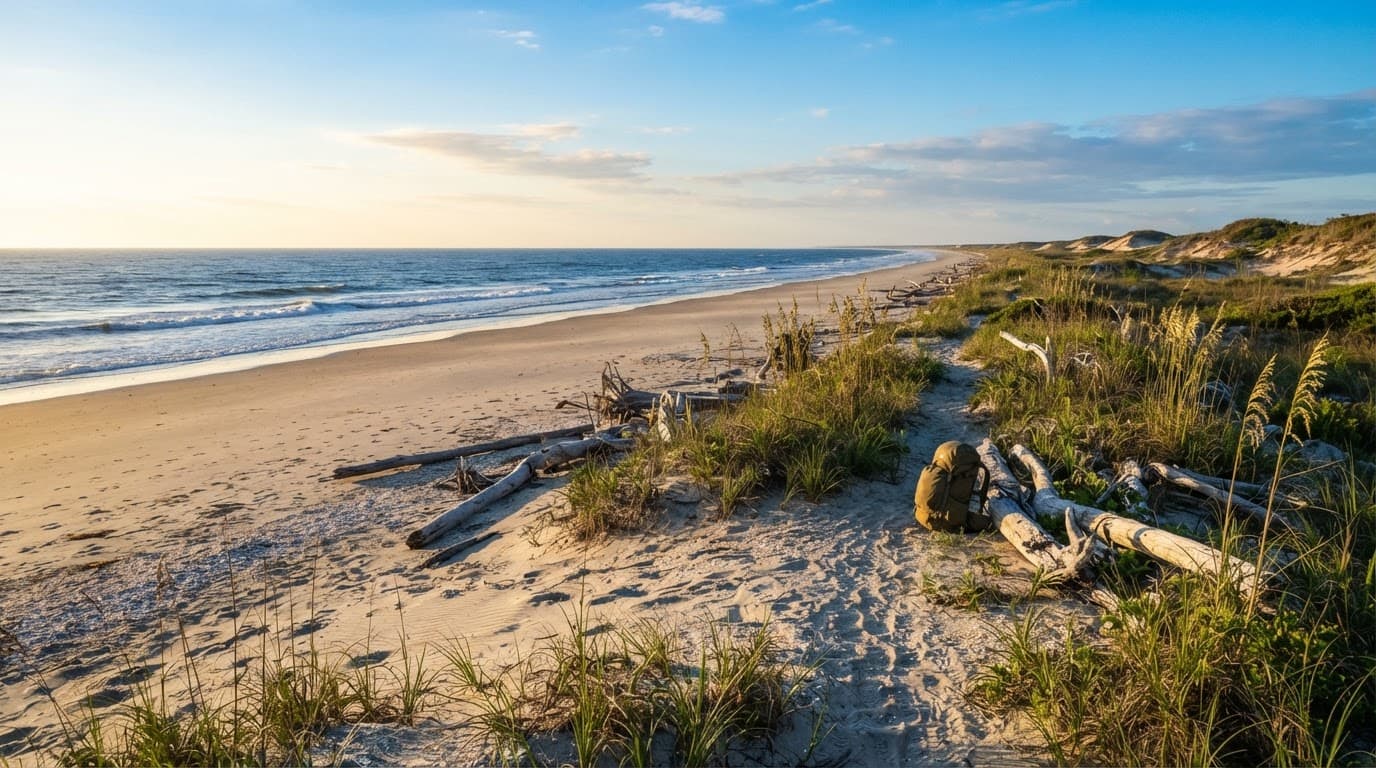
The south end is where first-timers should spend most of their energy. This area offers a live oak canopy, Spanish moss, saw palmetto, maritime forests, beach walking, and historic ruins. You also have a solid chance of seeing wild horses without carrying a full backpack deep into the wilderness.
The trail lengths below are individual segments from the park-linked trail map. They are not full loop totals, so add connector trails and beach walking before deciding how far your day will be.
| Trail segment | Listed length | Best use |
|---|---|---|
| River Trail | 0.8 miles | Connects the Sea Camp and Dungeness dock areas |
| South End Trail | 1.7 miles | Easy southern forest and beach access |
| Parallel Trail | 6.1 miles | Longer interior route for stronger hikers |
| Willow Pond Trail | 2.1 miles | Remote-feeling forest and wetland terrain |
The takeaway is simple: start small, then add distance if the weather, bugs, and your energy all cooperate.
Dungeness ruins are the first-stop classic
The Dungeness ruins are the island’s most famous historic stop. This was once the Carnegie family estate, and the remaining walls, open lawns, mossy oaks, and wandering horses create a scene that feels almost unreal.
Take your time here, but don’t crowd the horses for a photo. They are wild animals, not part of a petting zoo.
The River Trail is a useful 0.8-mile connector between the Sea Camp and Dungeness dock areas. Pair it with a beach walk and a slow loop through the ruins for a low-stress first afternoon.
Save Plum Orchard for a longer day
Plum Orchard Mansion sits farther north and takes more planning than Dungeness. It offers another look at the Carnegie family story and is worth seeing if you have a longer hiking or biking day, but I wouldn’t force it into a short first visit.
The First African Baptist Church is another meaningful historic landmark in the Settlement area. Bring the island map, read the historic context on site, and allow more time than you think you need.
Where to camp on Cumberland Island
Island camping is the best way to experience the island after day visitors leave. You need a reservation for every camping area, including remote backcountry campsites, and can book up to six months ahead through Cumberland Island camping permits.
Print your permit within 10 days of your trip and bring a paper copy. Cell service is not something to gamble on here.
Sea Camp and Stafford Beach are the beginner-friendly choices
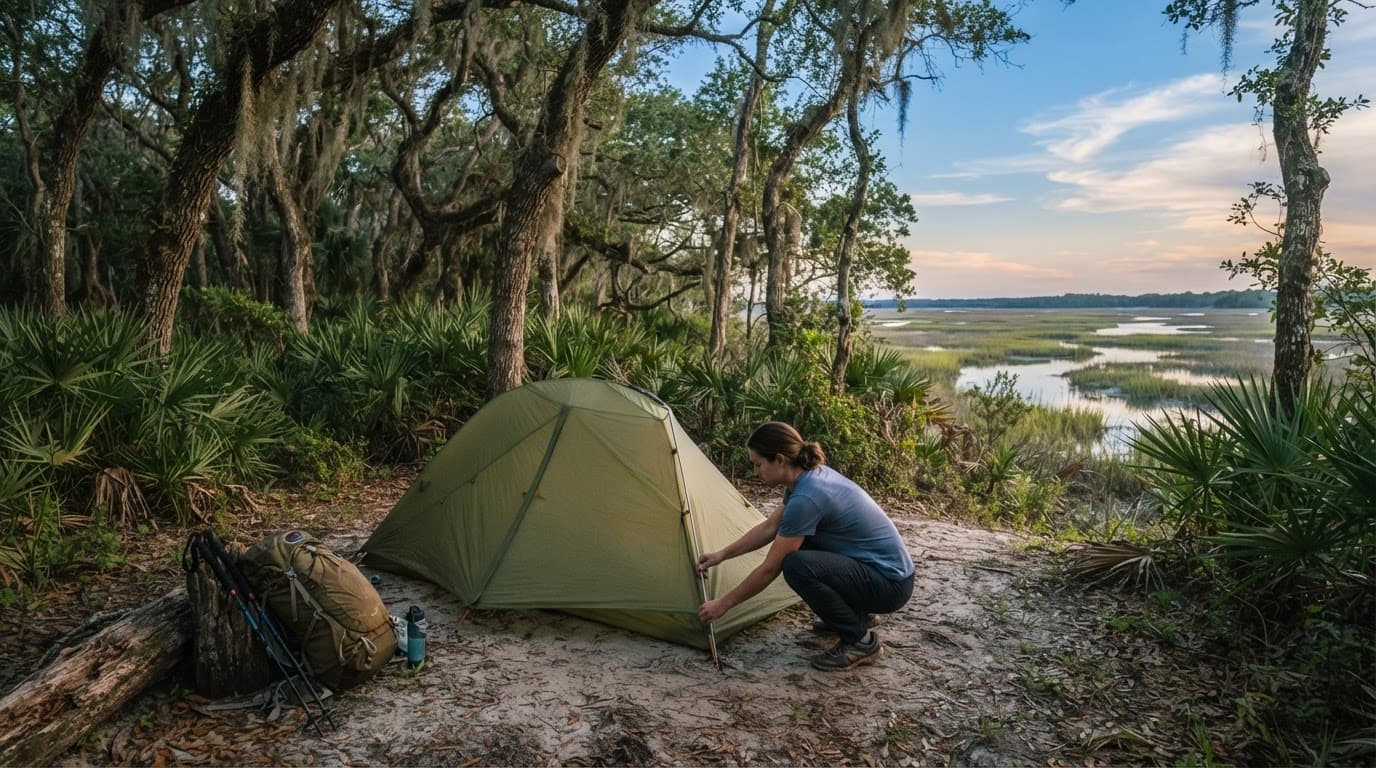
Sea Camp is the easiest place to start. It’s near Sea Camp Dock, has drinkable fresh water, and puts you close to the south-end trails. If this is your first island camping trip, Sea Camp is the clear choice.
Stafford Beach is a good next step for hikers who want more quiet without committing to true wilderness camping. It also has potable water, which makes packing and daily camp chores much easier.
Wilderness sites require more self-sufficiency
Hickory Hill, Yankee Paradise, and Brickhill Bluff are backcountry campsites. They’re for hikers ready to handle treated water, longer approaches, food storage, and changing trail conditions.
No fires are allowed at these sites. You also need to hang food, so bring a proper food-storage system and know how to use it before the trip. There are no trash cans on the island, so leave no trace by packing out every wrapper, food scrap, and fuel canister.
A simple two-night first-timer itinerary
The best first-timer plan gives you room to slow down. You don’t need a heroic mileage number to have a great trip here.
Day 1: Ferry in, camp, and Dungeness
Take the earliest sailing that fits your reservation. Campers get off at Sea Camp Dock, so set up your tent first, fill your water bottles, and keep the afternoon easy.
Walk the River Trail toward the Dungeness area, explore the ruins, and notice the Carnegie family history along the way. Then spend sunset on the beach. This is a great day for short walks, photos, and getting used to the heat and humidity.
Day 2: Beach, forest, and a flexible turnaround
Make this your main hiking day. Start early, walk a section of the South End Trail, and connect it with beach time and forest paths near camp.
The beach is wide open and beautiful, but sandy trails and soft sand add work fast. Pick a turnaround point before you start. If the heat is building or the bugs are winning, head back and enjoy camp instead of forcing extra miles.
Day 3: Pack up without rushing
Break camp, double-check for micro-trash, and leave no trace as you clean the site. Leave enough time to reach Sea Camp Dock well before your assigned ferry. A final beach walk or short forest stroll is plenty.
If you booked Stafford Beach instead, treat this final morning even more carefully. You don’t want to discover a slow, sandy hike is standing between you and your boat.
The northern wilderness is not a casual add-on
The north end is quieter, wilder, and far less forgiving when your route goes sideways. The Parallel Trail, Willow Pond Trail, Yankee Paradise Trail, and Brickhill routes pass through coastal forest, salt marshes, and stands of saw palmetto. They also serve more remote backcountry campsites, so these wilderness trails need more planning than the southern routes.
Flat terrain doesn’t always mean easy terrain. Mud, standing water, sandy stretches, humid air, and overgrown vegetation can slow your pace more than expected.
Plan for ticks, wet ground, and slow miles
Tick pressure can be intense, especially in warmer months and dense vegetation. Northern trails can also become muddy after rain, and trail conditions change faster than an old map suggests.
Wear long pants, treat clothing with permethrin according to the product directions, and do a full tick check every evening. Download offline maps, carry a paper map, and ask a ranger about recent trail conditions before heading north.
Don’t plan an inflexible schedule around one campsite or one mileage target. Give yourself daylight, backup time, and permission to turn around.
Water and food are your daily priorities
Sea Camp and Stafford Beach have drinkable fresh water. At backcountry campsites, treat every water source before drinking. Carry a reliable filter or purifier, plus a backup method in case your primary system fails.
Start each day with full bottles. Heat and humidity can make a moderate walk feel like a workout, especially if you are hiking through soft sand with a pack.
Food needs the same attention. Keep it sealed, hang it where required, and pack out scraps as part of leave no trace practices. Never leave snacks in your tent vestibule or pack pockets. Raccoons, insects, and larger wildlife have had plenty of practice finding careless food.
Wildlife rules that keep the island wild
Wild horses are part of the reason Cumberland is so special. You may also see armadillos, deer, shorebirds, snakes, alligators, and, in season, loggerhead sea turtles and marked nests.
Give every animal room, and don’t feed wildlife, block horses, or leave food where they can reach it. These are simple leave no trace habits. If a horse wanders near camp, stay calm and let it move through.
A horse near your campsite is a reason to create more space, not a reason to move closer for a better photo.
Treat marsh edges with respect
Alligators live in the island’s freshwater and marshy areas. Keep children close, avoid lingering at water edges, and never assume a still pond is empty.
Mosquitoes, biting flies, and ticks are often the more immediate problem. Repellent, long sleeves, and a head net can make the difference between a magical evening and a miserable one.
What to pack for hiking and camping
Cumberland is not the place to pack light by leaving behind basics. There are no island shops to rescue a forgotten headlamp, water filter, or rain layer.
Bring the following:
- Supportive hiking shoes or trail runners with real grip for sandy trails, roots, mud, and wet boardwalks.
- A daypack with more water capacity than you normally carry on a short hike.
- A water filter or purifier for any wilderness itinerary.
- A headlamp, even if you don’t plan to hike after dark.
- Rain protection, dry socks, and a light insulating layer for damp evenings.
- Insect repellent, sun protection, tick-treatment clothing, and a head net if bugs tend to ruin your day.
- Offline maps, a paper backup map, and a fully charged battery pack.
A loaded backpack makes every mile different. If you’re new to overnight hiking, choose a beginner-friendly frontcountry site and keep your route modest. Follow leave no trace habits, and learn what your boots and pack feel like after a full day outside.
The right first trip is the one you finish happy
Cumberland Island rewards hikers who resist the urge to see everything at once. Base yourself at Sea Camp, reserve early, hike the southern trails, and leave the northern wilderness for a return trip.
The beach, ruins, maritime forest, Carnegie family history, and wildlife already make a hike here feel like a real adventure. You don’t need to overpack the itinerary to make it memorable.
Frequently asked questions
Is Cumberland Island good for beginner hikers?
Yes, especially around the southern end near Sea Camp and Dungeness. The terrain is mostly flat, but heat, humidity, sand, insects, and ferry schedules add difficulty. Start with short trails and beach walks, then add distance only if everyone still feels good.
How far ahead should I reserve camping and ferry tickets?
Book as soon as you know your dates. Campsites can be reserved up to six months ahead, and ferry seats often sell out on popular weekends. Your campsite reservation and ferry ticket are separate.
Can you camp on Cumberland Island without a permit?
No. Every overnight stay requires a reserved campsite and camping permit. Bring the printed permit, and make sure your ferry reservation matches your arrival and departure dates.
Are there reliable water sources on the island?
Sea Camp and Stafford Beach have potable water. Wilderness campers need to treat water before drinking. Carry enough water capacity to reach your next known source, and don’t rely on older maps showing water locations.