
Starved Rock can surprise first-time hikers. You may come for a quick view of the Illinois River, then find sandstone canyons, steep wooden stairs, and rock formations that make a short hike feel like a real day outside.
A first hike here can still be a welcoming hiking adventure if you choose the right route. The canyon routes aren’t uniformly accessible, since stairs, uneven sandstone, wet surfaces, and narrow canyon walls can make some sections challenging. Start with French Canyon, and enjoy beautiful views without assuming every route will be easy.
Before you go, check the official Illinois DNR park page for current opening times, closures, and alerts.
Key takeaways:
- The best beginner route pairs French Canyon with Starved Rock and Lover’s Leap.
- Day-use parking and park entry are free, but weekend lots fill quickly, so arrive early.
- Official trail distances are measured one way from the Visitor Center.
- Spring after snowmelt or rain offers the best chance of flowing waterfalls.
- Wear shoes with real grip for slick stairs and wet canyon rock.
- Check current park alerts before setting out.
What to Know Before Your First Starved Rock Hike
Starved Rock State Park sits along the Illinois River near Oglesby, Illinois, about 90 minutes from Chicago. The park has roughly 13 miles of marked hiking trails and 18 sandstone canyons carved into St. Peter sandstone.
The mileage isn’t intimidating. Repeated stair climbs and bluff elevation changes are what catch people off guard.
Some trails rise quickly from river level to bluff-top overlooks, then drop into canyons with muddy or slick surfaces. Take your time, use the railings, and don’t push your pace because another group is behind you.
Start at the Visitor Center
For a first visit, park near the visitor center and use it as your home base. Restrooms and some bluff viewpoints may offer more accessible facilities than canyon routes. Visitors using wheelchairs, mobility aids, or strollers should confirm current accessible areas with the park before arrival, since many routes involve stairs and uneven ground.
The park’s trails open at 7 a.m. and close at sunset. The visitor center is generally open from 9 a.m. to 4 p.m., though winter holiday closures apply. Check the official Starved Rock State Park updates for current closures, trail restrictions, hours, and weather alerts before leaving home.
Download or photograph the trail maps before you start, then follow posted markers and choose your turnaround point. Published mileage is usually one way, so return climbs, mud, crowds, and photo stops can add time.
A route that looks short on paper can take twice as long when muddy stairs, return climbs, photo stops, and crowds enter the picture.
Starved Rock Hiking Routes for Different Time Windows
The park’s published distances are one way from the visitor center. That matters because a canyon listed at one mile becomes roughly two miles out and back. Detours, overlook stops, and the walk back to your vehicle add more mileage.
Here’s the practical breakdown for the named stops most first-timers want to see.
| Destination | One-way distance from visitor center | Estimated round trip* | Best for |
|---|---|---|---|
| Starved Rock | 0.3 miles | 0.6 miles | Quick bluff-top river view |
| French Canyon | 0.4 miles | 0.8 miles | Short, stair-heavy canyon introduction |
| Lover’s Leap | 0.7 miles | 1.4 miles | River overlook and a bigger climb |
| Wildcat Canyon | 1.0 mile | 2.0 miles | A stronger half-day hiking target |
| St. Louis Canyon | 1.5 miles | 3.0 miles | Longer, uneven out-and-back with waterfall potential |
| Ottawa Canyon | 3.9 miles | 7.8 miles | Full-day distance, not a casual add-on |
Round-trip estimates double the listed one-way distance. Detours, overlook stops, and the walk back to your vehicle can add mileage.
Check these distances and route options against current official trail maps before setting out, since signage and closures can change.
The sweet spot is choosing one main target, then adding stops on these hiking trails only if your legs still feel good. Ottawa Canyon’s estimated 7.8-mile round trip makes it a planned full-day outing, not a casual add-on.
The Best 2-Hour First Visit
Start at the visitor center and hike to Starved Rock, then continue toward French Canyon. Both are short but stair-heavy. Together, they offer beautiful views, forest, and striking rock formations.
If you have time and energy, continue toward Lover’s Leap on the signed river trail. Its more substantial climb makes it a sensible turnaround point if the stairs feel taxing. If not, turn around. There’s no prize for squeezing every overlook into one outing.
This is the route I’d recommend for families, casual hikers, or anyone arriving after a long drive. It offers family fun and a manageable hiking adventure. You’ll still get the payoff without turning your first visit into a stair-climbing contest.
A Better Half-Day Plan: Wildcat Canyon
Got four hours? Make this canyon your main destination. Start with the core canyon and bluff trail network, stopping at Starved Rock and other signed overlooks where the route allows.
This canyon is one mile one way from the starting point, giving you a satisfying outing without Ottawa Canyon’s long commitment. Bring water and snacks, and leave enough time for the return at a realistic pace.
St. Louis Canyon is also a great choice if you want a longer out-and-back. At about three miles round trip from the main trailhead, it works best for hikers who already enjoy uneven ground. Expect stairs and treat it as a separate outing rather than a casual add-on.
Parking, Dogs, and Group Rules Near the Visitor Center
Day-use entry and parking at Starved Rock State Park are currently free. Free access doesn’t guarantee an available space on busy days.
Beat the Weekend Parking Rush
On Saturdays, Sundays, holiday weekends, and peak fall color days, arrive near the 7 a.m. opening if possible. By mid-morning, nearby lots can be packed.
If the lots by the visitor center are full, follow official signs to other parking areas. Don’t park illegally, and expect a longer walk from those parking areas to the trailhead.
Weekday mornings are the quietest choice. Late afternoon can work too, but trails close at sunset.
Parking and trail access rules can change with crowding, weather, construction, or special events. Check the official Illinois DNR page before you go, not just older blog posts. Verify current parking availability, entry rules, closures, and alerts.
Bringing Your Dog or a Large Group
Dogs are allowed on the trails, but they must stay leashed. Bring water for your dog, pick up waste, protect them from heat, and never leave them in a parked vehicle. The park’s dog rules prohibit pets in park buildings unless they’re certified service animals, but verify current Illinois DNR rules before your visit.
Informal visits don’t need special paperwork, but organized outdoor activities may require activity permits. Contact Illinois DNR to confirm the current permit threshold, forms, lead time, and submission method. Review the current activity permit requirements before setting a date or applying for activity permits.
When Waterfalls, Fall Color, and Winter Ice Are Best
The canyons are beautiful all year, but conditions at Starved Rock State Park change with the weather. Seasonal waterfalls depend on recent snowmelt and rainfall, not pumps or guarantees. Check recent weather and current park alerts before choosing a waterfall-focused itinerary.
Spring Is the Waterfall Window
Late winter through spring is usually the best time to see water moving through French Canyon, Wildcat Canyon, and the longer canyon routes. Snowmelt and spring rain bring the falls to life, though they also create mud, puddles, and slick rock.
After a dry stretch in summer, many falls shrink to a trickle or disappear. Changing light still reveals details in the canyon walls, but don’t plan a July trip around waterfall photos.
For more Illinois options once you’ve caught the canyon-hiking bug, check out these Illinois canyon hikes, including other trails with waterfalls and bluff views.
Fall Brings the Crowds and the Color
October is hard to beat for crisp air and bright hardwood forest. It also brings beautiful views from the overlooks and some of the year’s largest crowds. Get there early, especially near the park’s busiest trailheads.
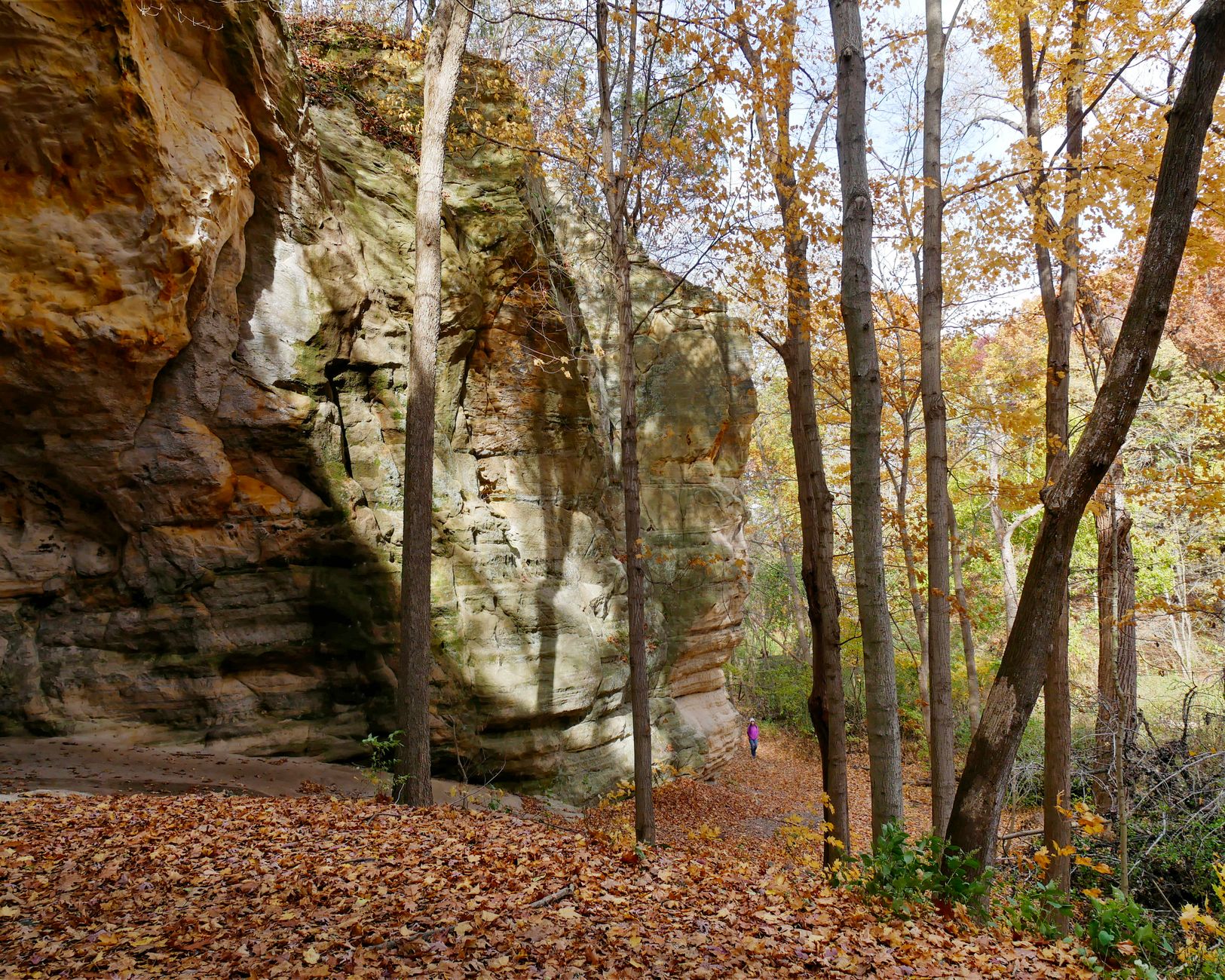
Photo by Efren Anguiano
Winter has a different kind of magic, but follow current official restrictions when planning your visit. Frozen waterfalls and bald eagles along the Illinois River make the park feel more dramatic, but icy stairs can turn an easy route into a sketchy one. Bring traction when conditions call for it, and check official updates for eagle viewing and seasonal campground availability. Observe frozen waterfalls from safe areas, and don’t enter frozen canyons or attempt ice climbing without confirmed authorization and appropriate expertise.
Gear That Makes the Stairs Easier
You don’t need a huge pack or heavy backpacking boots for most Starved Rock hiking days. But this isn’t the place for flat-soled casual shoes either.
Wear Grippy Shoes and Pack Light
Supportive trail runners work well on dry trails. After rain, snowmelt, or a muddy spring week, choose hiking shoes or lightweight boots with deeper tread and ankle or foot support that suits your comfort. Wet wooden stairs and polished rock deserve your attention.
Bring these basics:
- A water bottle or hydration pack, even on short hikes. Bring extra water for Wildcat Canyon or St. Louis Canyon.
- A small snack, especially if Wildcat or St. Louis Canyon is your goal.
- A light rain layer in spring and fall.
- Offline trail maps and a charged phone. Follow current marked signs too, since downloaded maps may not reflect temporary closures.
- Microspikes or similar traction for icy winter trails. They don’t make every icy canyon route safe.
Keep your hands free on the stairs. A phone flashlight can help at dusk, but it isn’t a substitute for leaving the trail with plenty of daylight left.
Keep dogs leashed, especially near stairs, overlooks, and narrow paths.
Watch the Canyon Edges
Stay on marked trails, give canyon walls and overlook edges plenty of space, and remain behind railings at overlooks. The St. Peter sandstone can crumble, and wet leaves can hide uneven roots or drop-offs. Follow current park guidelines: don’t climb railings, approach unstable edges, enter closed canyons, or stand directly beneath icy or unstable waterfall features.
Many canyon approaches include steep stairs, narrow uneven sections, roots, and wet rock. Wheelchair and stroller users should confirm accessible viewpoints, restrooms, and current route conditions with the park before visiting. Core overlooks can be easier to reach than canyon routes, but accessibility varies.
Kids do well here when the route fits their energy level. Give them a clear goal like French Canyon or the Starved Rock overlook, then stop before everyone gets tired and cranky. A shorter hike that ends on a high note beats a forced six-mile day every time.
Where to Stay Near Starved Rock State Park
A day trip works well, but staying near Starved Rock State Park makes the visit much more relaxed. You can hike early, avoid the parking headache, and catch cooler morning conditions.
Choose Lodging Based on Your Plan
Starved Rock Lodge makes it easier to reach the Visitor Center before weekend lots fill. The core trail network is nearby. The historic lodge has rooms, cabin rentals, dining, and seasonal programming, including outdoor activities. For current room, cabin, dining, program, and availability details, check Starved Rock Lodge lodging details on the official lodge website.
Campers can use the State Park campground when it’s open, but loops, reservations, seasonal closures, check-in rules, and availability can change. Verify current details with Illinois DNR or the official reservation system before booking. For an organized event or group activity, confirm activity permits with Illinois DNR.
Grand Bear Resort and lodging in nearby Utica are good alternatives when the lodge is full. Grand Bear can be practical for family fun, while Utica offers more lodging and dining choices. If you ask me, staying nearby is worth it for first-timers. It gives you a better shot at an early start, cooler morning conditions, and quieter trails.
Final Thoughts on a First Starved Rock Visit
The best first visit isn’t about checking off every canyon. Start with French Canyon, then follow the river trail toward overlooks and other canyons as time and energy allow.
Starved Rock hiking feels bigger than its mileage because of the stairs, bluffs, and changing canyon conditions. Choose a manageable route, arrive early with water and grippy footwear, and be willing to turn around. Check current closures and alerts before setting out, especially after storms, snow, or heavy rain.
Starved Rock Hiking FAQs
Is Starved Rock good for beginner hikers?
Yes. Beginners can handle the shorter route to the main overlook and the shorter canyon route. These hiking trails aren’t flat, though. Expect stairs, roots, mud after rain, and a little leg burn on the bluff climbs. Wear hiking shoes with reliable grip, and take your time.
How long does Starved Rock hiking take?
A quick visit to the main overlook or shorter canyon route can take one to two hours with photo stops. Plan three to four hours for a fuller outing that includes the longer half-day route. St. Louis Canyon is a longer option, while Ottawa Canyon is best treated as a full-day commitment.
Are dogs allowed at Starved Rock State Park?
Yes, dogs are welcome outdoors when leashed. Bring their water, clean up after them, and keep them out of park buildings unless they are certified service animals. Avoid hot summer afternoons, since the stairs and exposed sections can be hard on paws.
Are parking and entry free?
No. Starved Rock State Park has no day-use entrance fee or parking fee. Parking lots can fill early on weekends, so arrive early when possible. You may still need to reserve and pay for camping, lodge rooms, guided activities, or other overnight arrangements.
Are the canyon routes wheelchair- or stroller-accessible?
Most canyon routes aren’t fully accessible because of stairs, roots, uneven ground, and muddy sections. Check current conditions before visiting, especially if you need a smoother route for a wheelchair or stroller.
What should I bring for a first visit?
Bring water, a small towel, and layers for changing weather. Mud can make the stairs slick, so leave extra time and avoid rushing through steep sections.
Can you see waterfalls at Starved Rock in summer?
Sometimes, but don’t count on it. The seasonal waterfalls depend on recent rain and snowmelt. Spring is the more reliable season for active falls, while summer often brings lower water flow.
How can I check current closures and trail conditions?
Check the current official Illinois DNR park page before leaving. It provides the latest hours, closures, trail conditions, accessibility information, and weather-related alerts.