If you’re looking for the best hikes in Arches National Park, start with Delicate Arch, add Devils Garden, then fill the day with Park Avenue or the Windows Section. That mix gives you the biggest scenery in Arches near Moab, Utah without turning the trip into a sufferfest. Arches is where I’d point any first-timer, and from there it’s an easy jump to the canyons of Zion, Bryce, Canyonlands, and Capitol Reef.
When friends ask me about the best hikes Utah gives beginners, this is the park I bring up first. Arches packs a ridiculous amount of payoff into short to moderate trails, as long as you start early and stay flexible. If you want the wider state-by-state version, my guide to the best hikes in Utah for beginners covers the other parks worth building a road trip around.
Here are the takeaways before we get into the trails:
- Delicate Arch is the best single wow hike, at 3 miles round trip.
- Devils Garden gives you the most scenery per mile, with an easy turnaround at Landscape Arch.
- Park Avenue is the best easy canyon walk in the park.
- The Windows Section is the safest bet for beginners and sunset.
The trail mix I’d pick first
This is the quick screen I use when planning a day in Arches National Park. Distances and difficulty below come from the National Park Service trail pages, so you can plan around real numbers.
| Hike | Distance (round trip) | Difficulty | Best for |
|---|---|---|---|
| Delicate Arch | 3 miles | Moderate | Iconic view |
| Devils Garden to Landscape Arch | 1.8 miles | Easy to moderate | Big payoff fast |
| Park Avenue | 1 to 1.8 miles | Easy to moderate | Canyon walls |
| Windows + Double Arch | About 1.5 miles | Easy | Easy arches and big scenery |
| Tower Arch | 2.6 miles | Strenuous | Fewer crowds |
My opinionated take: if you only have one day, pick one moderate hike and two easy ones. That keeps the day fun, not rushed, and it works well for families. For a full hour-by-hour version, my Arches National Park one-day hiking itinerary follows this same logic.
Go big first with Delicate Arch and Devils Garden
Delicate Arch is worth the effort
The headliner lives up to the hype. The trail is 3 miles round trip and climbs about 480 feet over open slickrock, with sun exposure and a steady grade that make it feel honest. There’s no shade, and the last stretch traverses a narrow rock ledge before the arch opens up in front of you. For beginners, that bit of work is a good thing. You earn it, then the payoff lands hard.
I always go early. Morning light is softer, parking is easier, and the trail feels less like a parade. The official Delicate Arch trail page is the one I check for the latest conditions before a trip, and it’s worth a look because rangers regularly rescue people who underestimate this hike in the heat.
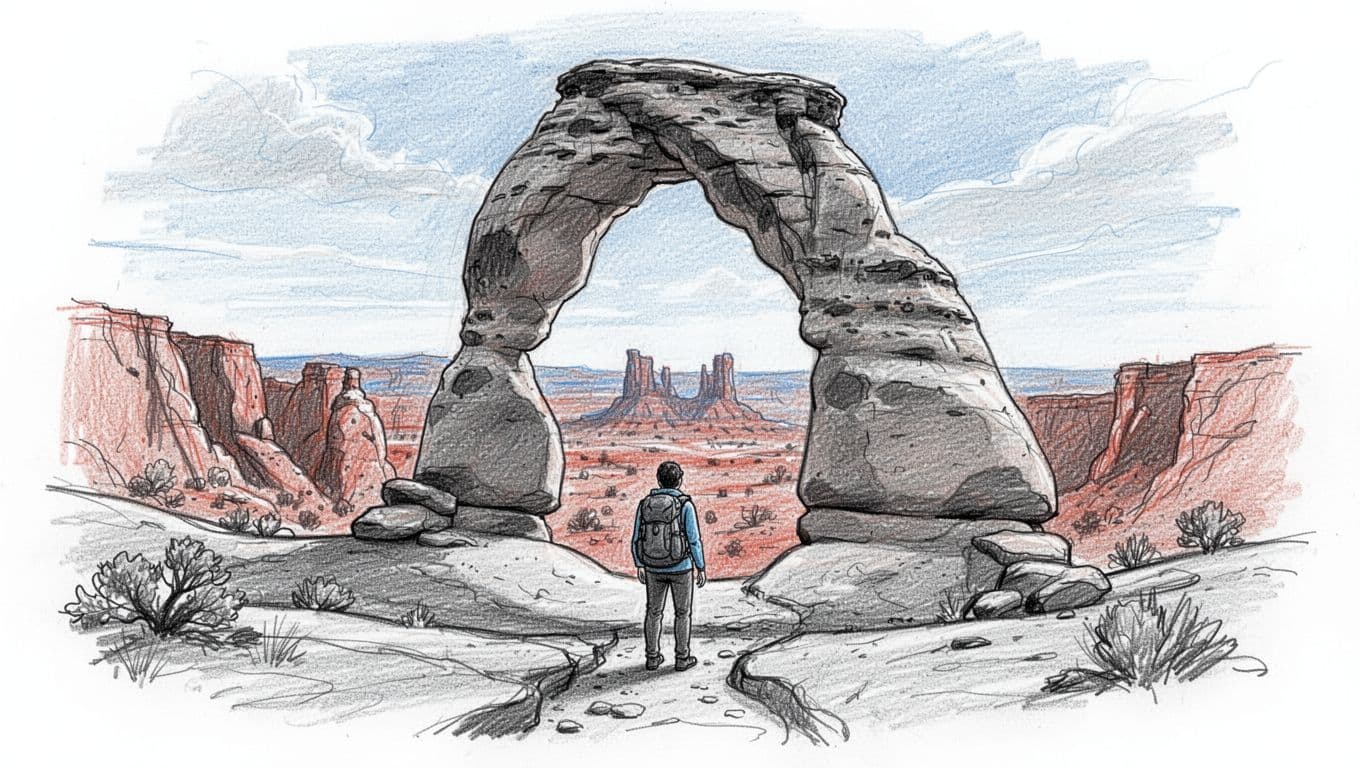
Standing under it is the moment that turns a Utah trip into a memory. It feels like walking toward a postcard, except the scale is better in real life. If you want to see where it sits relative to the rest of the park, my Arches National Park map lays out the trailheads and drive times.
Devils Garden gives you the best variety
If Delicate Arch is the single best viewpoint, Devils Garden is the best trail system. I like hiking out to Landscape Arch at a minimum, a 1.8-mile round trip on a hard-packed, mostly flat trail. It gives you a huge ribbon of rock that spans more than 300 feet, plus short spurs to Pine Tree Arch and Tunnel Arch along the way.
Feeling strong? You can keep going past Landscape Arch, but be honest with yourself first. The National Park Service notes the trail gets difficult beyond that point, with rock scrambling, narrow ledges, and exposure to heights. The full loop runs close to 8 miles. Need to keep it simple? Turn around at Landscape Arch and call it a win. That flexibility is exactly why I recommend it to beginners.
For route ideas, I like using an AllTrails map with view-heavy Arches trail lists to compare mileage, check elevation, and read recent trail comments before I commit to a longer day.
For canyon walls and easy wins, choose Park Avenue and the Windows
Park Avenue feels like walking through a stone city
Park Avenue is short, simple, and dramatic in a way photos rarely explain well. Towering walls and spires rise on both sides, and the trail drops you right into the corridor between them. It runs about 1 mile one way down to Courthouse Towers, or roughly 1.8 miles round trip if you walk back the way you came. A set of stairs near the viewpoint adds a little climb, but it’s still one of the easiest ways in Arches to get that deep-canyon feeling without much mileage.
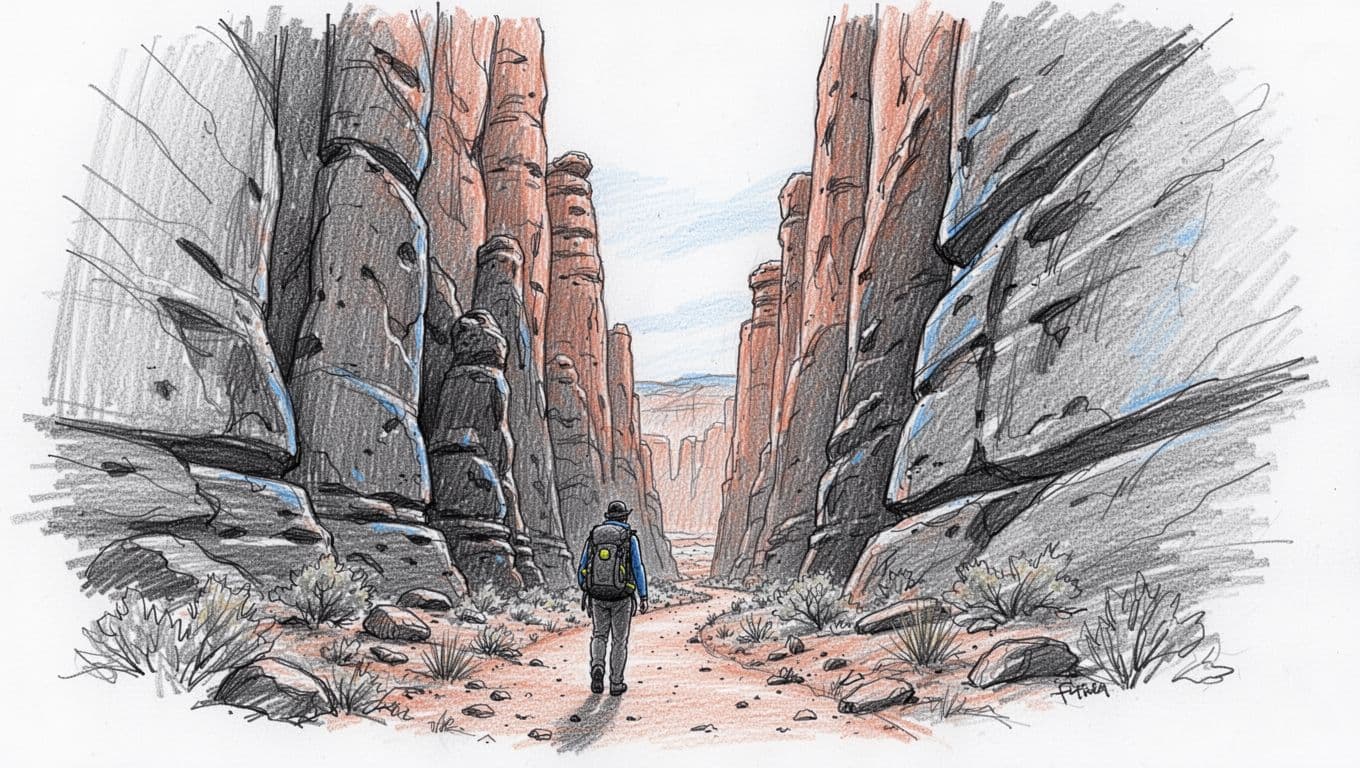
I like it early or late in the day, when low light makes the walls look even taller. It’s also a smart first stop while your legs are fresh.
The Windows Section is the beginner-friendly closer
The Windows Section is where I send people who want the highest reward for the least strain. You can stack North Window, South Window, Turret Arch, and Double Arch on short, flat paths without burning much energy. Double Arch alone is a 0.6-mile round trip to the tallest arch in the park. That low effort matters a lot after a longer morning hike.
This area also works well at sunset because the short walks keep the pressure low. You can move slowly, stop often, and still feel like you saw a lot. If you want another hiker’s take on which routes are worth the alarm clock, this roundup of Arches hikes worth waking up early for is a helpful second opinion.
If you want one quieter pick, add Tower Arch. It’s a 2.6-mile round trip, the National Park Service rates it strenuous, and reaching the trailhead means driving about 8 miles on unpaved roads that wash out fast in rain. That access is exactly why it stays empty, so check conditions before you commit. Once you’ve had your fill of arches, the canyons are the natural next step, whether that’s Zion and The Narrows or the overlooks of Canyonlands.
Beginner planning tips that save time
Arches rewards timing more than toughness, and I mean that literally. A strong hiker who starts late can have a worse day than a beginner who starts at sunrise.
In Arches, the wrong start time matters more than your fitness level.
Spring and fall are the easiest windows because days are cooler, though spring mornings can still be cold and the slickrock slick. Pack sturdy hiking shoes, trekking poles if your knees complain on switchbacks, more water than you think you need (rangers suggest at least two quarts per person for Delicate Arch), and a simple backup plan for when a parking lot is full.
I also protect my mornings by staying close. If you’re building a weekend around these trails, my guide to the best places to stay near Arches National Park keeps the logistics easy. And if you want another day of giant overlooks after Arches, my Canyonlands National Park map and my Island in the Sky one-day itinerary make the cleanest add-on.
FAQs about hiking Arches for big views
What’s the best first hike in Arches for beginners?
Pick the Windows Section if you want easy miles. If you want one famous hike and you’re okay with moderate effort, Delicate Arch is the better choice at 3 miles round trip.
Is Devils Garden too hard for new hikers?
Not if you keep it short. The 1.8-mile walk to Landscape Arch is approachable for most beginners. The full loop, with its scrambling and exposed ledges, is a much bigger step up.
When should I start hiking in Arches?
Start at sunrise whenever you can. That helps with parking, cooler temps, and a calmer trail, especially at Delicate Arch.
Which other Utah parks should I pair with Arches?
Canyonlands is the closest add-on from Moab and an easy second day. Farther west, Bryce Canyon’s Navajo Loop and Queens Garden trails are short, scenic favorites, my Bryce Canyon map guide covers where to start. Capitol Reef is the more rugged, less crowded pick if you keep heading that way; here’s my Capitol Reef National Park map.
Where can I hike near water in Utah?
Arches is all desert arches and rock, so for a water hike you’ll want Zion. The Narrows walks you straight up the Virgin River between thousand-foot walls, and the bottom-up version from the Temple of Sinawava doesn’t need a permit. If that’s on your list, my Zion itinerary for beginners is the place to start.
Arches proves something I love about hiking in Utah: you don’t need huge mileage to get huge scenery. Pick one big trail, layer in one easy canyon walk, and let the park do the rest.
Save this list, start earlier than feels necessary, and don’t waste your best hour circling parking lots. And if Park Avenue’s verticality leaves you wanting more, Zion’s Angels Landing is the obvious next dare, just know it now requires a permit through a seasonal lottery, so plan that one well ahead.