Wichita Mountains hiking can look like a quick road-trip stop. Granite, heat, and boot-worn paths can make a short hike feel longer than expected. The good news? A first visit is easy to get right if you choose one trail, start at dawn, and resist the urge to chase every boulder.
This 60,000-acre Wichita Mountains Wildlife Refuge gives you pink granite, open prairie, bison, Rocky Mountain elk, and Quanah Parker Lake. The views feel much bigger than the drive in. In August 2026, the refuge’s temporary heat order requires hikers to be off trails by 10 a.m., including Mount Scott, so check the current refuge visitor updates before you leave home.
Key takeaways
- Start with Bison Trail for a straightforward first outing, or choose a tougher route for bigger views and rougher footing.
- Charon’s Garden is stunning, but it is not the place to wing your route or ignore a map.
- Finish early, carry more water than feels necessary, and treat wildlife as wildlife, not a photo prop.
Know the refuge rules before your hike
The wildlife refuge itself is free to enter and generally open sunrise to sunset. Right now, though, hiking is only allowed from sunrise until 10 a.m. Hiking restrictions apply to trails and the Mount Scott Roadway, so don’t build a plan around squeezing in “one last overlook” at 9:55. Check Mount Scott access under the same order before you go.
Heat restrictions can change, as can closures tied to prescribed burns or weather. Check conditions the same morning, not the week before. Extreme heat in Oklahoma has a way of turning a good idea into a rough morning fast.
Pick up a map before choosing a route
The refuge has about 15 miles of designated hiking trails, spread across several separate areas. Maps are available in leaflet dispensers inside refuge gates and at pull-outs near entry gates. The Visitor center is at the intersection of Highways 115 and 49, with Quanah Parker Lake as a useful map landmark.
Grab a paper map, download an offline map to your phone, and compare both with the official Wichita Mountains trail listings. It sounds basic, but it saves a lot of wandering around in the wrong parking area.
Pick the right first trail, not the longest one
Most beginners have more fun by picking a clear route with a real destination on Oklahoma hiking trails. Granite boulders, heat, uneven footing, and photo stops all add time, so you don’t need huge mileage here.
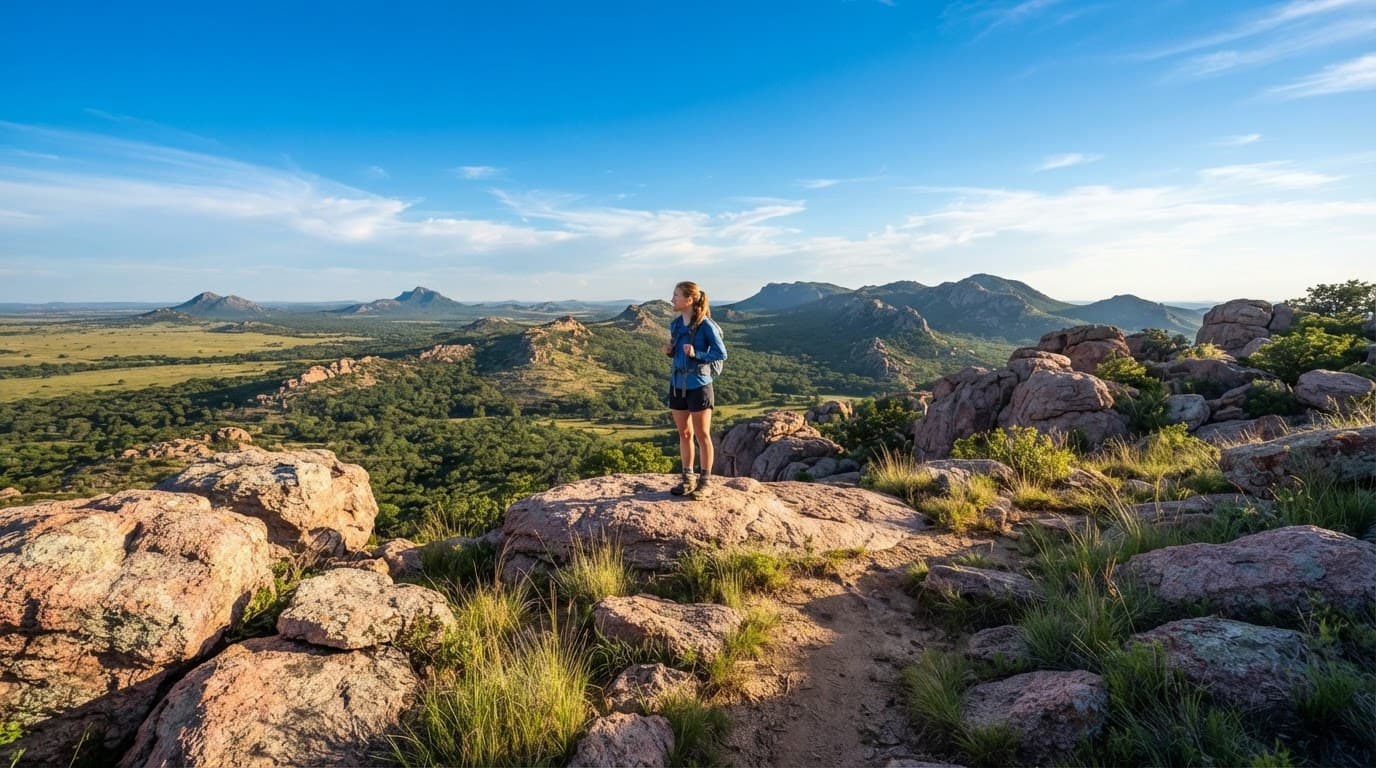
Here is the quick comparison I would use for a first visit.
| Trail | Listed length | Trailhead | Best fit |
|---|---|---|---|
| Bison Trail | 1.5 miles | French Lake Parking Area | A moderate first refuge hike |
| Elk Mountain Trail | 1.1 miles | Sunset Picnic Area | Strong hikers who want a big view |
| Narrows Trail | 0.8 mile | Boulder cabin Picnic Area | A short rocky walk near West Cache Creek |
| Kite Trail | 1.1 miles | Lost Lake or south Boulder Picnic Area | A shorter route through boulder country |
Elk Mountain is the big-view pick
This route is only 1.1 miles, but don’t let that number fool you. The official rating is difficult, and the climb over rock can feel more demanding than a longer dirt trail.
The payoff is a summit plateau with scenic views across the refuge. If you have decent balance, grippy shoes, and an early start, this is one of the best first hikes here. Take your time on the way down. Descents over granite are where rushed hikers get sloppy.
Bison Trail is the safer first choice
For most newer hikers, this route is the sweet spot. It begins at the French Lake Parking Area in the Dog Run Hollow trail system and covers 1.5 miles over dirt, rock, and gravel.
It is still a moderate route, not a paved nature walk. But the terrain is easier to read, and it gives you a strong taste of the refuge without immediately asking you to scramble uphill. You may see bison or Rocky Mountain elk nearby, but never count on wildlife sightings. The route is worth doing either way.
Charon’s Garden is beautiful, rugged, and easy to misread
Charon’s Garden Wilderness is the postcard section of the refuge. Granite domes, narrow gaps, boulder fields, and distant ridgelines make it feel more like a western mountain park than southwest Oklahoma.
It’s also where first-timers most often underestimate the terrain. This Wilderness area can take longer to navigate than its short routes suggest. Uneven rock, confusing side paths, and unofficial tracks used by Rock climbers can slow things down.
Use the Sunset Picnic Area for Charon’s Garden
For the clearest start, park at the Sunset Picnic Area. Elk Mountain Trail also begins here, making it useful for comparing your options before committing.
Charon’s Garden can also be accessed through Treasure Lake Parking Area, but Sunset is the better starting point if you’re new to the refuge. Backcountry visitors are required to use the Sunset area as well.
Go for the scenery, not a waterfall guarantee
Post Oak Falls is one of the refuge’s better-known water features, but it’s seasonal, not guaranteed. After rain, it can be a great add-on, while dry stretches may leave it barely flowing.
The smarter move is to make granite scenery your main goal and treat flowing water as a bonus. Wet rock can be slick, even when the rest of the route feels dry.
Stay on route, manage heat, and keep the day simple
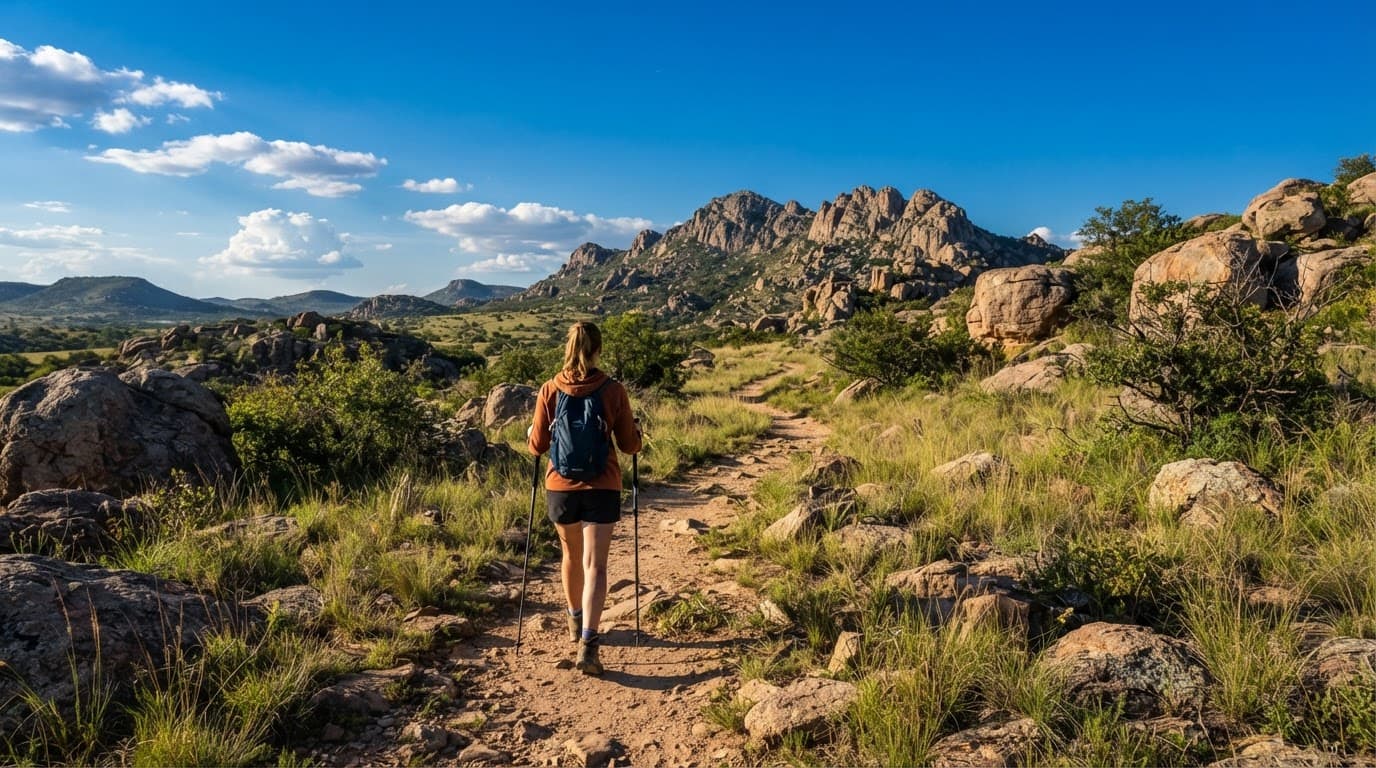
A good day on these trails depends more on judgment than tough-guy mileage. This wildlife refuge has limited shade, uneven ground, and cell service that can disappear when you need it most.
Ignore unofficial social trails
The main navigation issue isn’t a missing sign. It’s the number of unofficial paths branching from the real route. A worn-looking track can lead to a scenic boulder, a climber’s approach, or nowhere useful at all.
Cross-country exploration can pull you away from the signed route and into trouble. Stay on the marked path and check your map at every major junction. If the trail suddenly becomes vague, steep, or much narrower than expected, stop and retrace your steps before wandering farther.
A one-mile trail over granite can take twice as long as you expect when every step needs attention.
Pack for exposed rock and no margin for error
Trail runners or hiking shoes with solid grip are the right call. Casual flat-soled sneakers might work on easy dirt sections, but they get sketchy fast on sloped granite or loose gravel.
Bring water, salty snacks, sunscreen, a hat, a small first-aid kit, and downloaded maps. The heat-first approach in this The Wave hiking guide applies here too. Start early, drink before you feel thirsty, and turn around before conditions get ugly.
Tell someone where you’re hiking and when you expect to return. A charged phone is helpful, but it isn’t a rescue plan when service is spotty.
Give wildlife space and book camping ahead
American bison, Rocky Mountain elk, Longhorn cattle, prairie dogs, and plenty of birds all live in the refuge. Seeing them is part of the experience, but their comfort matters more than your photo.
Let animals set the distance
Never approach or feed animals, and don’t try to pass a bison for a better photograph. If an animal notices you, changes direction, or seems tense, you’re too close.
Keep moving calmly, give the animal plenty of room, and wait calmly at a safe distance if it blocks the route. The trail is named for the setting, not because it promises a close encounter.
Camping takes advance planning
Camping in the refuge is reservation-only. Doris Campground is the main developed option, with campsites, drinking water, restrooms, and showers. It’s a good base if you want an early start without a long morning drive.
The refuge’s Sunset Picnic Area isn’t a campground, so verify Sunset Campground’s location and current status before booking. Backcountry camping in Charon’s Garden requires a permit when the area is open. Under the current extreme heat order, it is closed, so use the Charon’s Garden permit page to confirm availability, fees, and rules before planning an overnight.
A first morning that actually works
For the least stressful first visit, arrive before sunrise and hike Bison Trail first. It gives you time to move slowly, watch for wildlife, and return to the car before the current 10 a.m. cutoff. Build your morning around these Hiking restrictions.
If you want more of a challenge, swap that route for Elk Mountain and give yourself extra time for the descent. For a shorter future visit, try Kite Trail instead. Don’t cram the summit route, Charon’s Garden, Mount Scott, and Quanah Parker Lake into one restricted morning. Make either destination a separate plan. Finishing early with water and energy remaining is better than collecting trailheads.
Your First Wichita Mountains Hike
The best first day isn’t the one with the most mileage. It’s the one where you finish with water left, solid footing under you, and time to notice the granite glowing in the morning sun.
Start early, follow the official route, and choose the trail that fits your legs. The Wichita Mountains will still be there for a bigger adventure next time.
Wichita Mountains Wildlife Refuge Hiking FAQs
Is Wichita Mountains Wildlife Refuge good for beginners?
Yes, as long as you choose the right trail and respect the heat. A shorter, gentler trail is best for many beginners. Elk Mountain is doable for confident hikers, but its rocky surface and climbing make it more demanding.
Which Wichita Mountains trail has the best views?
A short summit trail offers high, wide-open views. Charon’s Garden has the most dramatic granite scenery, while Post Oak Falls can add a water feature after wet weather.
How long is Bison Trail and where does it start?
This 1.5-mile route begins at the parking area in the Dog Run Hollow trail system. It follows dirt, rock, and gravel terrain.
Can I camp in the Wichita Mountains Wildlife Refuge?
Yes, but you’ll need a reservation. Doris Campground is the main developed option. Backcountry camping at Charon’s Garden requires a permit when available, though it’s currently closed under the temporary heat order.