Colorado’s mountains have a way of making 12 miles look like an afternoon stroll. Add a loaded pack, thin air, and 3,000 feet of climbing, and the math changes fast.
The best Colorado Trail section hikes for first-time backpackers aren’t always the longest or most famous. Choose a route with manageable mileage, a clear access plan, and enough time for weather without racing the clock.
Key takeaways
- Start with one or two nights, not a long multi-segment push. A good first trip should leave you wanting another one.
- Segment 7, from Gold Hill to Copper Mountain, is the best short test for fit hikers who’ve already handled some elevation.
- Segment 8, from Copper Mountain to Tennessee Pass, is the better choice for a true two-night weekend.
- The Colorado Trail includes 28 standard segments plus five western alternate segments. Conditions, water, parking, and closures can change right before your trip.
Choose a first section without biting off too much
The Colorado Trail is not one simple 486-mile footpath with identical conditions from Denver to Durango. The Colorado Trail Foundation lists 28 standard segments and five western alternates on its official segment list. The entire mapped system is 567 miles, while the continuous eastern route is 486 miles and the western route is 491 miles.
That is a lot of trail. A first-time backpacker doesn’t need to understand the entire route before choosing a short section instead of attempting a thru-hike.
Pick access before scenery
A beautiful section isn’t automatically the right opening route. A trailhead near Breckenridge, Frisco, Copper Mountain, or Leadville gives you better odds of a smooth start.
You can grab food, sort out a forgotten fuel canister, and adjust if weather changes. A remote San Juan route may have bigger mountain drama, but it also asks more from you. Longer drives, fewer simple shuttle options, and less room for a mistake can turn a great hike into a stressful weekend.
Keep the first schedule loose
For a first backpacking trip, aim for a route where you can hike six to nine miles per day without rushing. That mileage may sound conservative. At altitude, with a pack, it is plenty.
Plan to reach your general camping area early enough to filter water, set up camp, eat, and get warm before afternoon weather rolls in. Don’t build a schedule around one exact campsite pin. Stay flexible around available camping spots, since conditions can make that plan fall apart fast.
The best Colorado Trail section hikes for an opening trip
These options balance access, scenic views, mileage, and logistics. Distance and elevation gain provide a useful reality check, but they don’t guarantee an easy outing. Check the starting trailhead and treat each segment hike as its own outing, since conditions can change.
| Section | Distance and elevation gain | Best fit | Planning base |
|---|---|---|---|
| Segment 7, Gold Hill to Copper Mountain | 12.8 miles, 3,674 feet | Strong hikers trying their first overnight | Breckenridge, Frisco, Copper Mountain |
| Segment 8, Copper Mountain to Tennessee Pass | 25.4 miles, 4,417 feet | A two-night first backpacking weekend | Copper Mountain, Leadville |
| Segment 6, Kenosha Pass to Gold Hill | 32.9 miles, 5,196 feet | A bigger follow-up after a shakedown trip | Bailey, Fairplay, Breckenridge |
| Segment 21, San Luis Pass to Spring Creek Pass | 12.7 miles, 3,104 feet | A short southern Colorado sample | More remote logistics required |
If you ask me, Segment 7 and Segment 8 are the sweet spot. Segment 6 is beautiful and accessible, but 33 miles with more than 5,000 feet of climbing makes it a better post-shakedown option than a first outing from Kenosha Pass.
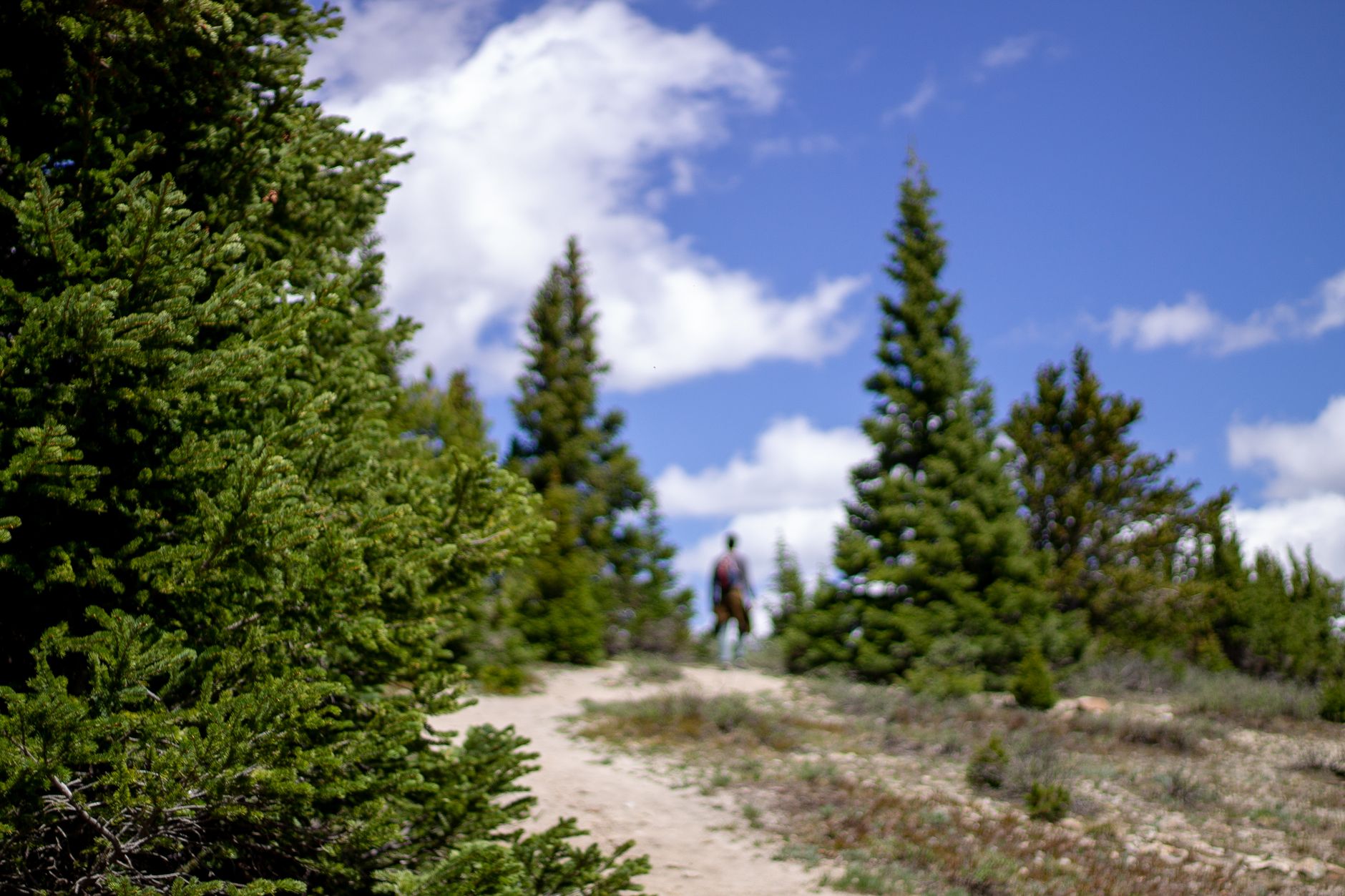
Photo by Nora Brody
Build your first weekend around Segment 7 or 8
Both sections offer mountain scenery and practical access. The better choice depends on how much time and energy you want to invest.
Segment 7 is a short but serious shakedown
Segment 7 runs 12.8 miles from Gold Hill Trailhead to Copper Mountain. Its 3,674 feet of elevation gain make it serious with camping gear.
Give yourself one night if everyone in your group is comfortable hiking uphill with a loaded pack. Start early, move steadily, and use the outing to learn how your body, boots, and pack feel after several hours.
This is a great section if you live near Denver and want a real Colorado Trail backpacking experience without committing to an entire long weekend.
Segment 8 feels like a complete outing
Segment 8 covers 25.4 miles between Copper Mountain and Tennessee Pass Trailhead. Spread it over two nights, and you are looking at roughly eight to nine miles per day.
That is my favorite format for new backpackers. You have enough time to settle into camp life, test your water system, and wake up to a real mountain morning. You also avoid the classic first-trip mistake of hiking too far on day one, then waking up sore and behind schedule.
A 13-mile section can feel harder than a 20-mile low-elevation hike. Elevation, weather, and a loaded pack all count.
Don’t combine Segments 7 and 8 on your first trip. The combined mileage is tempting, but it turns a simple weekend into a 38-mile commitment.
Solve the shuttle before you pack the car
Most point-to-point sections are routes where the shuttle can waste the most time. It’s the least glamorous part of the trip.
The two-car method is the easiest answer
Drive both vehicles to the finishing trailhead first. Leave one there as the shuttle car, then use the other to reach the starting trailhead. After the hike, the shuttle car transports the group back to the starting vehicle.
Take a photo of the parking area, posted sign, and any regulations. Keep valuables out of sight, lock your car, and never leave food or scented items in view.
Before departure, confirm that overnight parking is allowed. A trailhead that worked last summer may have a new closure, construction project, or restriction.
One car means an out-and-back or a paid shuttle
A paid shuttle can work well, especially around popular mountain towns. Book early, confirm the pickup location, and get a backup contact number. Service availability can change by season.
An out-and-back is another good option for a first trip. You lose the novelty of a point-to-point route, but avoid a complicated car plan. Set a strict turnaround time, then turn around whether you reached your hoped-for campsite or not.
Don’t make hitchhiking part of your itinerary. If you get a ride, great. It should never be the plan holding your whole weekend together.
Know the Segment 1 rules, water, and camping limits
Waterton Canyon is the traditional northern start of the route. It is close to Denver, which makes it tempting for a first trip. The northern trailhead also has rules that make overnight planning less flexible.
Waterton Canyon is better as a rules-heavy introduction
According to the USFS Segment 1 rules, Segment 1 is 16.8 miles with 2,830 feet of climbing. Dogs aren’t allowed in the canyon to protect wildlife, including bighorn sheep habitat.
Camping and fires are also prohibited on the first 6.7 miles. That means you can’t casually walk a few miles from your car, set up camp, and call it a beginner overnight.
It is still a worthwhile hike. Just don’t assume the Denver-adjacent starting point is the simplest first overnight choice.
Treat water as a live detail
Dry stretches in the early segments are one of the biggest planning issues. Seasonal water sources may be low, muddy, or dry by late summer.
Use the FarOut Guides Colorado Trail guide for offline navigation, waypoints, and recent hiker comments. Then carry enough water capacity for the longest dry stretch you might face, plus a little margin if your preferred source is unusable.
Filter or treat all natural water. “Clear” and “safe” aren’t the same thing.
Camping rules also change by land manager and wilderness area. Check fire restrictions, food-storage guidance, and permit requirements, then verify the exact section’s trailhead parking and camping access.
Make weather and altitude part of the itinerary
Mountain weather is not a side note on the Colorado Trail. It should shape your daily schedule.
Cross exposed terrain early
Afternoon thunderstorms are common in Colorado’s high country. If your route includes mountain passes, exposed ridges, or open slopes, cross them early.
Get moving at first light when possible. If thunder develops, descend from ridges, peaks, and other elevated terrain immediately. The National Weather Service’s lightning safety advice is clear on this point, and it also warns against sheltering under an isolated tree or rocky overhang.
A late summit is never worth gambling with lightning.
Altitude can humble strong hikers
You may be fit at home and still feel rough at 10,000 feet. Headache, fatigue, poor sleep, and a slower pace are common. Give yourself a night at elevation before starting if you can, drink regularly, eat enough, and don’t try to “push through” worsening symptoms.
If someone develops severe headache, confusion, trouble walking, or shortness of breath at rest, stop ascending and get lower. The trail will still be there tomorrow.
Save the Collegiate routes for your next trip
The Collegiate Peaks area is among the route’s biggest scenic prizes, with alpine lakes and high ridgelines. It is also where the trail becomes more serious.
Collegiate East is the standard choice
Collegiate East covers 78.3 miles through portions of Segments 11 through 15. It passes trailheads near Twin Lakes, Clear Creek Road, Chalk Creek, and U.S. Highway 50.
For a longer Colorado Trail plan, it is the more straightforward route. That doesn’t make it easy. You still need to handle sustained climbing, mountain weather, and more complex resupply planning.
Collegiate West is more remote and demanding
Collegiate West covers 84.8 miles across five alternate segments and shares its route with the Continental Divide Trail. It enters a remote wilderness area, making access and planning more demanding. The Collegiate route breakdown lays out both options and their access points.
Many hikers chase the west route for bigger mountain scenery. Fair enough. It is spectacular. Still, it is not a beginner upgrade just because it is more famous.
Do Segment 7 or 8 first. Then come back for the Collegiate country with better systems, stronger trail legs, and more confidence.
Get your gear and map routine right first
The best gear is the gear you have already used before the trip. A brand-new pack, unfamiliar filter, or untested sleeping pad can create a long night fast.
Carry backup navigation
Download a detailed trail map before leaving town, then keep your phone in airplane mode to save battery. Bring a power bank, a paper map, and a compass you know how to use.
A detailed Colorado Trail end-to-end guide is helpful for understanding how sections connect, where access gets harder, and why a route that looks simple online may not be simple on the ground.
Phone service can disappear quickly once you leave the highway corridor. Plan as if you will have none.
Practice with the pack you will carry
Before your first trip, take two local hikes with the full gear list, including your pack, trail shoes, water system, rain layer, and food. A pack that feels fine in the living room can rub your shoulders raw by mile four.
Bring a headlamp, warm insulating layer, rain protection, sun protection, first-aid supplies, water treatment, and more food than you think you need. Good footwear with real grip matters too, especially after rain.
If you need a few warm-up outings first, these beginner-friendly Colorado hikes are a smart place to build trail legs before sleeping outside.
A strong first Colorado Trail trip is a simple one
Your first Colorado Trail overnight doesn’t need the biggest pass, longest mileage, or most dramatic finish. It needs a route you can complete without rushing through the good parts.
Start with Segment 7 for a compact challenge, or give Segment 8 two nights for the full experience. Check current conditions, carry adequate water, and let good judgment control the schedule.
FAQs
How many miles and segments are on the Colorado Trail?
The mapped system has 28 standard segments plus five alternate segments. It covers 567 miles, while a continuous Denver-to-Durango route is 486 miles on the standard alignment or 491 miles on the western alternate.
Can a first-time backpacker complete a section?
Yes, as long as you pick the right section. Segment 7 is a good first overnight for strong day hikers, while Segment 8 is better for a relaxed two-night trip. Avoid stacking segments together on your first outing, and check current conditions before leaving.
How do hikers shuttle cars between trailheads?
The easiest method is using two cars. Leave one at the endpoint, then drive the other to the start. With one car, confirm a shuttle service in advance or hike an out-and-back route.
Where are the easiest resupply towns for beginner sections?
For northern and central starter sections, Breckenridge, Frisco, Copper Mountain, and Leadville are practical planning bases. Farther south, hikers often use hubs around Twin Lakes, Buena Vista, Salida, Silverton, and Durango. Always confirm transport and store hours before counting on them.
Why are dogs not allowed in Waterton Canyon?
Dogs aren’t allowed in the canyon to protect wildlife, especially bighorn sheep habitat. If hiking with a dog is non-negotiable, choose a legal alternate access point beyond the canyon and verify current regulations first.
Which areas have the biggest views?
The Collegiate West and the San Juans are usually the scenery favorites. They are also more exposed and harder to organize, so check weather and access conditions first. For a first backpacking trip, Segment 7 or 8 gives you plenty of Colorado mountain payoff without the same level of commitment.