For the best hikes Delaware offers in coastal forests and quieter settings, start with Pinelands at Cape Henlopen, then consider Brandywine Creek’s wooded loops farther north. These hikes don’t require big elevation gain, but choosing between coastal exposure and forest shade makes a real difference to your day.
On Delaware hiking trails, Gordons Pond gives you marsh boardwalks and open sky, while inland parks offer creekside walking, old stone walls, and longer woodland outings. Start with the scenery you want, then choose a distance that leaves room to enjoy it.
Key Takeaways
- Choose Pinelands for coastal forest, Gordons Pond for marsh scenery, and Walking Dunes for sandy terrain.
- Brandywine Creek offers wooded loops with more climbing than the coastal trails.
- Start early on warm weekends, download your trail map, and distinguish one-way distances from complete outings.
Coastal Hikes Near Lewes
These three Cape Henlopen trails offer different experiences, so I wouldn’t try to squeeze them all into one morning.
1. Pinelands Trail: My Pick for Coastal Forest
About 2 miles; an easy trail through forest.
Pinelands is the strongest match if you’re looking for coastal woods rather than a long, exposed shoreline walk. The route passes through maritime forest near the Fort Miles Historical Area.
Start near Fort Miles, and give yourself time for the historical area before or after hiking. This pairing works well because you don’t need another substantial drive between activities.
I recommend Pinelands when shade and a relaxed pace matter more than sweeping water views. Having said that, a quieter setting doesn’t guarantee solitude on a summer weekend.
2. Gordons Pond Trail: Marshes and Open Sky
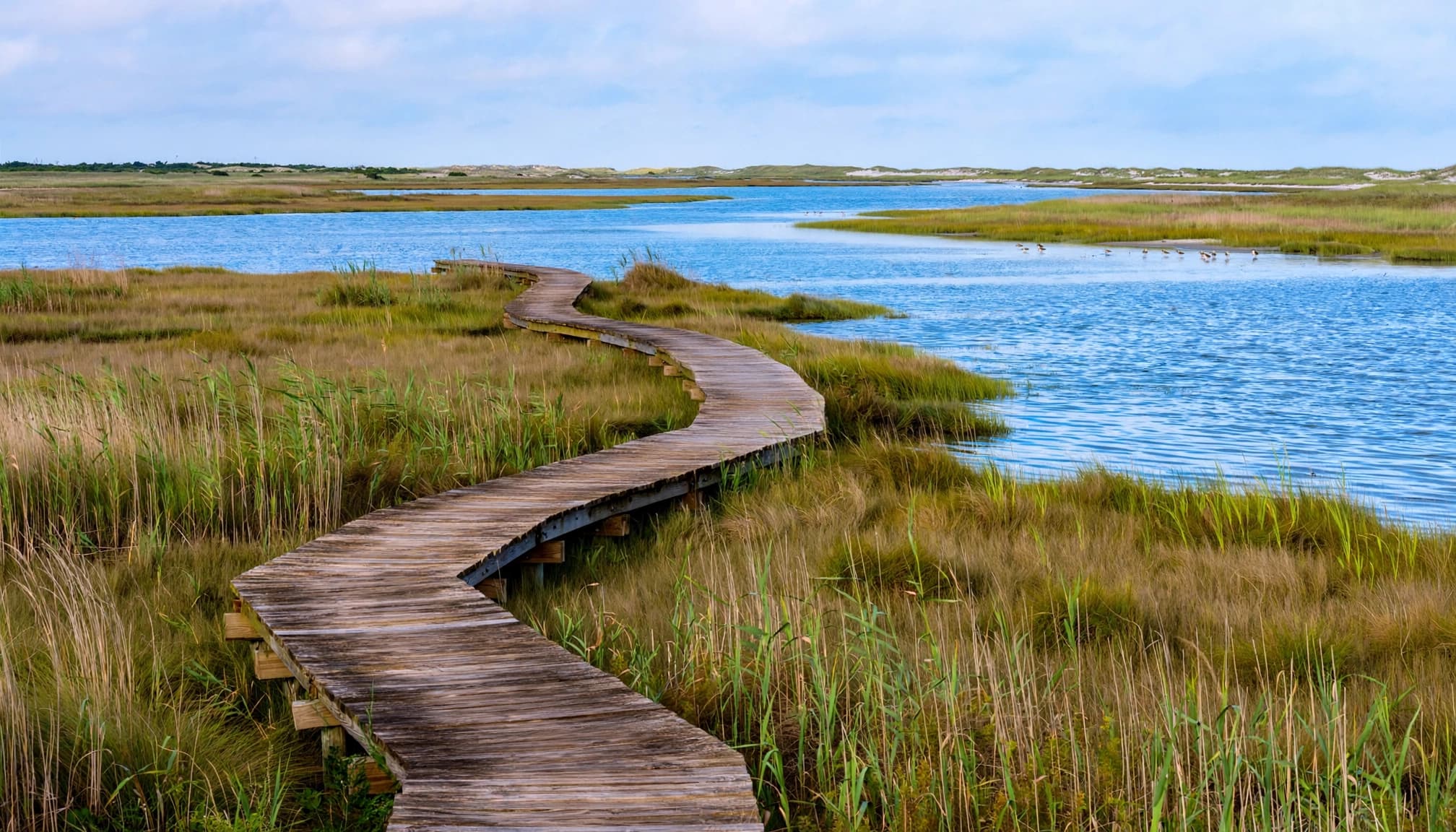
About 3.2 miles one way; exposed coastal walking.
Gordons Pond is the coastal outing here, with boardwalks, marsh grasses, and plenty of open sky. The state’s trail listings distinguish it as a named route, but its listed distance isn’t a loop.
Start at the Gordons Pond parking area and choose your turnaround before setting out. Wind and direct sun can change the effort considerably.
My Cape Henlopen hiking guide pairs this walk with shorter forest trails and nearby park stops.
3. Walking Dunes Trail: A Sandy Change of Pace
About 2.5 miles; easy, with sandy sections.
Choose Walking Dunes when you want coastal scrub and rolling sand rather than another boardwalk. Use the trailhead along the park’s main road network.
Sand makes your legs work harder than the modest terrain suggests. Supportive sneakers or trail runners are a better choice than flip-flops, even if you’re heading to the beach afterward.
Indian River Bay is a separate coastal setting farther south. Check local trail access and mileage rather than assuming it connects to Cape Henlopen.
Wooded Loops at Brandywine Creek
Brandywine Creek State Park has more than 14 miles of trails, with wooded slopes and creekside sections that feel different from the coast.
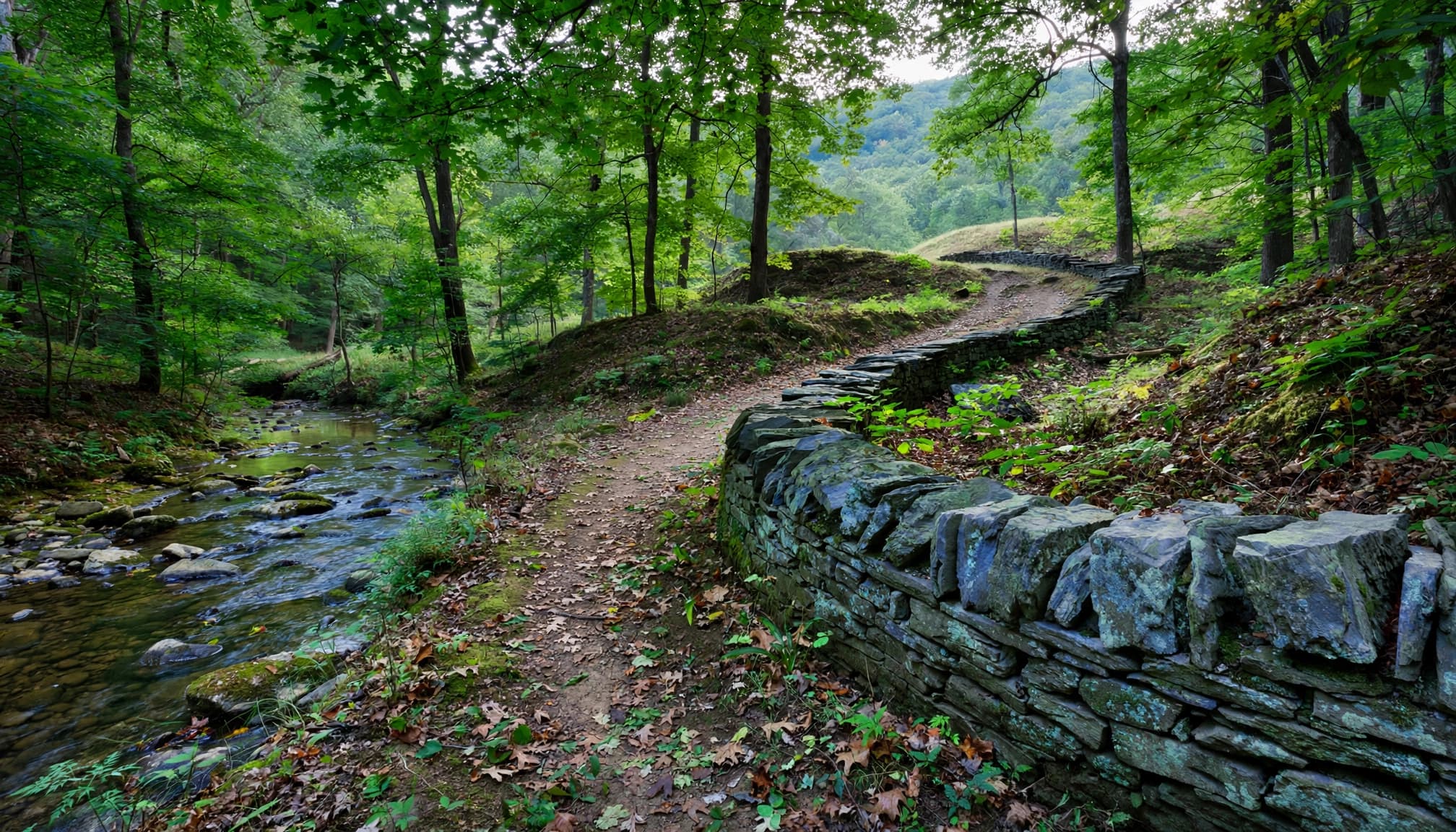
Its blue gneiss stone walls date to the late 1800s and early 1900s, when the property was part of a du Pont dairy farm. Leave the stones where they are, and enjoy them from the trail.
4. Indian Springs Loop: Shorter Mileage With Real Slopes
1.8 miles; expect changing grades.
At 1.8 miles, Indian Springs is a moderate trail for a woodland outing, with changing grades rather than flat ground.
The official Brandywine Creek trail map describes access from the Thompson’s Bridge Road connector or the Tulip Tree Trail near the nature center. Grades become steeper around the creek banks.
Allow extra distance for whichever approach you choose. After rain, take your time on wet roots and muddy descents.
5. Hidden Pond Trail: A Manageable Woodland Loop
2.1 miles; packed-earth woodland terrain.
Hidden Pond is another manageable option if your priority is time under the trees. Begin from the nature center area and use the marked connections shown on the park map.
I recommend choosing either Hidden Pond or Indian Springs for a first visit rather than linking trails without a mileage plan. Brandywine’s interconnected routes make it easy to extend your outing.
For a little extra walking, the mapped Longwall Trail is 1.1 miles, but it’s a separate segment rather than an automatic loop extension.
6. Swamp Forest Trail: A Longer Pond-Side Walk
6.8 miles for the AllTrails-listed route; roots and uneven footing.
Swamp Forest is the pick when a two-mile walk feels too short. It follows the wooded surroundings of Lums Pond, Delaware’s largest freshwater pond.
Lums Pond State Park covers about 1,790 acres and has 17 miles of trails. Nearly 200 bird species have been recorded here, making it a worthwhile birdwatching stop. Binoculars help with slower wildlife viewing.
The AllTrails Delaware listing gives its Swamp Forest route a length of 6.8 miles. Other park circuits use different connections, so this figure describes that mapped version.
Choose a designated parking area that connects to your saved route, and note that location on your map. An outing around a pond can become confusing when several recreation areas look similar.
Don’t let the low elevation fool you. Roots, damp ground, and sustained mileage make this a bigger outing than the shorter coastal walks. Give yourself a generous morning or afternoon, with breaks included.
7. Alapocas Run: Woodland and Quarry Scenery
Flexible distance; choose your route from Blue Ball Barn.
Alapocas Run State Park is a northern Delaware option for a woodland walk with an unusual geological landmark. The park’s former quarry contains Delaware’s only natural rock-climbing wall.
Blue Ball Barn is the visitor center and a practical starting point. Use it to orient yourself, then choose a route through the park rather than assuming every path forms one obvious loop. For a regional extension toward the Northern Delaware Greenway, check a current map before combining routes.
For beginners, keep the first outing modest. Follow a mapped route with a clear return to the barn, and save longer combinations for another day.
The quarry scenery is the main attraction, but designated climbing areas require different preparation than a hike. Stay on walking trails unless you’re properly equipped and following the park’s climbing rules.
This is a good alternative when you want more variety than another pond circuit.
8. Pomeroy Rail-Trail: A Flexible White Clay Creek Outing
Choose-your-distance out-and-back; follow the mapped corridor.
White Clay Creek State Park offers more than 3,600 acres and roughly 37 miles of trails. Individual routes range from short segments around 0.3 mile to trails of about 4 miles.
The Pomeroy Rail-Trail is a useful introduction when you’d rather control your turnaround than commit to a woodland loop. Use a designated access point along the Newark and White Clay Creek corridor, then decide how far you’ll walk before starting.
I recommend this approach for mixed-ability groups. Everyone can agree on a turnaround time without needing to complete a larger circuit.
For route selection across the park, the Delaware State Parks trail finder separates named trails and permitted uses. Save the particular route you intend to follow.
With a network this extensive, park-wide mileage isn’t your hiking distance. Include any connector between your parking spot and the named trail.
Plan Around Weather, Fees, and Shared Trails
Choose Your Season and Starting Time
For a quieter outing, I recommend a weekday morning in spring or fall. Coastal summer weekends bring more parking pressure, and exposed trails become less comfortable as temperatures rise.
Cape Henlopen’s March 1 through November 30 entrance fees are $5 per vehicle with Delaware registration and $10 for out-of-state vehicles. Walking and biking into the park are free.
Cape Henlopen can be dog-friendly on permitted trails, but check current rules and keep dogs leashed. The swimming beaches have seasonal pet restrictions, including at the Gordons Pond swimming area when lifeguards are on duty.
Inland, give muddy trails time to dry after substantial rain. Wet roots and creekside slopes deserve more caution than their modest elevation suggests.
Pack for Exposure and Uneven Ground
Bring water, snacks, sun protection, a light wind layer, and a charged phone with your route downloaded. A printed map is a useful backup.
On the coast, wind can make a pleasant forecast feel cooler, while open sand adds effort. Inland, footwear with dependable grip matters more than heavy boots.
Shared-use routes also require attention. Leave room for other trail users, keep your dog close, and avoid stopping across the full path.
Choose one main hike for the day. You can always add a short walk afterward if your group still has energy.
Frequently Asked Questions
Which Delaware Hikes Work Well for Young Children?
The Seaside Nature Trail near Cape Henlopen’s Seaside Nature Center is roughly 0.6 mile, a manageable introduction for many children. Pinelands is a longer option at about 2 miles.
For more trips built around manageable distances, my family-friendly hiking guide offers additional ideas.
Which Trails Suit Wheelchairs or Strollers?
Cape Henlopen’s paved Bike Loop is a more wheelchair-friendly starting point than sandy dune paths or rooted woodland trails. AllTrails describes it as likely accessible with assistance, though some visitors may need to avoid a steeper section.
Don’t assume the route is universally ADA accessible. Suitability depends on the chair, stroller, and assistance available.
What’s Delaware’s Longest Hiking Trail?
AllTrails lists the Michael N. Castle Trail at 19.7 miles as Delaware’s longest hiking route. That’s a different commitment from the short loops here.
For beginners, an out-and-back section makes more sense than treating the entire listed distance as a day-one goal.
Are There Mountain Hikes in Delaware?
Delaware offers rolling Piedmont terrain in the north, rather than mountain summits. Brandywine Creek and White Clay Creek are good choices for hills.
The Delaware Water Gap recreation area spans New Jersey and Pennsylvania. Worthington State Forest is on its New Jersey side. Mt. Tammany belongs to that separate mountain-hiking trip, not a Delaware shortlist.
Are There Waterfall Hikes in Delaware?
The hikes in this guide focus on coastal, marsh, woodland, and quarry scenery rather than waterfall viewing.
Choose the Trail That Fits Your Day
For coastal forest, I’d start with Pinelands. For a longer shaded outing, Swamp Forest offers more mileage, while Brandywine Creek adds rolling terrain and historic stone walls. For another pond-side walk in southern Delaware, check Killens Pond State Park’s current trail map for route options and mileage.
The best choice is the one that matches your group’s comfortable distance and the day’s conditions. Pick one main route, save the map, and leave yourself enough time to enjoy the woods or shoreline.