Kansas hikes don’t need big mountains to deliver a memorable day of outdoor recreation. The payoff here is space, wide horizons, waving grass that runs to the sky, and rock outcrops that catch you by surprise.
The best hikes in Kansas for tallgrass prairie and limestone bluffs are spread out, so a little route planning matters. Pick the Flint Hills for open prairie views and scenic views along classic hiking trails, then head southeast when you want rougher trail and rockier terrain.
Key takeaways:
- Tallgrass Prairie National Preserve is the best all-around choice for a first Kansas prairie hike.
- Konza Prairie delivers bigger climbs and more solitude, but the trails are exposed.
- The Elk River Hiking Trail is the move for limestone bluffs, rugged footing, and a longer day outside.
- Start early in warm weather. Kansas sun and wind can turn easy mileage into a grind.
Best Hikes in Kansas for Tallgrass Prairie and Limestone Bluffs
The Flint Hills are where Kansas hiking clicks. You aren’t walking through a flat field. You’re climbing folds in the land, dropping into creek bottoms, and reaching grassy ridges where the sky feels enormous.
For limestone scenery, set your sights on the southeast corner of the state. The trails are more wooded, more uneven, and better suited for hikers who want a little more edge than a smooth prairie path.
Tallgrass Prairie National Preserve: the essential tallgrass prairie hike
If you only hike one place in Kansas, make it Tallgrass Prairie National Preserve near Strong City. This is the state’s headline landscape, and it earns the drive.
The preserve covers nearly 11,000 acres and has about 40 miles of hiking trails. That sounds like a lot, and it is, but you don’t need to turn your day into an endurance event. The best first-time move is linking the Scenic Overlook Trail, Prairie Fire Loop, and Davis Trail into a roughly seven-mile loop, making it one of the best day hikes in the Flint Hills.
It has everything you came for: long views, native grasses, wildflowers in season, and enough rolling terrain to keep the walk interesting. The hiking trails follow old ranch roads and mowed paths, so the route feels rustic without being hard to follow.
The scenic overlook is the moment to slow down. On a clear morning, the Flint Hills stretch out in every direction with almost no interruption from development, creating scenic views that feel bigger than Kansas gets credit for.

If seven miles sounds like too much, turn around at the overlook for a shorter outing. That’s the better call for beginners, hot days, or anyone hiking with kids who are still warming up to longer trails.
The National Park Service has a useful rundown of the preserve’s backcountry hiking trails, including current notes on access and trail conditions. No permit is required for day hiking, but overnight camping isn’t allowed in the preserve.
Prairie trails have almost no shade. Bring more water than you think you need, especially from late May through September.
Dogs are allowed only on select trail sections, and rules can change when cattle are present. Check the official Tallgrass Prairie trail guide before loading the car.
Fox Creek Trail: a quieter prairie walk with water nearby
Fox Creek Trail is a strong choice when you want the tallgrass prairie scenery without committing to an all-day loop. The route is about 6.1 miles round trip and follows a riparian corridor through the preserve.
That creek-side setting changes the feel of the day. You still get prairie hills and big skies, but you also walk through greener lowland terrain where shade and birdlife are more common, making for a varied hiking experience.
The trail begins near the Bottomland Trail area and its main trailhead. If you’re hiking with young kids, limited mobility, or someone who doesn’t need a long day, start with the short Bottomland Nature Trail instead. Its half-mile and three-quarter-mile loops are paved and accessible when conditions are dry.
This is one of the best Kansas hikes for a mixed group. Faster hikers can add mileage on the hiking trails at Fox Creek, while everyone else gets a scenic, low-stress introduction to the preserve.
Konza Prairie: Bigger Hills and a More Wild Feel
Konza Prairie, south of Manhattan, is the place to go when you want the Flint Hills to feel less polished. The hiking trails climb quickly, the scenic views open wide, and there isn’t much between you and the weather.
The Konza Prairie Nature Trail is the easy entry point. It’s a shorter loop with enough uphill walking to make you feel like you’ve earned the ridge views. For longer day hikes, the Kings Creek Loop and Godwin Hill Loop give you more rolling terrain and a better sense of the preserve’s scale.
Don’t expect a casual stroll through a city park. These exposed hiking trails can be demanding, and summer heat sits hard on the hills. I recommend hiking early, even in spring. Morning light is prettier, parking is easier, and the wind usually hasn’t picked up yet.
Konza is also a research preserve, so stay on marked trails and respect closures. Bison may be present in parts of the area, and they aren’t photo props. Give wildlife plenty of room and keep moving.
For hikers comparing Kansas hikes for tallgrass prairie and limestone bluffs, the Konza Prairie Nature Trail is the sweet spot when you want prairie that feels earned rather than handed to you.
Elk River Trail for Kansas Limestone Bluffs
Elk River Hiking Trail at Elk City State Park is the best pick when prairie views aren’t enough and you want real rock under your boots. This is the more rugged side of Kansas hiking, with scenery that feels different from the open grasslands.
The trail runs through wooded hills above Elk City Lake, with limestone bluffs, rocky slopes, creek crossings, and occasional lake views. It doesn’t have the wide-open drama of the Flint Hills. What it has is texture, from shaded hiking trails to exposed rock formations along the lake.
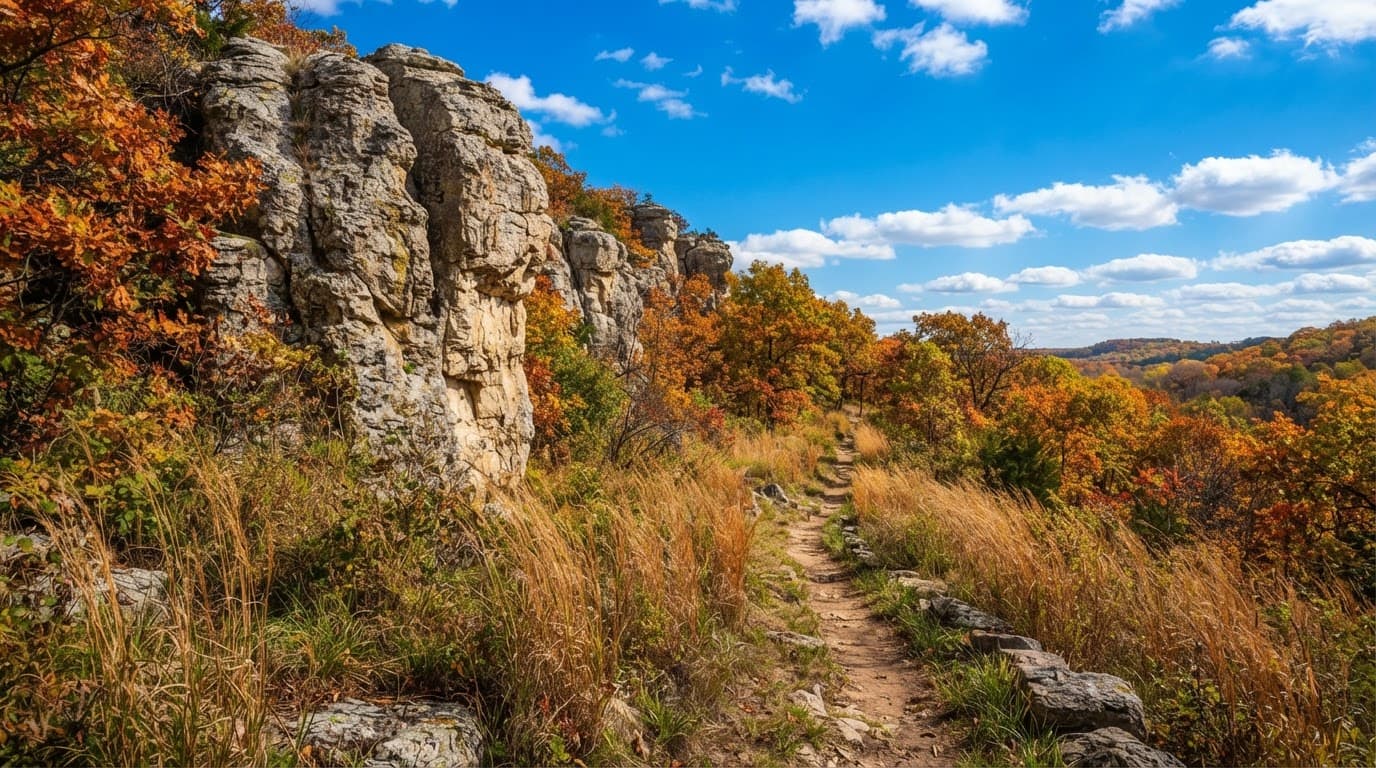
You don’t need to hike the whole system to enjoy it. Pick an out-and-back section, turn around when you’ve had your fill, and save your knees for the drive home. That approach works especially well for beginners who want bluff scenery without committing to a huge mileage day.
After rain, this trail gets slick. Creek crossings can also change fast, so don’t assume a dry forecast means dry rock. Wear trail runners with solid tread in good conditions. If the ground is muddy, supportive hiking shoes are a better call.
Elk River Hiking Trail is a good reminder that Kansas isn’t only grassland. The limestone ledges and dense woods feel almost hidden until you’re in them, much like the rugged sections found at other state parks, including Kanopolis State Park, Scott Lake State Park, and Fall River State Park.
Other Kansas state parks with rugged trails
Kanopolis State Park is another strong option for hikers who want bluffs, wooded valleys, and more varied terrain. Its Buffalo Tracks Nature Trail offers a shorter way to experience the area, while other hiking trails and multiuse routes create room for mountain biking and horseback riding.
Scott Lake State Park and Fall River State Park also add variety to a Kansas hiking trip, with shoreline scenery, wooded sections, and rugged routes that feel more secluded than the prairie preserves. These state parks are worth considering when you want a change from open grassland and a chance to explore more varied hiking trails.
Pillsbury Crossing: a short limestone stop near Manhattan
Pillsbury Crossing Wildlife Area isn’t a full hiking destination like Tallgrass or Elk River, but it’s worth knowing about. The main draw is a broad limestone shelf waterfall on Deep Creek, with short paths and open areas nearby.
This is the right stop if you have an hour, not a whole day. It also pairs well with a Konza Prairie hike, especially in spring when water levels are higher and the surrounding green is at its best.
Keep expectations realistic. You’re coming for a quick look at Kansas limestone and moving water, not a long backcountry day. The rocks near the waterfall get slick, so don’t wear flat-soled casual shoes just because the walk is short.
How to Plan a Better Kansas Hiking Day
Kansas hikes reward simple preparation. There may be fewer steep climbs than Colorado or Utah, but exposure is a real factor. Sun, wind, mud, and long drives between trailheads can catch first-timers off guard, especially when planning outdoor recreation at places such as Smoky Valley Ranch or Kanopolis State Park.
If you want granite domes and a bigger climb without a long flight, the Wichita Mountains in southwest Oklahoma are the closest big-rock hiking to Kansas.
For the same open-country feel across the northern border, the best Nebraska hikes roundup covers bluffs, river valleys, and tallgrass prairie.
Bring the basics:
- Carry at least two liters of water for longer prairie hikes, with more in summer.
- Download your map before leaving town because cell service can fade fast.
- Wear sunscreen, sunglasses, and a hat on exposed Flint Hills routes.
- Pack shoes with grip for Elk River Trail and wet limestone near Pillsbury Crossing.
- Check whether your route is shared with horseback riding or mountain biking, and confirm access at the trailhead.
Spring and fall are the sweet spots. April through early June brings green grass and wildflowers. October can be excellent too, with cooler temperatures and warmer colors around wooded trails and day hikes near distinctive rock formations.
Summer is still doable, but only if you start early and shorten the plan. A three-mile walk at 8 a.m. is a completely different hike than the same route at 2 p.m., particularly on exposed hiking trails.
Before a Tallgrass trip, check the preserve’s visitor information and trail resources. Prescribed burns, cattle activity, storms, and wet ground can change what makes sense that day. The same quick check is useful before visiting other hiking trails, since closures and conditions can change quickly.
Final Thoughts
Kansas hikes are best when you stop expecting mountain scenery and let the land be what it is. The Flint Hills offer huge, open beauty, while tallgrass prairie stretches provide wide scenic views. Elk River brings limestone bluffs, rougher footing, and wooded trails many hikers don’t expect.
Start with Tallgrass Prairie National Preserve if you’re new to the state. Then come back for Konza or Elk River when you’re ready for a longer, more rugged day. Exploring Kansas state parks and preserves creates an unforgettable hiking experience, one that’s less about chasing a summit and more about giving yourself room to look around.
Frequently Asked Questions
What is the best beginner hike in Kansas?
The Bottomland Nature Trail at Tallgrass Prairie National Preserve is the easiest starting point for Kansas hikes. It has short, mostly flat loops and accessible features. For a bigger first hike, choose the scenic overlook route and turn around before committing to the full loop.
Are Kansas prairie hikes hard?
Most Kansas prairie hikes are moderate rather than technically difficult. The hard part is exposure. There is little shade, wind can be strong, and summer heat builds quickly. Start early, carry water, and don’t underestimate a trail because the elevation numbers look modest.
Where can I find the best hiking trails near limestone bluffs in Kansas?
The Elk River Hiking Trail at Elk City State Park is the best choice for limestone bluffs and rocky woodland terrain. Kanopolis State Park also offers scenic hiking trails, along with opportunities for mountain biking in some areas. Pillsbury Crossing is another good limestone stop near Manhattan, though it is better for a short scenic walk than a full hike.
Can I hike Tallgrass Prairie National Preserve with a dog?
Dogs are permitted on certain designated trails when cattle aren’t present. Rules differ between nature trails and backcountry routes, so check the current preserve guidance before you arrive. Keep your dog leashed, bring water for them, and avoid hiking during the hottest part of the day. These guidelines also apply at many Kansas state parks, where pet access can vary by trail.