Mount Hood gives you the kind of mountain views that can stop a conversation mid-sentence. But Mount Hood hiking can also be a rude first lesson in snow, crowded trailheads, rough roads, and routes that are harder than their photos suggest.
The good news is you don’t need to overcomplicate it. Choose a hike based on the season, road access, and trailhead location. Check access before departure, since summer crowds can overwhelm the parking lot. For more ideas beyond the mountain, the Columbia River Gorge waterfall hikes make an easy add-on day trip, and these beginner-friendly Oregon hiking trails are a great next stop.
Key Takeaways
- Late July through September is usually the best window for high-elevation Mount Hood trails, though snow can linger longer in big-snow years.
- The Mirror Lake summit route is the sweet spot for first-timers seeking a serious Mount Hood view. Paradise Park offers another scenic option for hikers ready for a longer outing.
- Tamanawas Falls is the better pick when clouds, snow, or your legs make a summit-style hike feel like a bad bet.
- Compare the trail type, elevation gain, and trailhead location before choosing your route.
- Many trailheads need a Northwest Forest Pass, Mt. Hood National Forest Site Pass, or accepted America the Beautiful Pass. Check the exact Forest Service trailhead listing before leaving.
- Start early on summer weekends. If I can’t arrive early, I’d rather hike later or switch trails than circle a full parking lot.
Choosing Your First Mount Hood Hike
The first call is simple: do you want a close-up volcano view, a waterfall, or a manageable forest walk? Choose by trail type, elevation gain, trailhead location, time, and current conditions, not by the prettiest social post.
Pick the payoff you actually want
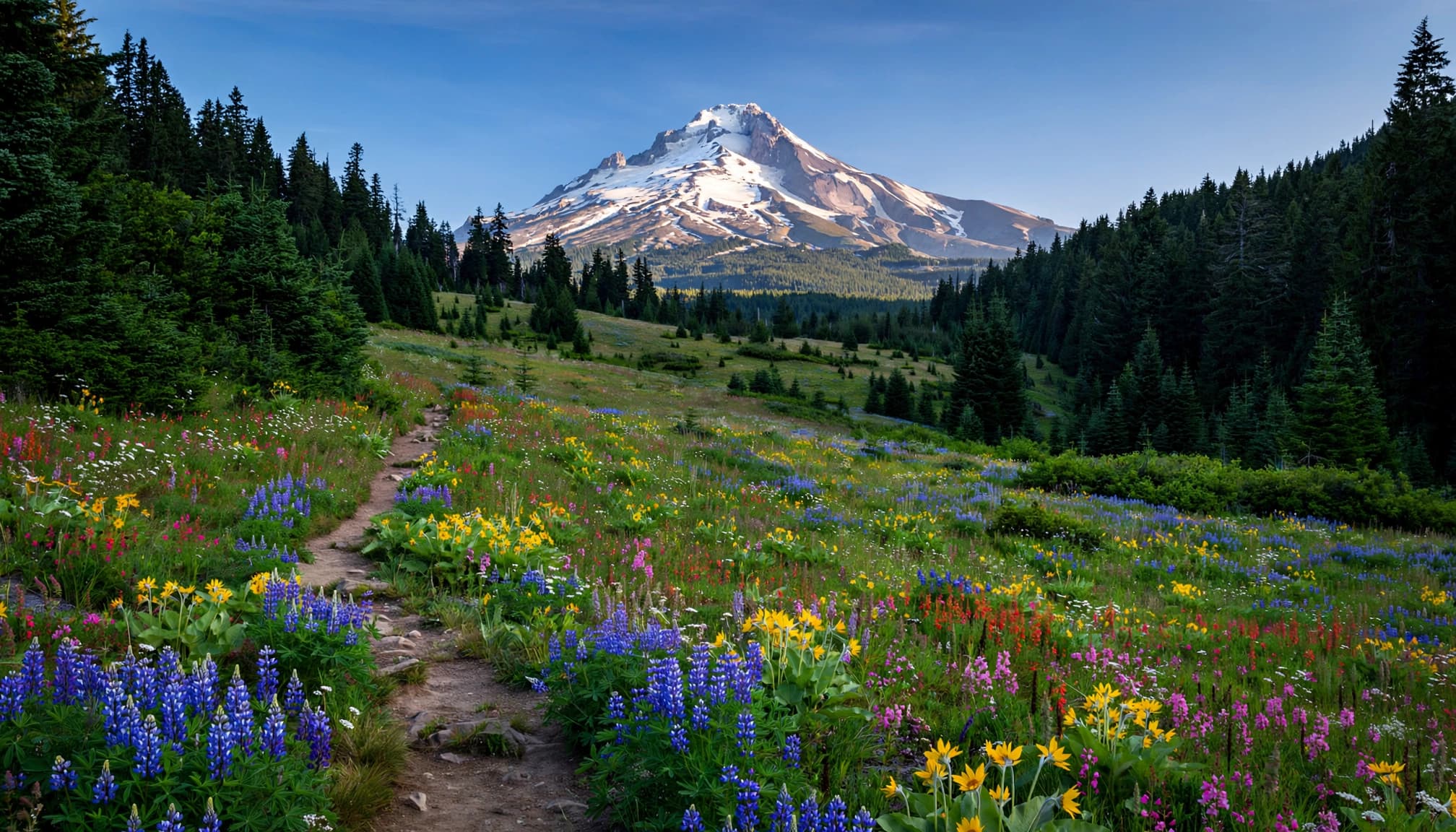
For the classic mountain payoff, Tom, Dick, and Harry Mountain is hard to beat. Mirror Lake is a nice bonus, but the summit view is the main event.
Want a waterfall with less exposure? Tamanawas Falls is the smarter first choice. Its forest setting also makes it better when Mount Hood is hiding behind clouds.
McNeil Point, Paradise Park, and other longer waterfall routes are beautiful, but they require more honest planning. They’re not the hikes I’d choose when you’re new to the area and trying to squeeze in one stress-free afternoon. Use Elk Meadows or Lookout Mountain as lower-elevation backups only after verifying their current access and trail status.
Treat conditions as part of the trail
A route that feels moderate in August can be a snow, mud, or creek-crossing problem in June. High-elevation trails do not run on a neat calendar.
Even Paradise Park can change quickly with lingering snow, muddy sections, or difficult stream crossings. Check Mt. Hood National Forest updates with the Forest Service before leaving Portland or Hood River, and verify current trail conditions, closures, road access, and snow.
Then download an offline map, because service can disappear once you get into the forest.
The right Mount Hood hike is the one that matches today’s trail, not the version you saw online last summer.
Best Mount Hood Day Hikes for Scenic Payoffs
You could spend years working through Mount Hood’s trail network. For a first visit, I’d compare these five day hikes and pick only one main route.
Tom, Dick, and Harry Mountain, McNeil Point, and Paradise Park
Planning estimate for the first route: 7 to 8 miles round trip, with about 1,400 feet of elevation gain. Trail type: out and back. Trailhead location: Mirror Lake near Government Camp. Scenic views across Mirror Lake make the climb feel worthwhile, especially on a clear day.
The second route is a steeper, longer commitment, with roughly 10 miles and 2,000 feet of vertical gain. Trail type: out and back. Start: the Top Spur area, when the road is open. The historic stone shelter delivers mountain and Bull Run watershed views, but snow can linger well into summer.
Paradise Park is another all-day option from Timberline Lodge. The planning estimate is about 9.6 miles with roughly 2,500 feet of elevation gain. Trail type: out and back. Trailhead location: Timberline Lodge. Wildflowers can be magical here, but Paradise Park isn’t a casual stroll around the lodge. This Mount Hood trail rundown is useful for comparing route options before you commit.
Check Forest Service alerts before choosing any of these routes. Snow, road closures, and changing trail conditions can alter the practical distance and difficulty.
Tamanawas Falls and Ramona Falls
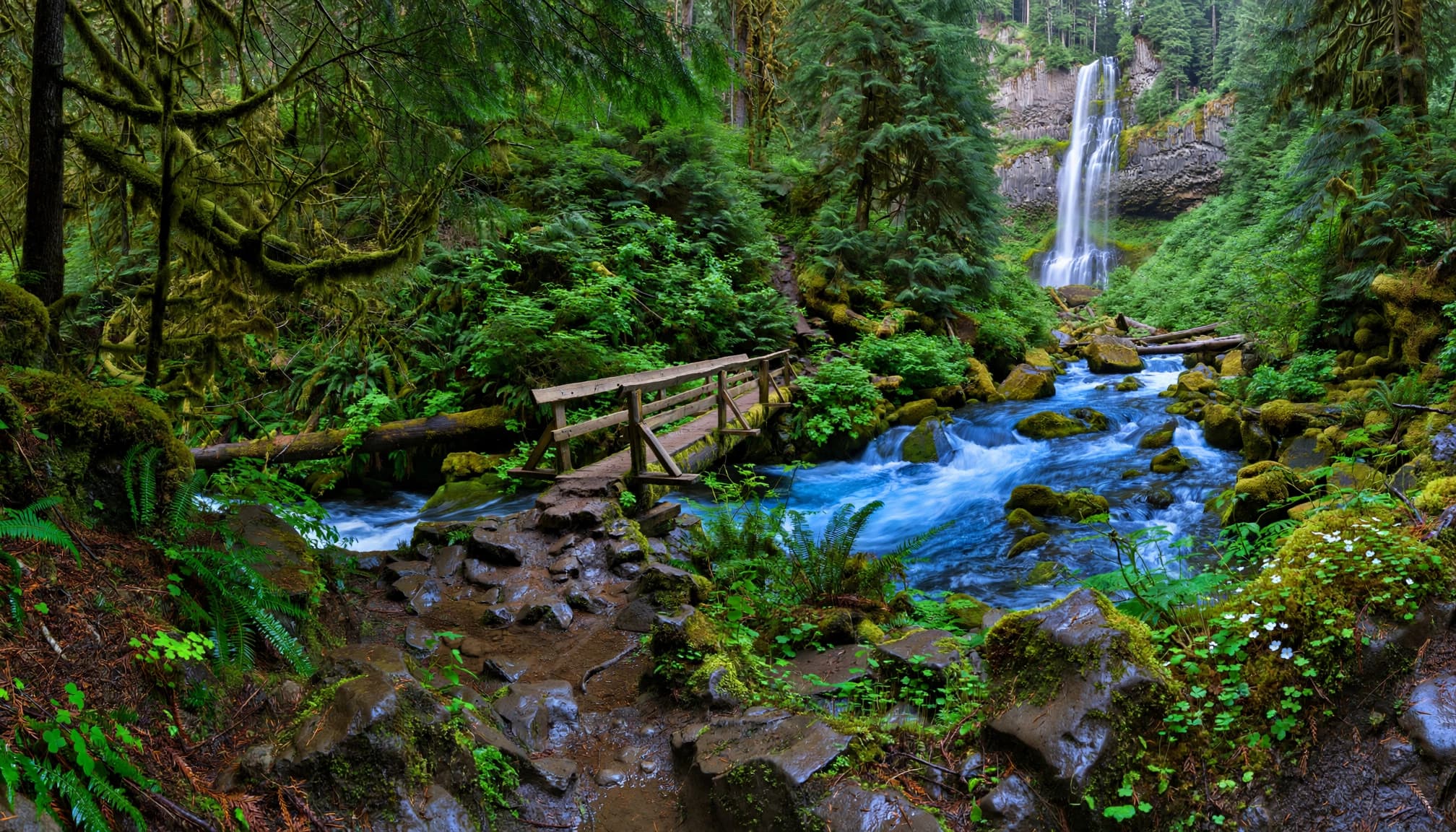
The first waterfall route is about 3.6 miles round trip, with roughly 700 feet of elevation gain. Trail type: out and back. Start: the Cold Spring Trailhead near Highway 35. The route follows Cold Spring Creek through mossy forest before reaching a tall basalt amphitheater. Expect uneven footing and some boulder scrambling near the falls.
The second waterfall route is one of Oregon’s prettiest, but it requires more planning. The estimate is roughly 7 miles round trip with about 1,000 feet of vertical gain. Trail type: loop trail. Trailhead location: the Ramona Falls Trailhead. The river crossing can change quickly, so don’t assume a bridge is in place or that conditions are safe.
Elk Meadows is a useful lower-elevation alternative for first-time visitors who want a shorter, quieter outing. Check access and snow conditions before driving out, since the trailhead road can remain challenging early in the season.
Timberline Lodge and the Pacific Crest Trail
Timberline Lodge is more than a historic place to grab a drink after hiking. It is a practical launch point for the Pacific Crest Trail #2000 and the Timberline Trail #600, with parking open around the clock.
Keep your first PCT section short
A short Pacific Crest Trail out and back from Timberline Lodge is a better first outing than committing to a long traverse. The path toward Yocum Ridge offers a strong taste of high-country Mount Hood without requiring a backpacking trip.
The trail type, elevation gain, trailhead location, and weather exposure can make the terrain feel larger than the map suggests. Plan carefully around route exposure near Zigzag Canyon when considering the Timberline Trail.
Start with plenty of time to turn around. Weather moves fast up here, especially when afternoon clouds begin building.
Wilderness permits and campfire rules
A free, self-issued wilderness permit is required where these trails enter the Mount Hood Wilderness and Paradise Park. Pick one up and carry it, even for a day hike. Verify current permit requirements and fire restrictions through the U.S. Forest Service.
Also, campfires are prohibited within 500 feet of McNeil Point and the falls site, and throughout Paradise Park. Pack a warm layer instead of planning on a fire to fix a cold evening.
Parking Passes and Trailhead Logistics
Mount Hood trailhead rules aren’t one-size-fits-all. That’s where first-time visitors get tripped up.
Bring the right pass for the exact lot
Many sites in Mt. Hood National Forest accept the Annual Northwest Forest Pass or the Mt. Hood National Forest Site Pass. Federal recreation passes, including the America the Beautiful Pass, may also be accepted at listed trailheads.
Before driving, confirm the exact trailhead location, trail type, elevation gain, and permit requirement. Pay special attention to Lolo Pass, Mirror Lake Trailhead, Paradise Park, and Tamanawas Falls.
Recent recreation notices have listed Mirror Lake Trailhead and nearby sites as requiring a pass from May 15 through October 1, snow dependent. Tamanawas Falls has been listed as requiring a valid recreation pass year-round, but seasonal exceptions can change. Check whether the parking lot requires a pass, then confirm current rules in the Travel Portland’s Mount Hood guide and the latest Forest Service notice.
An America the Beautiful Pass may be accepted, but confirm acceptance at the specific parking lot before your trip. Current Mt. Hood National Forest recreation notices always take priority.
Start before the parking rush
On summer weekends, arrive by 7:30 or 8:30 AM for popular Mount Hood hiking trails. Popular Mount Hood hiking trails can fill the parking lot early, particularly near Mirror Lake and waterfall trailheads.
Tuesday through Thursday mornings are usually calmer. If the parking lot is full, don’t create your own spot along a gate, emergency pullout, or narrow forest road. Never block emergency access. Pivot to your backup trail and save yourself a frustrating start.
Snow, Roads, and River Crossings
The safest plan is to match your route to the season and current trail conditions. Snow levels can vary by elevation and aspect, so the trail type and trailhead location alone won’t predict conditions. Snow and mud can make elevation gain harder on the ascent and less stable on the descent.
The best time for high trails
Mid-July through September is the usual sweet spot for alpine views, dry trail tread, and wildflower season. Early summer can be fantastic at lower elevations, but upper routes such as Paradise Park may still have snow, mud, downed trees, and hidden stream crossings.
Snow can linger on shaded slopes after nearby trails are clear. The same elevation gain may require slower travel uphill and extra care on the way down.
October can be beautiful too, especially on crisp clear days. It can also bring an early storm. Bring more layers than you think you’ll need.
Check roads and crossings, not only weather
Forest Service roads are not plowed in winter, and some become rough or impassable after storms. Seasonal closures may determine whether you can reach the parking lot at all. Your map app may suggest a route that is technically a road but absolutely not a route for a low-clearance rental car.
Check current U.S. Forest Service notices or official agency updates for road status, closures, snow levels, and river conditions before leaving.
Ramona Falls deserves an extra check because of the Sandy River river crossing. If water is swift, the crossing is unclear, or a bridge’s status is uncertain, turn around. A waterfall is never worth gambling on swift water.
Dogs, Safety, and What to Pack
Dogs can be allowed on many national forest trails, but rules vary by trail, wilderness boundary, season, and local closure. I wouldn’t drive out assuming every named Mount Hood route is dog friendly.
Confirm dog rules before the drive
Check the current Forest Service page for the exact trail, trailhead location, and access conditions before you go. Bring a leash and waste bags. Even where dogs are permitted, a loose dog around snowfields, river crossings, wildlife, or narrow rocky trail can make a simple hike complicated fast.
Keep an eye on your dog for heat and hydration too. Open trails around Timberline Lodge can feel much warmer than the Portland forecast suggests.
Pack for a mountain day
Bring at least 1.5 to 2 liters of water per person for longer summer hikes, plus salty snacks and a real lunch. Greater elevation gain makes water, traction, and a headlamp more important on longer or steeper routes. Add a rain shell, warm layer, sun protection, and a basic first-aid kit.
Trekking poles are useful for boulder traction at Tamanawas Falls and on long descents from Tom, Dick, and Harry Mountain. They aren’t required, but your knees may appreciate them.
A Simple First-Time Mount Hood Itinerary
If you have one clear summer day, arrive early at Mirror Lake Trailhead and confirm the trailhead location before the parking lot fills. Choose the summit route after checking the trail type and elevation gain. Bring breakfast for the car, enjoy the summit without rushing, then head to Government Camp or Timberline Lodge afterward.
If snow is lingering or clouds cover the peak, choose the waterfall option as an out and back. You’ll still get a proper Oregon hike, and the forest is a lot more forgiving when the weather turns.
For a second day, choose the longer route, with Paradise Park as an option only when weather is stable and daylight is sufficient. Ramona Falls also works when conditions are confirmed, but Paradise Park and other demanding day hikes shouldn’t be stacked unless you know your body handles them well.
Frequently Asked Questions
What is the best Mount Hood hike for beginners?
The waterfall alternative is a safer first choice for many beginners because it offers a shorter distance and clear payoff. Tom, Dick, and Harry Mountain is better for hikers comfortable with 7 to 8 miles, more elevation gain, and a sustained uphill trail type.
Do I need a pass to hike around Mount Hood?
Often, yes. Many trailheads accept a Northwest Forest Pass or America the Beautiful Pass. Check the exact trailhead location, current official listing, and posted sign before hiking.
When can I hike Mount Hood without snow?
Late July through September usually offers the most reliable snow-free conditions on higher trails. Timing varies with snowpack and trail conditions, so confirm recent reports before planning Paradise Park, higher routes, or hikes from Timberline Lodge.
Can I hike Ramona Falls as a first-time visitor?
You can, but only when the water crossing and access road conditions are good. Check the crossing status right before your trip. If it looks uncertain, choose the waterfall alternative and return another day.
Final Thoughts
Mount Hood rewards smart choices more than big mileage. Start early, bring the right pass, and pick the trail that fits the conditions in front of you.
That first clear view of the mountain is better when you’re still enjoying the hike, not trying to survive it.